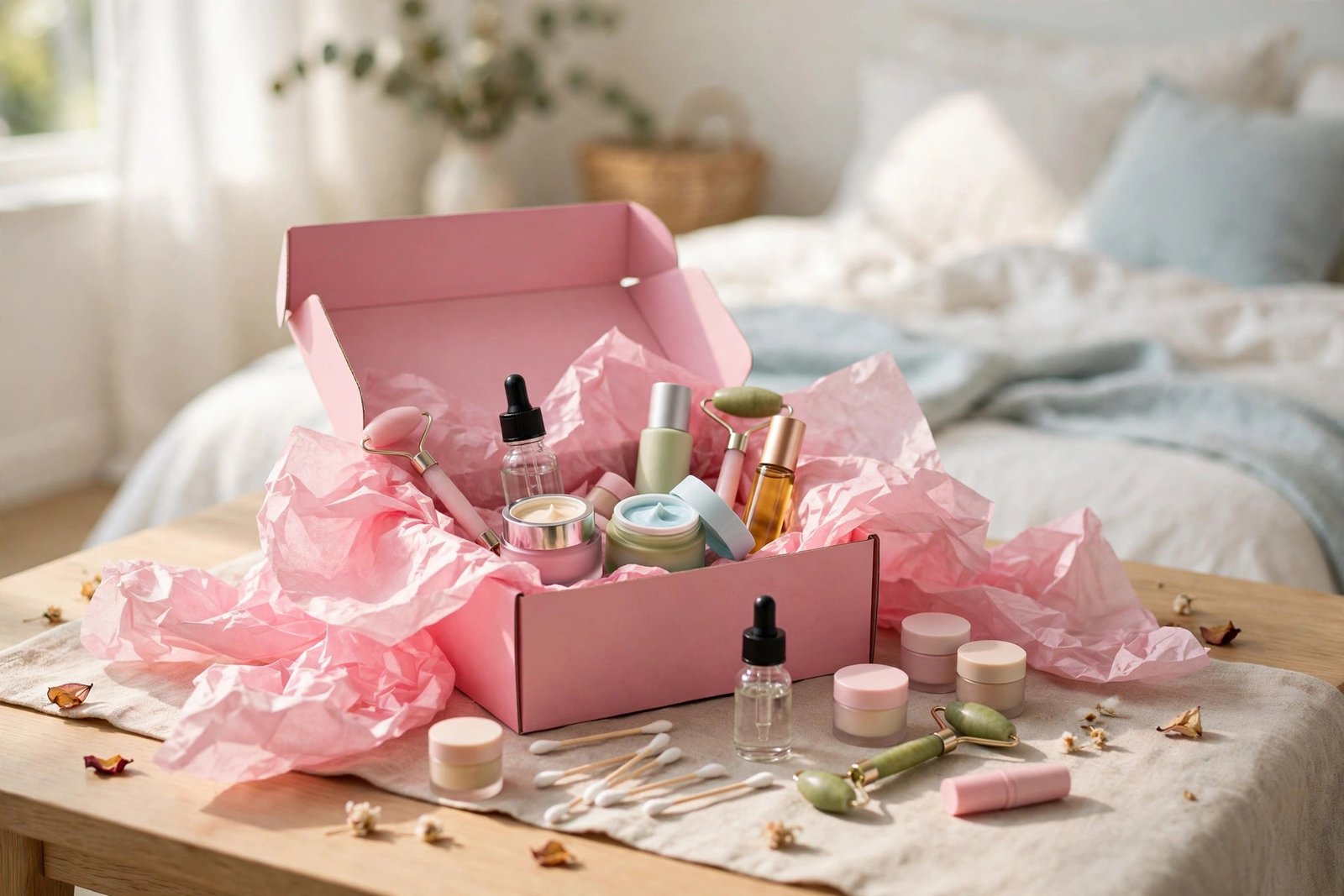
Every month, a pretty box lands on the doorstep promising £50-plus worth of beauty products for around £15. The UK beauty box market — Glossybox, Lookfantastic, Cohorted, Birchbox and a rotating cast of newcomers — has turned subscription sampling into a national hobby. But are UK beauty box subscriptions worth the money, or are they an elegant way to accumulate tiny mascaras you will never open? The answer, as with most subscriptions, is: it depends entirely on how you use them.
This guide breaks down the real maths behind Britain’s biggest beauty boxes, who gets genuine value from them, the hidden costs and cancellation traps, and how to decide whether a subscription deserves a place in your budget.
How the maths actually works
Take a typical £15-per-month box advertising a £55 “value.” That value is the combined recommended retail price of the contents — usually five or six items, a mix of full-size and deluxe samples. If you would genuinely have bought two or three of those products anyway, the box wins easily. If you use one item and the rest gather dust, you have paid £15 for a £6 lip balm.
The honest calculation is personal value, not box value. Track three months: list everything received, mark what you actually used up, and price those items at what you would have paid — not RRP, but the real price, since affordable high-street brands often undercut box contents on everyday staples. Which? consumer analysis of subscription services has repeatedly found that perceived value and actual value diverge sharply with beauty boxes.
Who gets the best value
Beauty boxes suit the curious: people who enjoy discovering new brands, travel frequently (miniatures are ideal), or want to try premium products before committing to full sizes. They are excellent for building a varied kit cheaply — skincare, makeup, haircare and fragrance samples that would cost far more bought individually. Gift subscriptions also punch above their weight as presents.
They suit the brand-loyal badly. If you have a settled routine and strong preferences, most box contents will miss. They are also poor value for minimalists and anyone on a strict budget — a box is a “want,” and there is no shame in admitting that looking stylish without spending much starts with cancelling subscriptions you do not need.
The hidden costs and cancellation traps
Read the terms before you subscribe. Many boxes lure you with a cheap first box, then roll onto full-price auto-renewal. Some require three or six-month commitments for the advertised price; cancelling mid-plan can be deliberately fiddly. Annual plans offer the lowest monthly price but lock you in for a year of boxes you may stop wanting by month four.
Watch for the “lifestyle creep” cost too: boxes introduce you to £40 serums you then buy full-size. That is the business model working as intended. Set a rule before subscribing — full-size repurchases come from your existing beauty budget, not on top of it. Under UK gov.uk consumer guidance on subscriptions, you have a 14-day cooling-off period for most online subscription purchases, and companies must make cancellation reasonably straightforward — screenshot everything if they do not.
How the big UK players compare
Glossybox (around £15 monthly) leans mainstream with five products and frequent full-size items; its advent calendar is a genuine event. Lookfantastic’s box (around £20) skews premium, often including higher-end brands that justify the price for luxury-curious subscribers. Cohorted (around £40+) is the luxury option — fewer, pricier products for those who want indulgence, not bargains. Birchbox and others compete on curation and personalisation quizzes.
Limited editions and collaboration boxes often offer the best value of all — brands clear inventory through them, so contents can be spectacular — but they sell out fast. If you are on the fence, a one-off limited edition is a low-commitment trial.
Making a subscription work harder
If you subscribe, maximise it: fill in the beauty profile honestly so curation matches your skin tone and type; actually use the samples rather than hoarding them; regift or swap unwanted items in the thriving online box-swap communities; and review quarterly whether the box still earns its place. Pause options — offered by most major boxes — are underused: skip the months when the spoilers do not excite you.
The environmental question
Beauty boxes have a footprint worth considering: monthly cardboard, plastic miniatures, and products shipped individually that you might have bought together. If sustainability matters to you, weigh the waste against the discovery value. Some boxes now use recyclable packaging and partner with refill schemes; others remain plastic-heavy. You can reduce the impact by choosing quarterly over monthly plans, recycling empties through schemes like Terracycle, and regifting rather than binning unwanted items.
There is also the consumption psychology: boxes normalise constant novelty, training you to want new products monthly rather than finishing what you own. The “shop your stash” movement — deliberately using up existing products before buying — is the philosophical opposite of the subscription box. Neither is morally superior, but knowing which camp you are in clarifies whether a box serves your goals or sabotages them.
Alternatives to subscriptions
If the box maths does not work for you, consider the alternatives. Department store beauty halls and Space NK offer generous free samples with purchases — targeted sampling without commitment. Brand discovery sets, sold by many premium labels, let you try a curated range for a one-off price. And the humble miniatures shelf at Boots and Superdrug lets you build your own “box” of exactly the products you want to try, with no subscription strings attached. Discovery does not require a direct debit.
How to cancel without the headache
When the value fades, cancel promptly — and do it right. Log into your account (not the app, which sometimes hides the option), screenshot every step, and check for the confirmation email; no email means it probably did not process. Cancel a few days before the renewal date, not the day before, to avoid being charged for the next box. If you are within 14 days of starting, UK distance-selling rules give you a cooling-off right to a refund. And if a company makes cancelling deliberately difficult, that tells you everything about how they view customers — complain, screenshot, and if needed, cancel the direct debit with your bank while disputing the charge.
Conclusion
Are UK beauty box subscriptions worth the money? For the curious beauty lover who uses what arrives, tracks the maths, and cancels without sentimentality when value fades — yes, they can be a genuine bargain and a monthly delight. For the brand-loyal, the budget-conscious, or the drawer already full of unopened minis — no, they are an expensive habit dressed as a treat. The box is not the villain; mindless subscribing is. Do the three-month audit, know your beauty personality, and let the answer be personal, not marketed.
Frequently Asked Questions
Which UK beauty box is the best value?
It depends on your preferences, but Glossybox and Lookfantastic consistently offer the strongest value-to-price ratios for mainstream subscribers, while Cohorted suits luxury lovers. Limited-edition boxes often beat them all on pure value.
Can I cancel a beauty box subscription easily?
Most major UK boxes allow online cancellation, though some make it deliberately awkward or require notice periods. You have a 14-day cooling-off right on new online subscriptions; always screenshot your cancellation confirmation.
Are the products in beauty boxes full-size?
Usually a mix — typically two to three full-size products plus deluxe minis. Boxes advertising high “values” often include one premium full-size item that accounts for much of the claimed worth.
Do beauty boxes cater to darker skin tones?
Historically poorly, though improving. Fill in beauty profiles accurately, check spoiler contents before each box, and favour boxes with strong shade-inclusive curation reputations.