Here is a fact that surprises most Britons: you can get sunburned in Manchester in March. UV radiation penetrates cloud cover, bounces off pavements, and streams through office windows — which is why dermatologists now treat daily SPF as non-negotiable, not a holiday extra. The best SPF moisturiser for daily use in the UK is the one you will actually apply every morning: elegant enough to wear under makeup, comfortable enough to reapply, and protective enough for real British conditions, from Cornish coastal walks to grey commutes.
This guide explains what to look for in a daily SPF moisturiser, how much protection you genuinely need in Britain, application mistakes that undermine even good products, and how to choose between chemical, mineral and hybrid formulas.
Why daily SPF matters in Britain
The UK’s UV index regularly reaches 6 or 7 (“high”) between April and September, and UVA — the ageing, deep-penetrating wavelength — is present year-round and passes through window glass. Cumulative daily exposure during commutes, school runs and lunch breaks adds up to the lion’s share of lifetime UV damage for most people. That damage shows as pigmentation, loss of elasticity and fine lines long before it shows as anything more sinister.
The NHS advice on sunscreen and sun safety recommends sunscreen as part of a broader sun-protection strategy, and Cancer Research UK’s sun protection guidance notes that getting sunburned even occasionally significantly raises skin cancer risk. Daily SPF is the single highest-impact anti-ageing and skin-health step available — more proven than any serum.
What to look for: the non-negotiables
Start with the rating: broad-spectrum SPF 30 minimum for daily use in the UK, SPF 50 if you are fair-skinned, outdoors a lot, or prone to pigmentation. “Broad-spectrum” means meaningful UVA protection alongside UVB — in the UK, look for the UVA star rating (four or five stars) or the circled UVA logo. Check the expiry date; last summer’s half-used bottle has likely degraded.
Then consider the formula. Chemical (organic) filters tend to feel lighter and sit better under makeup, making them the most popular daily choice. Mineral (inorganic) filters with zinc oxide or titanium dioxide suit sensitive or reactive skin but can leave a white cast — newer tinted or nano formulations have largely solved this. Hybrids blend both. There is no universally “best” type; the best is the texture you will wear daily without resentment.
Application: where most people go wrong
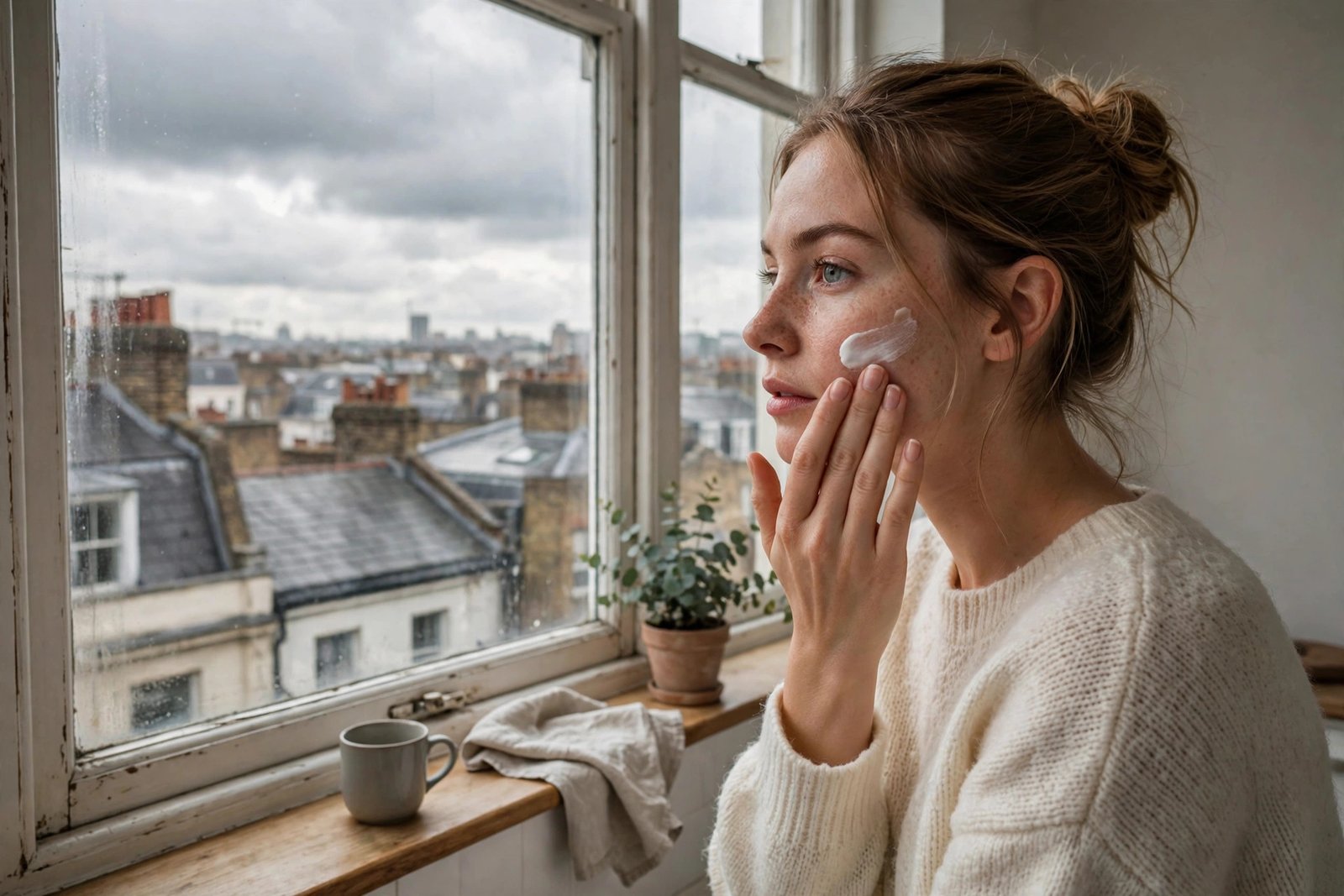
Studies consistently find people apply a quarter to half the tested amount of sunscreen, slashing real-world protection. For the face and neck, use the two-finger rule: two full finger-lengths of product. Apply as the last step of your morning routine, about 15 minutes before sun exposure, and do not forget ears, the back of the neck, and the backs of hands — all high-exposure, high-ageing zones.
Layering order matters: moisturiser first, then SPF, then makeup. If your foundation contains SPF 15, that does not replace dedicated sunscreen — you would need an implausibly thick layer of foundation to reach the labelled protection. And reapply if you are outdoors for extended periods: every two hours in direct sun, and after swimming or heavy sweating, even with “once-a-day” formulas.
Choosing for your skin type and lifestyle
Oily or combination skin does best with oil-free, gel or fluid textures labelled non-comedogenic; heavy creams under makeup are a recipe for midday shine. Dry skin can embrace richer SPF moisturisers and may prefer hydrating chemical filters. Sensitive skin should favour fragrance-free mineral or hybrid formulas and patch-test newcomers along the jawline.
Consider your day: office workers need elegant, makeup-compatible textures; outdoor workers, runners and gardeners need water-resistant SPF 50 and a reapplication plan. British weather demands versatility — a product that handles both the unexpected April heatwave and the grey February commute. Our guide to dressing for unpredictable British weather covers the clothing half of the equation; SPF covers the skin half. And if you have fair or pale skin that burns easily, our advice on colours that suit pale skin tones pairs naturally with choosing flattering, protective formulas.
SPF moisturisers vs separate sunscreen
Combination SPF moisturisers win on convenience — one step, done — which is why dermatologists often recommend them for SPF-sceptics: the routine you follow beats the theoretically superior one you skip. The trade-off is that people tend to apply moisturiser more sparingly than sunscreen, so be deliberate about using the full two-finger amount.
Separate sunscreen layered over your usual moisturiser gives maximum control over both hydration and protection, and makes reapplication simpler (SPF mists and powders exist for over-makeup top-ups, though they are supplements, not substitutes). Either approach works; consistency is the active ingredient.
Common SPF mistakes that undermine protection
Even diligent SPF users sabotage themselves in predictable ways. Applying moisturiser over sunscreen (instead of under it) disrupts the protective film — order matters. Using last year’s bottle past its expiry risks degraded filters. Skipping the neck, ears and backs of hands leaves the most age-revealing areas unprotected. Relying on a “once a day” formula during a full day outdoors without reapplying invites burns. And perhaps the most British mistake: skipping SPF entirely on overcast days, when up to 80 per cent of UV still reaches the skin.
Another subtle one: mixing SPF with foundation or moisturiser in your palm to “save time” dilutes the protection unpredictably. Layer products sequentially, let each settle for a minute, and give sunscreen the respect of a dedicated step. Protection is only as good as its application.
SPF and makeup: making them work together
The morning juggle — skincare, SPF, then makeup — fails when products pill or slide. The fix is sequencing and patience: apply SPF, wait two to three minutes for it to set, then apply primer and foundation. Choose a primer compatible with your sunscreen’s base (silicone primers over silicone sunscreens, water-based over water-based) to prevent balling. For touch-ups over makeup, SPF setting sprays and powder sunscreens offer top-up protection, though they are supplements to — not substitutes for — the morning base layer. And remember the ears, neck and hands in the SPF step; they age visibly and are almost always forgotten.
Conclusion
The best SPF moisturiser for daily use in the UK is broad-spectrum, SPF 30 or higher, and — above all — one you will apply generously every single morning. Match the texture to your skin type, respect the two-finger rule, reapply on long outdoor days, and replace expired bottles. It is the cheapest, most evidence-backed anti-ageing and skin-cancer-prevention step in existence, sitting quietly in a tube on your bathroom shelf. Future you, with fewer sun spots and smoother skin, will be grateful you started today.
Frequently Asked Questions
Do I need SPF in the UK in winter?
UVA is present year-round and penetrates clouds and glass, so daily SPF is still worthwhile in winter, especially on the face. If you spend winter days entirely indoors away from windows, it matters less — but the habit is easier to keep unbroken.
Is SPF 30 enough, or do I need SPF 50?
SPF 30 blocks about 97 per cent of UVB when applied properly; SPF 50 blocks about 98 per cent. For typical UK daily use, SPF 30 is sufficient — but fair skin, pigmentation-prone skin, or long outdoor days justify SPF 50.
Can I rely on the SPF in my foundation?
No. You would need to apply far more foundation than anyone wears to achieve the labelled SPF, and most people do not reapply it. Treat makeup SPF as a bonus on top of dedicated sunscreen.
Does sunscreen expire?
Yes — check the open-jar symbol (usually 12M) and the expiry date. Heat-degraded or expired sunscreen offers unreliable protection; replace bottles yearly.