You sailed through your twenties with barely a spot, and now at thirty your chin looks like a teenager’s. It feels like a cruel joke, but adult acne in your thirties is remarkably common in Britain — particularly among women — and it rarely means you are doing anything wrong. Hormones, stress, skincare mistakes, and even life changes like stopping contraception can all trigger breakouts a decade after you thought spots were behind you. Here is what is actually going on, and what genuinely helps.
Adult acne at 30 is normal — and different from teenage acne
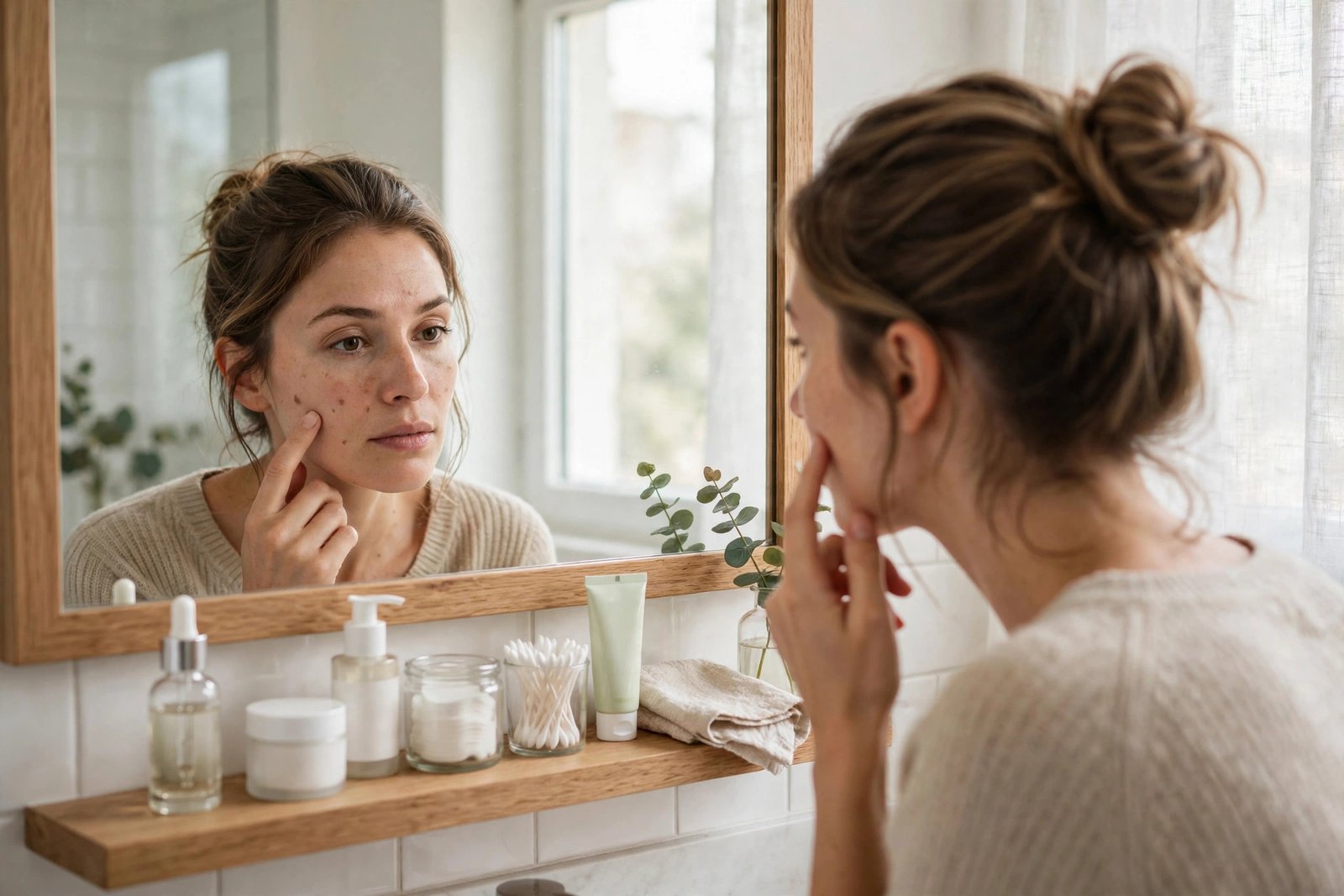
Teenage acne centres on the T-zone and is driven by puberty’s androgen surge. Adult-onset acne behaves differently: it clusters along the jawline, chin, and lower cheeks (sometimes called the “U-zone”), tends to be deeper and more inflammatory, and heals more slowly because cell turnover has already begun to decline by thirty. Research consistently shows adult acne affects a significant minority of women in their thirties, and British dermatologists report it as one of their most frequent consultations.
The NHS acne guidance confirms that acne is not just a teenage condition and outlines when over-the-counter approaches are enough versus when a GP appointment is warranted.
The most common triggers in your thirties
Hormonal shifts
The single biggest driver. Coming off the combined contraceptive pill — which many women take through their twenties — removes the synthetic hormones that were quietly suppressing acne, and breakouts often erupt two to three months later. Pregnancy, post-pregnancy hormone swings, perimenopause (which can begin in the late thirties), and conditions like PCOS all disrupt the androgen-oestrogen balance that keeps skin calm.
Chronic stress
Your thirties often bring career pressure, mortgages, young children, or all three at once. Stress raises cortisol, which increases oil production and inflammation — a direct pipeline to breakouts. If your spots flare during intense work periods and calm on holiday, stress is likely a major factor.
Skincare sabotage
Ironically, many thirty-somethings cause their own breakouts by over-treating their skin: layering multiple active ingredients (retinoids plus acids plus vitamin C), over-exfoliating, or using heavy anti-ageing creams that clog pores. More is not better — a disrupted skin barrier breaks out more, not less.
Diet and lifestyle factors
The evidence linking diet to acne is modest but real: high-glycaemic diets and, for some people, dairy appear to worsen breakouts. Poor sleep and smoking also impair skin healing. None of these alone causes acne, but together they lower your skin’s resilience.
What actually works: a dermatologist-approved routine
Forget the 10-step routines. An effective adult-acne regimen has four pillars:
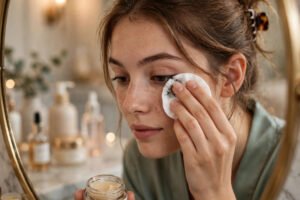
- Gentle cleanse, twice daily. A mild, pH-balanced cleanser removes excess oil without stripping. Harsh foaming washes trigger rebound oiliness.
- One proven active. Benzoyl peroxide (2.5–5%) kills acne bacteria; salicylic acid (a BHA) unclogs pores; adapalene (a retinoid, available OTC in the UK as Differin) normalises cell turnover. Pick one to start and give it 8–12 weeks.
- Lightweight moisturiser. Non-comedogenic gel or lotion formulas hydrate without clogging — skipping moisturiser makes oily skin worse.
- Daily SPF. Non-negotiable, especially when using actives that increase sun sensitivity, and essential for preventing post-acne marks.
Introduce actives gradually — every other night at first — and resist adding new products weekly. The British Association of Dermatologists’ acne information provides excellent detail on treatment options and realistic timelines.
When to see your GP or a dermatologist
Book a GP appointment if breakouts are painful, cystic, or nodular; if OTC treatments have failed after three months; if acne is leaving scars; or if you suspect a hormonal condition (irregular periods, excess facial hair, and acne together suggest PCOS). GPs can prescribe stronger retinoids, topical antibiotics, or hormonal treatments, and can refer you to dermatology for severe cases.
Be cautious with unregulated “hormone balancing” supplements sold online — many lack evidence and some interact with medications. And if persistent breakouts are affecting your confidence, that alone is reason enough to seek help; adult acne’s psychological impact is well documented and entirely valid.
Lifestyle adjustments that support clear skin
Manage what you can: prioritise 7–8 hours of sleep, find a genuine stress outlet (exercise is doubly effective — it lowers cortisol and improves circulation), change pillowcases twice weekly, clean your phone screen regularly, and keep hair products off your forehead and jawline. If you wear makeup daily, choose non-comedogenic formulas and remove them thoroughly every night. Small habits compound — and the same attention to what suits your skin applies when choosing colours that suit pale skin tones, since the right shades draw attention away from blemishes while they heal.
What your GP can actually do about hormonal acne
If over-the-counter treatments have not worked after three months, your GP has considerably stronger tools. For women, hormonal options include the combined contraceptive pill or co-cyprindiol, which reduce androgen-driven oil production — many women see dramatic improvement within three to four cycles. GPs can also prescribe topical retinoids (stronger than shop-bought adapalene), topical or oral antibiotics for inflammatory acne, and refer you to dermatology for severe, scarring, or treatment-resistant cases, where isotretinoin may be considered under specialist supervision.
Come prepared: note when breakouts started, their pattern (jawline? cyclical with periods?), what you have tried and for how long, and any related symptoms (irregular periods, excess hair growth, hair thinning — the PCOS cluster). Photos of flare-ups help, since skin often looks calmer on appointment day. If you suspect PCOS, ask directly about testing — blood tests for androgens and an ultrasound can confirm it, and diagnosis unlocks targeted treatment rather than endless generic acne creams. Do not accept “it’s just stress” if your gut says otherwise; you are entitled to ask for a dermatology referral, and persistence is reasonable when first-line treatments fail.
Conclusion
Sudden breakouts at 30 are frustrating but explainable — hormones, stress, and well-meaning skincare mistakes are the usual culprits, not poor hygiene or bad luck. The fix is refreshingly unglamorous: a simple routine built around one proven active, patience for the 8–12 weeks it takes to work, and a GP visit if things are severe or scarring. Most adult acne responds well to treatment once the trigger is identified. And remember that clear skin is a long game — consistency beats intensity every time. Stocking your routine affordably is easier than ever with quality options from affordable UK high-street beauty brands.
Frequently Asked Questions
Why am I getting acne at 30 when I never had it as a teenager?
Adult-onset acne is commonly triggered by hormonal changes (stopping contraception, pregnancy, perimenopause), chronic stress, or skincare over-treatment. It is a different condition from teenage acne and needs a different approach.
Does diet really cause breakouts in adults?
Diet is a contributing factor rather than a root cause. High-glycaemic foods and dairy worsen acne in some people, but hormones and genetics play the larger role.
How long does it take for acne treatment to work?
Most treatments need 8–12 weeks of consistent use before you can judge them. Skin cell turnover takes about a month at 30, so patience is essential — switching products every fortnight guarantees failure.
Should I stop wearing makeup if I have adult acne?
No — just choose non-comedogenic, oil-free formulas and remove them thoroughly every evening. Makeup does not cause acne; trapped makeup and dirty brushes can aggravate it.
Can stress alone cause a sudden breakout?
Stress raises cortisol, which boosts oil production and inflammation — enough to trigger breakouts in predisposed skin. If your spots track your stress levels, addressing the stress is part of treating the acne.