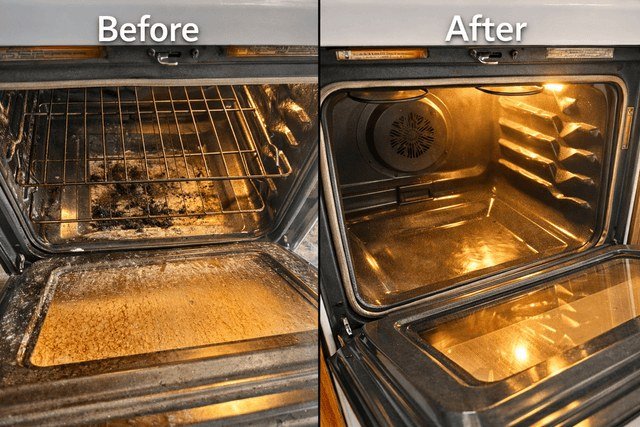
Oven cleaner is among the nastiest products under the kitchen sink — caustic, fume-belching, skin-burning stuff that works brilliantly and feels awful to use. But baked-on grease does surrender to gentler methods if you give them time. Here’s the best way to clean oven without harsh chemicals UK kitchens can manage — methods that actually work, not just Pinterest fantasies.
Set expectations: chemical-free cleaning trades speed for safety. Caustic cleaner works in 30 minutes; the methods below need hours (usually overnight). Plan accordingly — start the evening before you want a clean oven.
Best Way to Clean Oven Without Harsh Chemicals UK: The Bicarbonate Method
This is the gold standard of non-chemical oven cleaning, and it genuinely works on all but the most carbonised buildup:
- Remove oven racks, trays and the thermometer — they’ll be cleaned separately.
- Mix bicarbonate of soda with water into a thick, spreadable paste (roughly 3:1 bicarb to water).
- Wearing gloves, spread the paste generously over every interior surface — walls, floor, door glass, avoiding the heating elements and any exposed fan.
- Leave overnight (12 hours minimum). The alkaline paste slowly saponifies the grease — turning it into a soapy residue that wipes away.
- Wipe out the dried paste with a damp cloth, rinsing frequently. A plastic scraper (old credit card) shifts stubborn patches without scratching.
- Spray white vinegar over any remaining residue — it fizzes with the bicarb remnants and lifts the last film. Wipe clean.
- Buff the door glass with a final vinegar wipe for a streak-free finish.
Racks and Trays: The Bath Method
Oven racks defeat most in-oven methods because of their shape. Instead: lay them in the bath (on old towels to protect the enamel), cover with hot water, add a cup of bicarbonate of soda and a squirt of washing-up liquid, and soak overnight. In the morning, most grime wipes off; stubborn spots yield to a non-scratch scourer. For truly fossilised racks, a dishwasher tablet dissolved in the hot soak adds serious cleaning power — still far gentler than oven cleaner.
Steam: The Quick Maintenance Clean
For light to moderate soiling, steam is the fastest chemical-free method. Place a heatproof dish of water with lemon slices or a splash of vinegar in the oven, heat to 200°C for 30–45 minutes, then let it cool enough to wipe safely — the steam loosens grease dramatically. A handheld steam cleaner with a brush attachment does the same job more aggressively. This won’t shift year-old carbon, but as a monthly maintenance clean it prevents buildup ever reaching the bicarb-overnight stage. Little and often beats annual warfare.
The Door Glass: Seeing Through Again
Oven door glass gets a brown lacquer of baked grease that’s oddly resistant. The bicarb paste method works here too — apply thickly to the glass, leave overnight, then scrape gently with a razor blade scraper held flat (the kind sold for ceramic hobs, £5). The blade glides under the softened grease without scratching glass. Finish with vinegar for clarity. If your oven door has removable glass panels (many do — check the manual), taking them out makes the job ten times easier and lets you clean between the panes where drips migrate.
Self-Cleaning Ovens: Let the Machine Do It
If your oven has a pyrolytic self-cleaning function, use it — it heats to ~470°C and incinerates everything to ash you simply wipe away. It uses significant electricity and the oven locks for 2–3 hours, but it’s the ultimate chemical-free clean. Catalytic liners (the rough-textured panels) absorb grease continuously at normal cooking temperatures above 200°C — they need occasional high-heat “burn-off” cycles but no scrubbing. When buying a new oven, pyrolytic cleaning is worth the premium if you hate this job — Which?’s oven reviews compare cleaning functions across models.
Prevention: Keeping It Clean Longer
- Line the oven floor with a reusable oven liner (£8–£12) — catches drips, wipes clean, dishwasher-safe. (Don’t line a gas oven’s floor where it blocks the burner, and never use foil directly on oven floors — it can fuse to enamel.)
- Cover roasting food — lids and foil contain 90% of splatter.
- Wipe spills when the oven’s warm (not hot) — fresh spills wipe off; baked-on spills become archaeology.
- Monthly steam clean takes 10 minutes of effort and prevents the annual deep-clean ordeal.
What About Dishwasher Tablets and Other Hacks?
The internet loves oven-cleaning hacks; here’s an honest assessment. Dishwasher tablets rubbed on damp oven glass (the slightly abrasive tablet as a scrubber) genuinely work well on glass — it’s a legitimate trick. Salt and lemon pastes handle light grease but won’t touch carbonised buildup. Newspaper and vinegar is fine for a final polish but not a clean. And the “bowl of ammonia overnight” method you’ll see recommended? Ammonia is a harsh chemical with brutal fumes — it violates the entire premise of this guide. Stick with bicarb, vinegar, steam and patience; they’re boring, cheap and they work. The fanciest hack is no match for the basics done properly.
Oven Types: What Changes
A few adjustments by oven type. Gas ovens: never block the burner with liners or foil, and be gentle around the ignition — bicarb paste is fine on the enamel but keep it off gas outlets. Range cookers (Aga, Rayburn): the constant low heat actually keeps them cleaner, but the enamel needs non-abrasive care — bicarb paste is ideal, wire wool is forbidden. Microwave-combi ovens: clean like a microwave (steam with lemon water) for the microwave parts and like an oven for the convection parts. Whatever the type, always check the manual before using anything new on it — some enamel coatings and catalytic liners have specific don’ts, and the manual is the final authority.
Further Reading
Keep reading: our guides to meal prepping for the week and batch cooking healthy meals.
The Takeaway
Bicarb paste overnight for the deep clean, the bath soak for racks, steam for maintenance, razor scraper for the glass — and an oven liner plus covered roasting to keep it that way. No caustic fumes, no burned skin, no chemical smell in your food. Just patience, which — unlike oven cleaner — is free.