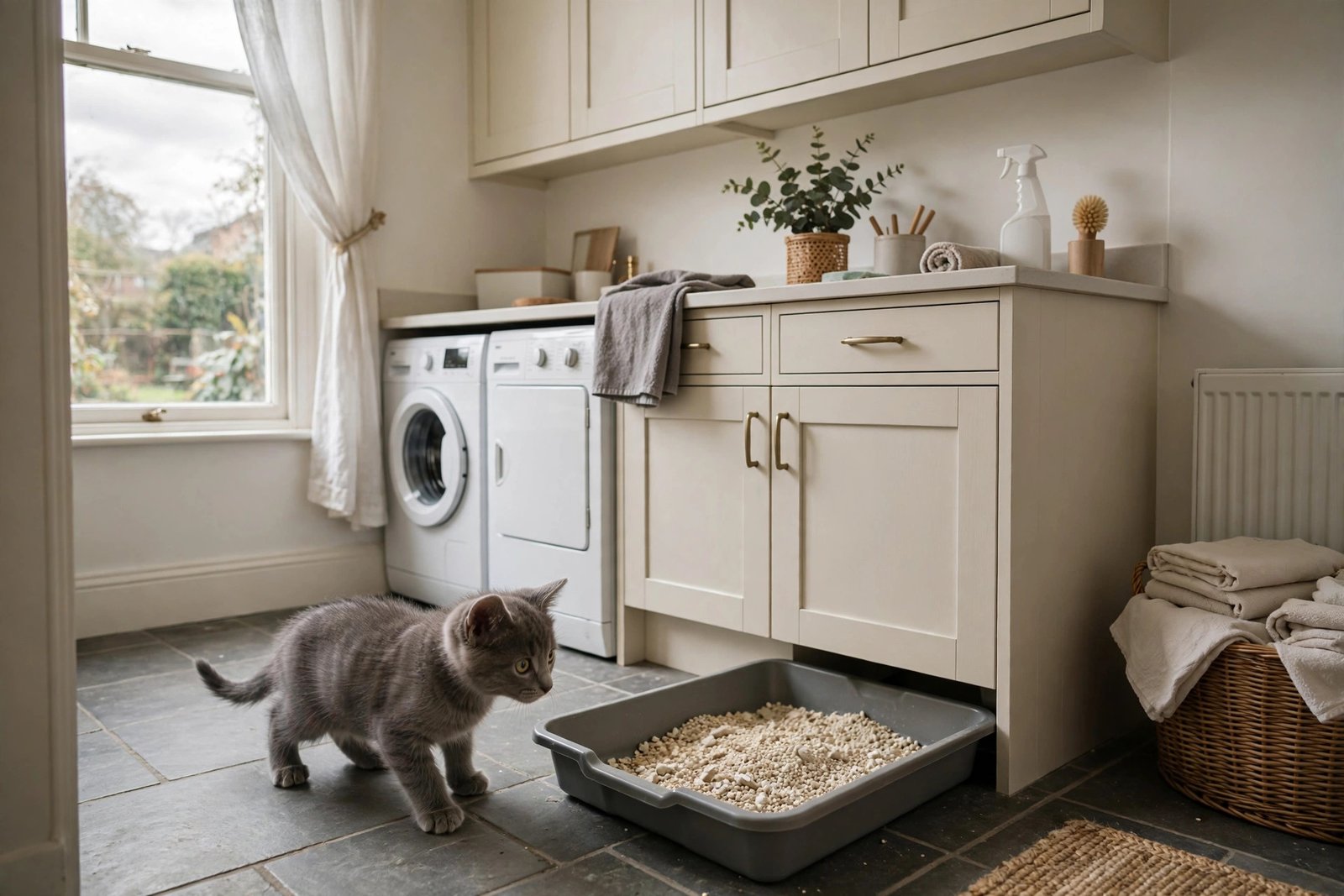
You have the kitten, the litter tray, the expensive odour-lock litter — and a kitten that regards the tray as modern art while preferring the corner behind the sofa. Learning how to litter train a kitten that refuses the box is one of the most frustrating early challenges of cat ownership, but it is almost always solvable. Kittens do not refuse trays out of spite. They refuse them because something about the tray, the litter, the location, or their health is putting them off — and once you identify the “something,” the fix is usually straightforward.
This guide covers why kittens reject litter boxes, the step-by-step retraining method behaviourists recommend, the tray setups that work, and the medical issues to rule out before assuming it is a behaviour problem.
First: rule out medical causes
Before any retraining, consider the vet — especially if a previously reliable kitten suddenly stops using the tray. Urinary tract infections, bladder inflammation and constipation can make tray use painful, and the kitten quickly associates the tray with that pain. Straining, crying, frequent tiny visits, or blood in urine are red flags that need a vet promptly, not a new litter brand.
Kittens from stressful backgrounds — recent rehoming, long journeys, multi-pet upheaval — may also have stress-related cystitis. If your kitten arrived recently, give them a small, quiet base room rather than the run of the house; a frightened kitten will not trek across a strange house to find a tray. Cats Protection’s kitten care guidance recommends confining new kittens to one room with everything they need until they are confidently using the tray and exploring.
The tray audit: what your kitten hates about the setup
Work through this checklist, because most refusals trace to one of these:
- Wrong litter: Kittens have texture preferences. Most prefer fine, unscented, sand-like clumping litter. Strongly perfumed litters, large pellets, or crystal litter put many kittens off. If you changed litter recently, change back.
- Wrong tray: Covered trays trap smells and ambush nervous kittens; open trays are better for training. The tray must be big enough — at least one and a half times the kitten’s length — with low sides for tiny kittens.
- Wrong location: Next to the washing machine, by a draughty back door, or beside the food bowl are all classic mistakes. Trays need quiet, accessible, low-traffic spots — and never next to food and water.
- Not clean enough: Scoop at least daily, full-change weekly. Some kittens refuse a tray with any waste in it. One tray per cat plus one spare is the rule.
- Too few trays: A single tray at the far end of the house is not a real option for a small kitten. Add temporary extra trays, including one near (not in) the accident spot.
The retraining method that works
Set up for success rather than punishing failure. Place the kitten in the tray after meals, after naps, and after play sessions — these are the moments nature calls. When they use it, reward calmly with praise or a tiny treat. If you catch them starting to go elsewhere, gently lift them to the tray without fuss or scolding; if they finish there, reward. Never rub their nose in accidents or shout — it teaches fear of you, not love of the tray.
Clean accident spots with an enzymatic pet cleaner, not ammonia-based products (ammonia smells like urine to cats and invites repeat offences). Temporarily make the favoured accident spot unattractive — a sheet of foil, or move a piece of furniture over it — while placing an extra tray nearby. Most kittens turn the corner within one to two weeks of consistent, calm retraining.
Litter choice and tray hygiene in detail
For a refuser, go back to basics: an open tray, fine unscented clumping litter, filled to about 5 centimetres. Avoid liners during training (kittens dislike the crinkly feel underfoot). Once the kitten is reliable for a month, you can experiment with alternatives gradually — but many cats are litter conservatives for life, and that is fine.
Hygiene extends beyond scooping. Wash the tray itself with hot water and mild unscented soap during the weekly full change; harsh disinfectants leave residues cats dislike. And remember that tray-adjacent mess — tracked litter, the occasional miss — is part of kitten life. Our guide to keeping your house clean when you live with pets has practical setups, from litter mats to washable runners, that keep the training phase bearable. For the inevitable accident on soft furnishings, our advice on removing stains from clothes and fabrics works on more than just laundry.
Multi-cat households and outdoor access
In multi-cat homes, tray guarding is a hidden cause of refusal: one cat ambushes another at the tray, and the victim starts going elsewhere. The fix is more trays in different locations — ideally on different floors — so no single cat can control access. Covered trays worsen guarding by limiting escape routes.
For kittens approaching outdoor access age (usually after neutering and vaccinations, around five to six months), do not assume the garden replaces the tray. Many cats prefer an indoor option in bad weather, and Blue Cross guidance on cat behaviour notes that outdoor toileting brings its own risks, from traffic to territorial disputes. Keep at least one indoor tray permanently.
When to seek professional help
If calm retraining has not worked after three to four weeks, or the kitten is distressed, escalate rather than struggle on. Your vet should rule out medical causes first — urinary issues, in particular, can be subtle in kittens. If the vet gives a clean bill of health, ask for a referral to an ABTC-registered feline behaviourist; persistent avoidance sometimes traces to anxiety, early-life trauma or inter-cat conflict that needs expert unpicking. What you should not do is punish harder, confine longer, or keep switching litters weekly — all three increase stress and entrench the problem. Most cases resolve with patience and method; the small minority that do not deserve professional eyes, not tougher love.
Conclusion
A kitten that refuses the litter box is not being difficult — they are giving you diagnostic information. Audit the tray, litter, location and cleanliness; rule out medical issues; confine and retrain calmly with rewards; and clean accidents properly. The overwhelming majority of kittens are reliably trained within a fortnight once the real obstacle is removed. Stay patient, stay consistent, and keep the enzymatic cleaner handy — this phase ends, and the sofa survives.
Frequently Asked Questions
At what age are kittens usually litter trained?
Most kittens learn from their mother by four to six weeks and arrive in new homes essentially trained. Persistent refusal beyond eight to ten weeks usually signals a setup, stress or medical issue worth investigating.
Should I use a covered or open litter tray?
Open trays are better, especially for training and nervous kittens. Covered trays trap odours and create ambush points in multi-cat homes; many cats simply prefer the ventilation and visibility of an open tray.
Why does my kitten use the tray for wee but not poo?
Some cats prefer separate areas for each — it is normal feline behaviour. Providing a second tray often solves it immediately.
Can stress cause litter box refusal?
Absolutely. House moves, new pets, new babies, building work and even rearranged furniture can trigger avoidance or stress cystitis. A quiet base room and Feliway-style pheromone diffusers help during transitions.