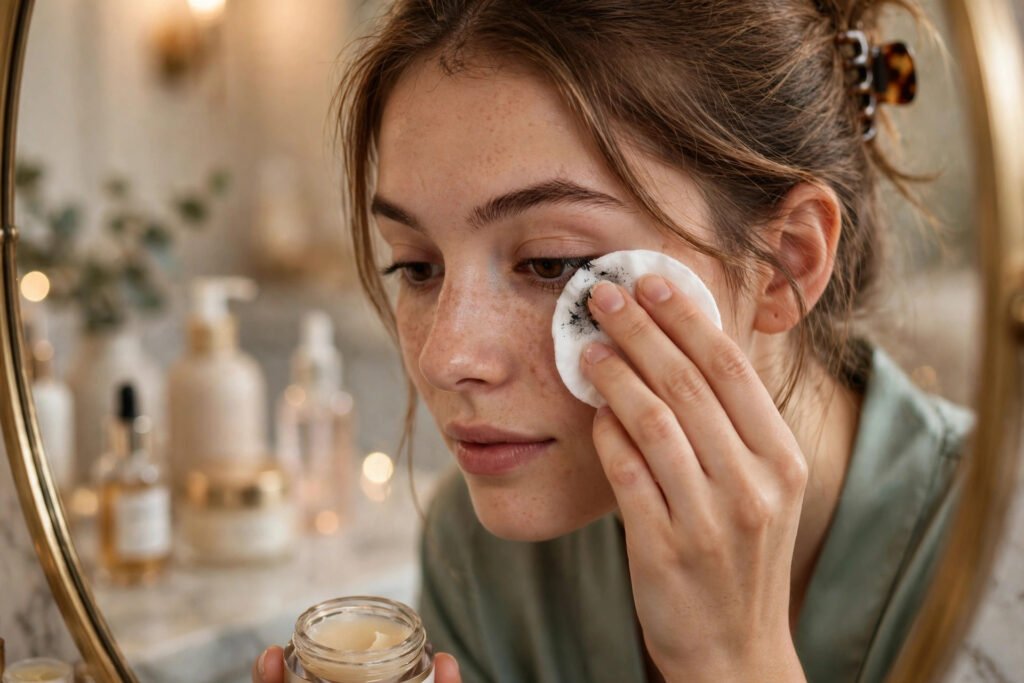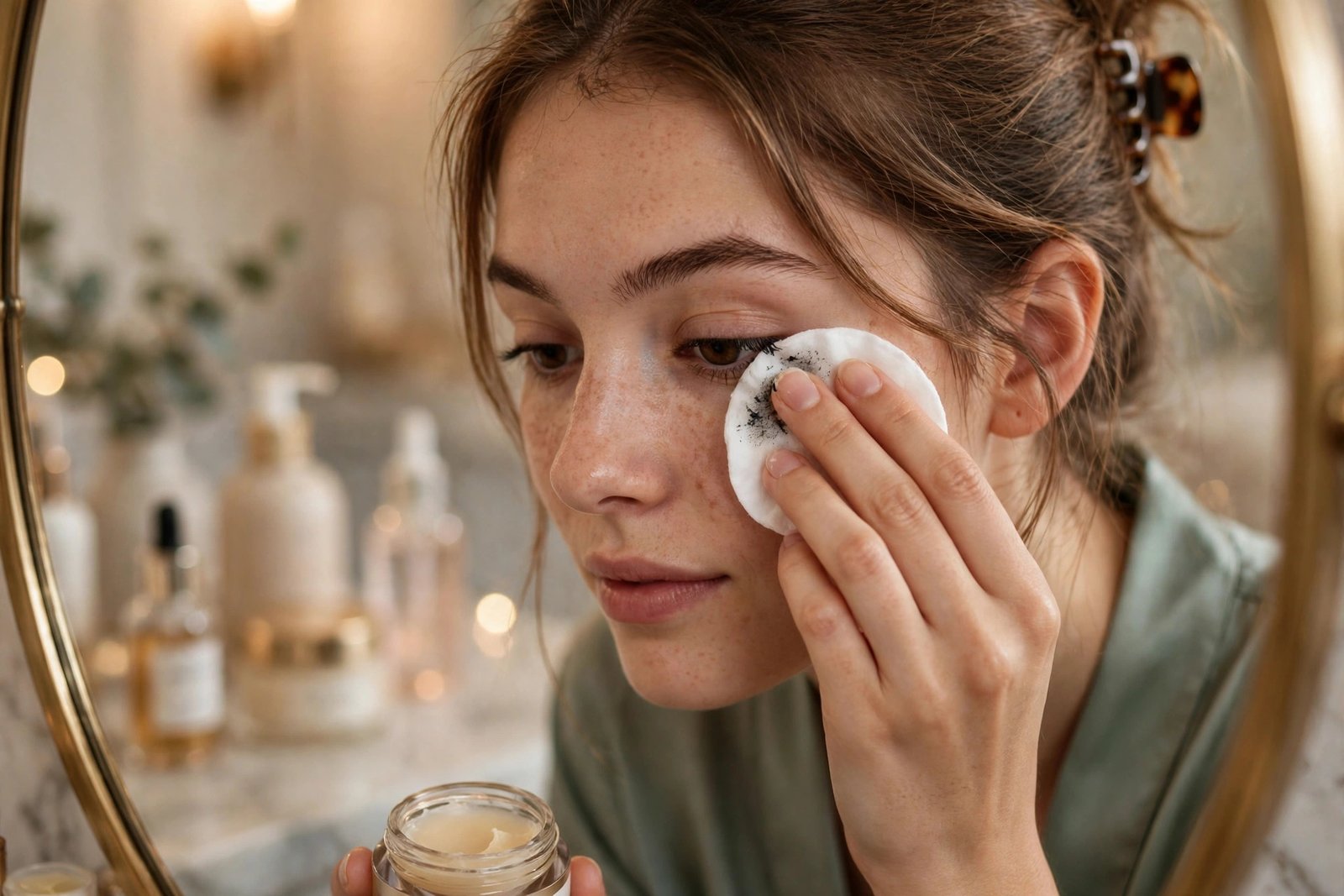
Waterproof mascara is a marvel of cosmetic chemistry — it survives tears, rain, sweaty commutes, and emotional finales. The price of that staying power becomes obvious at 11pm, when you are scrubbing at your lashes with a rough cotton pad and watching precious lashes come away with the pigment. Aggressive removal is one of the top causes of lash breakage and thinning, and it is entirely avoidable. The secret is not elbow grease; it is chemistry — dissolving the waterproof film gently before anything touches your lashes.
Why waterproof mascara is so hard to remove
Waterproof formulas work by wrapping each lash in water-repelling polymers and waxes — often including volatile silicones and film-formers that lock pigment in place. Regular water-based cleansers simply bead off this film, which is why splashing water and rubbing does nothing except irritate your eyes. You need an oil-based or dual-phase product that can break down those polymers first. Understanding this is the whole battle: once the film is dissolved, the mascara wipes away with almost no pressure at all.
This matters because eyelashes are far more fragile than scalp hair. Each lash follicle has a growth cycle of around three months, and a lash yanked out mid-cycle takes weeks to regrow. The NHS guidance on eyelid care notes that harsh rubbing around the eyes can also inflame the delicate eyelid margins — so gentle technique protects more than just your lashes.
The right removers: what actually works
Dual-phase (bi-phase) eye makeup removers
The classic blue-and-clear bottles. Shake to mix the oil and water phases, and they dissolve waterproof mascara faster than anything else. Look for ophthalmologist-tested formulas if you wear contact lenses or have sensitive eyes.
Cleansing oils and balms
Originally from Korean and Japanese skincare routines, these melt through waterproof mascara beautifully when massaged over dry skin. They double as a first cleanse for the whole face, making them economical as well as effective.
Micellar water (oil-infused versions)
Standard micellar water struggles with truly waterproof formulas, but oil-infused or “waterproof” micellar variants cope well and suit those who dislike the feel of oils.
What to avoid: harsh alcohol-based toners, bar soap, and baby wipes used with scrubbing motions. Baby wipes are convenient but the rubbing action they encourage is exactly what damages lashes over time.
The 60-second gentle removal method
Follow these steps and you will barely need to touch your lashes at all:
- Saturate, don’t scrub. Soak a soft cotton pad (or better, a reusable soft cloth) generously with your chosen remover.
- Press and hold. Place the pad over your closed eye and hold for 20–30 seconds. This dwell time lets the oils dissolve the waterproof film — it is the most important step.
- Wipe downwards gently. Sweep the pad down the lashes in one soft motion. Repeat with a fresh section of the pad rather than rubbing back and forth.
- Clean up the residue. Use a cotton bud dipped in remover along the lash line for stubborn remnants, especially in the outer corners.
- Follow with a proper cleanse. Remove all traces of oil-based product with your normal facial cleanser so pores do not clog overnight.
The whole process should take about a minute per eye and involve zero tugging. If you are pressing hard enough to move the skin around your eye, you are pressing too hard.
Protecting lash health long-term
Removal technique is only half the story. Give your lashes regular breaks from waterproof formulas — save them for weddings, beach days, and tearjerker cinema trips, and wear a regular or tubing mascara day to day. Tubing mascaras (which form water-soluble “tubes” around each lash) offer impressive staying power but slide off with warm water alone, making them the kindest option for fragile lashes.
A lash conditioner or a tiny amount of castor oil applied at night can help keep lashes supple, though evidence is anecdotal rather than clinical. What is well established is that diet, hydration, and not sleeping in makeup all affect lash condition. Be wary of unregulated lash growth serums sold online — some contain prostaglandin analogues with real side effects, and the UK’s cosmetic safety rules exist precisely because eye-area products deserve caution. For broader eye-area care, the principles overlap with choosing shades that flatter you, as covered in what colours suit pale skin tones — healthy lashes frame any look better.
Common mistakes that cost you lashes
- The dry cotton pad scrub. Rubbing with a dry or barely-damp pad creates maximum friction with minimum dissolving power — the worst of both worlds.
- Using the same pad for both eyes repeatedly. Reusing a dirty pad just redistributes dissolved mascara and forces harder rubbing.
- Pulling at clumps. If mascara has clumped, dissolve more, do not pick. Picking at clumps pulls out the lashes underneath.
- Skipping the second cleanse. Leaving oil-based remover on overnight can cause milia (tiny white bumps) and morning puffiness.
- Pumping the mascara wand. This pushes air into the tube, drying the formula out and making it harder to remove — and a breeding ground for bacteria.
Matching the remover to your eyes
Not all eyes tolerate the same formulas. If you wear contact lenses, choose an oil-free dual-phase remover labelled safe for lens wearers, and remove your lenses before you start — oils can coat lenses and blur vision for hours. For sensitive or allergy-prone eyes, fragrance-free, ophthalmologist-tested formulas are worth the small premium; avoid anything with denatured alcohol high on the ingredients list. The College of Optometrists provides guidance on keeping the eye area healthy when using cosmetics regularly. If you have blepharitis or frequent styes, be extra gentle along the lash line and consider a dedicated eyelid cleanser (available at UK pharmacies) as your second step — these are formulated to clean the lid margins without irritation. Oily eyelids, meanwhile, actually benefit from a slightly more thorough cleanse, since residual oil breaks down future mascara and causes smudging. Whatever your eye type, the press-and-hold technique stays the same — only the product changes.
Conclusion
Removing waterproof mascara without damaging your lashes is simple once you stop fighting the formula and start dissolving it. Saturate a soft pad with a dual-phase remover or cleansing oil, press and hold for 20–30 seconds, then sweep gently downwards — no scrubbing, no tugging, no lost lashes. Reserve waterproof formulas for occasions that truly need them, consider kinder tubing mascaras for daily wear, and always finish with a proper cleanse. Your lashes will stay fuller, longer, and healthier, and bedtime will stop feeling like a battle. For the rest of your routine, investing in quality staples from affordable UK high-street beauty brands keeps the whole regimen budget-friendly.
Frequently Asked Questions
Can I use coconut oil to remove waterproof mascara?
Yes — coconut oil dissolves waterproof mascara effectively. Use a small amount on a soft pad, then cleanse thoroughly afterwards, as residual oil can blur vision temporarily and clog pores if left on.
Is it bad to sleep in waterproof mascara occasionally?
Once in a blue moon will not ruin your lashes, but regular sleeping in mascara dries lashes out, encourages breakage, and risks eye infections. Always remove it when you can.
Why do my eyes sting when removing mascara?
Stinging usually means the remover is getting into the eye itself or the formula is too harsh for you. Try an ophthalmologist-tested, fragrance-free remover, keep eyes closed during removal, and rinse with lukewarm water if irritation persists.
Are makeup remover wipes bad for lashes?
The wipes themselves are not the enemy — the scrubbing motion they encourage is. If you use wipes, hold rather than rub, and follow with a proper cleanser.
How long does it take for pulled-out lashes to regrow?
Eyelashes typically take 6–12 weeks to fully regrow after being pulled out, depending on where they were in the growth cycle. Consistent gentle removal prevents the problem in the first place.