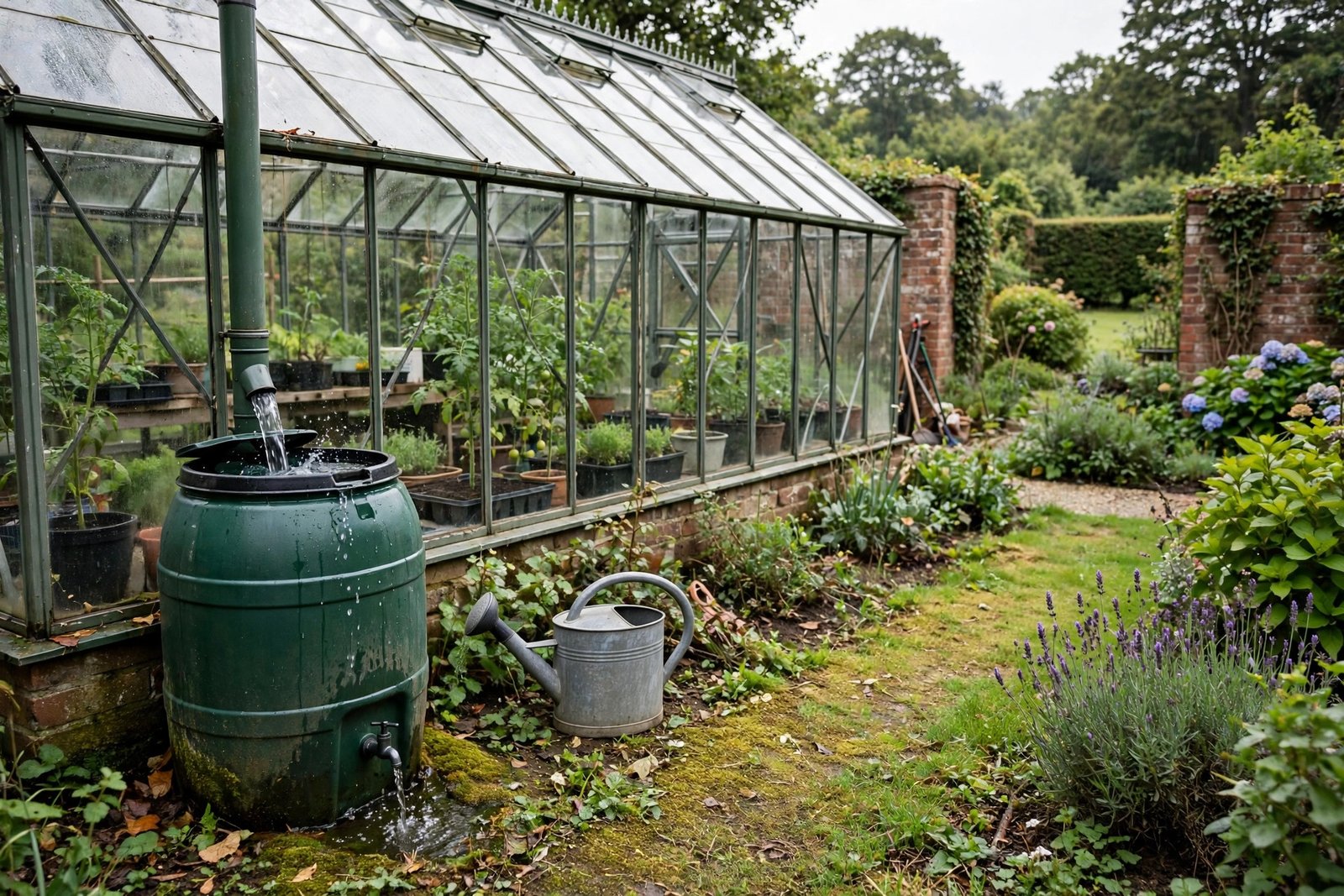
Every serious gardener collects rainwater, and every water butt in Britain is a quiet vote in a long-running debate: is rainwater actually better for plants than tap water, or is it gardening folklore? The answer is genuinely yes — with qualifications that matter. Rainwater and tap water differ in acidity, mineral content, chlorine and temperature, and those differences affect everything from blueberries to houseplants. If you are asking is rainwater better for plants than tap water in Britain, here is the chemistry, the practical differences, and when it actually matters versus when the hosepipe is fine.
The chemistry: what is different
Rainwater is naturally slightly acidic (pH ~5.6, from dissolved CO₂) — close to what most plants evolved with — and contains dissolved nitrogen and oxygen picked up falling through the air. It is soft: virtually no calcium or magnesium. Tap water in Britain varies by region: soft in the north and west (Scotland, Wales, Cornwall), hard to very hard in the chalk south-east (London, Kent, Essex). Hard tap water is alkaline (pH 7.5–8.5) and loaded with calcium carbonate — the white limescale in your kettle. UK tap water also contains chlorine or chloramine (disinfectants) and sometimes fluoride.
For most garden plants in most of Britain, these differences are minor — plants are adaptable, and tap water grows perfectly good gardens. The differences matter at the margins, and the margins are where gardeners live: acid-loving plants (blueberries, azaleas, camellias, rhododendrons) suffer visibly in hard-water areas, with yellowing leaves (lime-induced chlorosis) as calcium locks away iron; seedlings and houseplants in small pots accumulate salts faster; ericaceous compost in containers gets progressively alkalised by hard tap water, undoing the compost’s purpose within a season. The RHS recommends rainwater for acid-lovers and container plants in hard-water areas specifically.
When rainwater wins (and when it does not matter)
Rainwater wins clearly for: blueberries and all ericaceous plants in hard-water areas (the single biggest difference — hard tap water will yellow a blueberry within months); houseplants (no salt build-up, no chlorine); seedlings (gentler, and at the right temperature); ponds and water features (no chlorine to harm wildlife or encourage algae — top up ponds with rainwater always); and everything during hosepipe bans, when the butt keeps you gardening legally. Tap water is fine for: established garden beds in soft-water areas (functionally identical to rain); lawns; most vegetables; and anything where you are watering heavily — the volume matters more than the source.
Chlorine deserves a note: it dissipates from standing water within 24 hours, so filling the watering can the night before removes most of it. Chloramine (used by some UK water companies) does not dissipate — but its concentrations are low enough that garden impact is negligible; only sensitive aquatic setups need to worry. Temperature matters more than chemistry for most plants: ice-cold tap water on a hot day shocks roots — rainwater from the butt is ambient temperature, another quiet advantage. For the water-efficiency perspective, Waterwise, the UK water-efficiency body, champions rainwater harvesting.
The water butt setup
A standard 200-litre butt on a downpipe diverter (£30–£60) is the entry point; link multiple butts for serious capacity. Keep the lid on (mosquitoes, algae, drowned wildlife), raise the butt on a stand for tap pressure, and clean it annually — sludge accumulates. In a typical British year, a single butt refills many times over; the constraint is storage, not rainfall. Even flat-dwellers can harvest: a balcony diverter or simply buckets under a downspout during storms.
Hard water areas: the special case
If you live on chalk — London, the Chilterns, Kent, the Yorkshire Wolds — hard water shapes your gardening. Limescale on leaves (white deposits, especially on houseplants) is cosmetic but unsightly; wipe leaves or switch to rainwater. Soil alkalisation is the real issue: years of hard-water irrigation raise container compost pH measurably — repot ericaceous plants annually and top-dress with fresh ericaceous compost. Choose plants to suit: lavender, clematis, lilac and most Mediterranean herbs love chalky conditions — the answer to hard water is partly just planting accordingly, as our small garden plant guide emphasises.
For seed compost and propagation in hard-water areas, rainwater is measurably better — seedlings are sensitive to both pH and salts, and the first weeks set the trajectory. Keep one butt or even a few stored containers dedicated to “precious” water: seedlings, houseplants, blueberries. Use tap water freely for everything else. This two-tier system gives you 90% of rainwater’s benefits with none of the guilt about using the tap. And if you are building the beds these plants grow in, our raised bed guide covers the soil side of the equation.
Greywater: the other free water
Rainwater is not the only alternative to the tap. Greywater — bath, shower and washing-up water — is legal to use on UK gardens and effectively free. The rules are simple: use it on ornamental beds and lawns, not on edible crops you eat raw (root vegetables and salads — a sensible food-safety precaution); use eco-friendly, low-salt products (conventional detergents harm soil life over time); and apply it promptly — stored greywater goes stagnant within 24 hours. A bath holds 80 litres: bucketed onto the garden, that is a serious watering session that never touched the mains.
Greywater will not replace rainwater for the precious plants — it is more alkaline and saltier than rain — but for thirsty ornamentals, hedges and lawns in a dry summer, it is excellent. Combined with a water butt, the average household can cut garden mains use dramatically: rainwater for the blueberries and houseplants, greywater for the borders, tap water only for the rest. In a country where hosepipe bans are becoming routine, every litre you do not draw from the mains is resilience — and the garden will not know the difference.
The bottom line
Rainwater is better for plants than tap water — slightly acidic, soft, chlorine-free and ambient-temperature — and the difference matters most for acid-lovers in hard-water areas, houseplants, seedlings and ponds. For established beds in soft-water Britain, the tap is functionally identical and nothing to feel guilty about. Get a water butt (£30–£60), use rainwater for the precious plants, tap water for the rest, and let the hosepipe-ban summers remind you why the butt was worth it.
Frequently Asked Questions
Is rainwater better than tap water for plants?
Yes — naturally slightly acidic, soft, and free of chlorine. The difference matters most for acid-loving plants in hard-water areas, houseplants, seedlings and ponds; for established beds in soft-water areas, tap water is fine.
Why do my blueberries have yellow leaves?
Likely lime-induced chlorosis from hard tap water — calcium locks away iron. Switch to rainwater, repot in fresh ericaceous compost, and consider a sequestered iron feed.
Does chlorine in tap water harm plants?
Minimally at UK mains concentrations — and chlorine dissipates from standing water within 24 hours. Fill watering cans the night before if it concerns you; chloramine persists but garden impact is negligible.
Is collecting rainwater legal in the UK?
Yes — harvesting rainwater from your own roof is completely legal. Water butts on downpipes are the standard setup; larger harvesting systems need no permission for domestic garden use.
How do I keep a water butt clean?
Keep the lid on (prevents mosquitoes, algae and wildlife drownings), raise on a stand for pressure, and empty and scrub annually — sludge builds up and can block taps.