
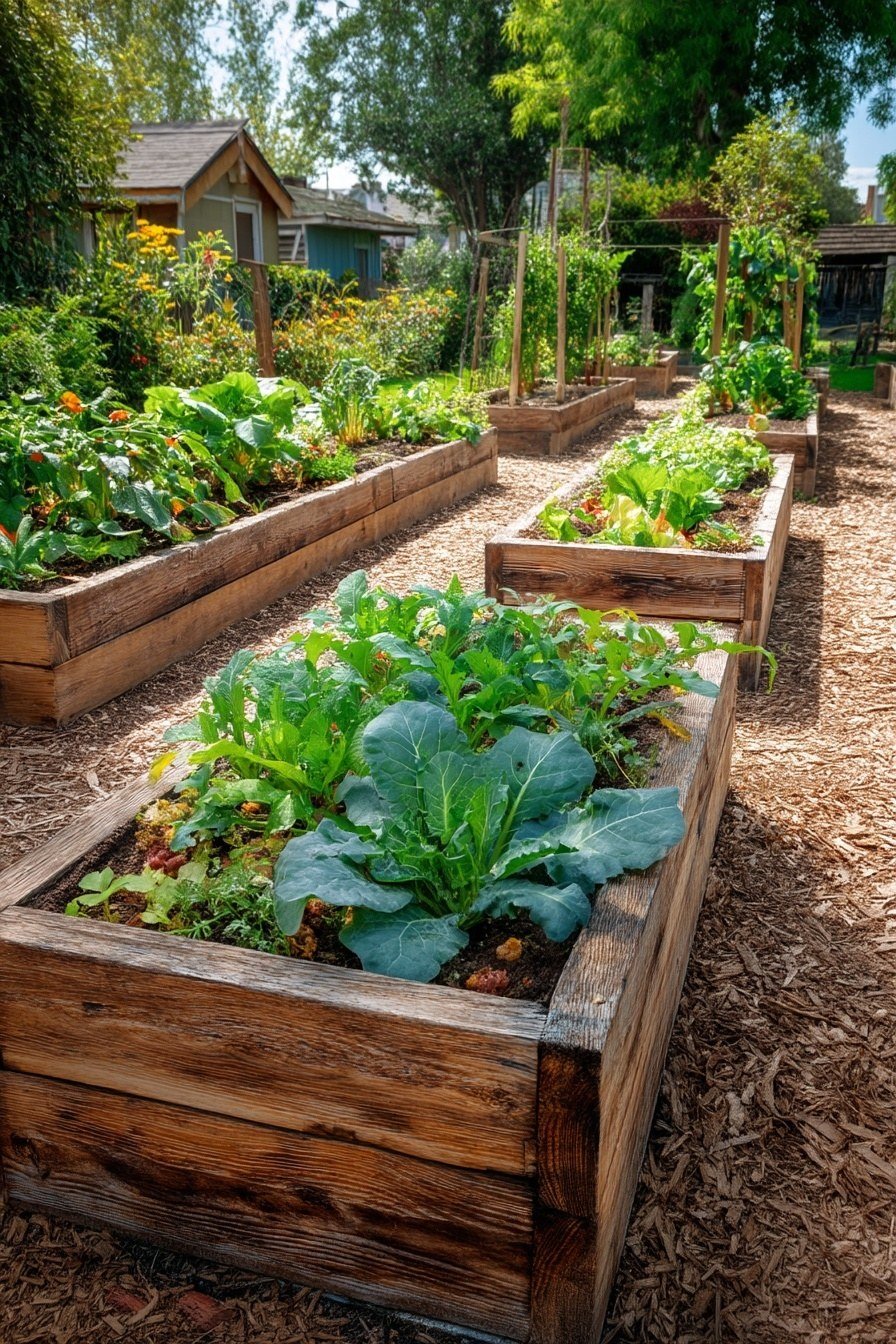
Raised beds are the cheat code of vegetable growing: better drainage, warmer soil, fewer weeds, no bending double — and they turn even a paved yard into a productive garden. Building one is a satisfying weekend project needing basic tools and about £50–£100 in materials. Here’s how to build a raised garden bed UK gardens will thrive in, from timber selection to the soil mix that makes it all work.
Why raised beds work so well in Britain: our native soil is often heavy clay or thin and stony, and our weather is wet. A raised bed lets you choose your soil rather than inherit it, drains freely in winter downpours, and warms up weeks earlier in spring — meaning earlier sowing and longer seasons.
How to Build a Raised Garden Bed UK: Size and Position
Get the dimensions right and everything else follows:
- Width: maximum 1.2m (4ft). You must reach the centre from either side without stepping on the soil — compacted soil is dead soil. For beds against a wall, 60–80cm max.
- Length: whatever fits, but 2.4m is convenient (matches standard timber lengths, no waste).
- Height: 20–30cm is plenty for most veg; 40cm+ if you want to garden standing or have back problems (but you’ll need much more soil).
- Position: maximum sun (south-facing ideally), near a water source, and not under overhanging trees (root competition and shade).
Materials: What to Build With
Timber sleepers and scaffolding boards — the classic
Untreated scaffolding boards (2.4m x 225mm x 35mm, £10–£15 each) are the sweet spot: cheap, the right dimensions, and long-lasting enough (5–8 years) for the price. Railway sleepers look superb and last 10–15 years but are heavy, expensive (£20–£35 each) and hard to cut — and avoid old creosote-treated ones for veg beds (use new untreated oak or softwood sleepers). Whatever timber you choose, never use old treated/painted wood of unknown origin for food growing — old treatments contain chemicals you don’t want near carrots.
Alternatives
Brick or block beds are permanent and attractive but cost more and need basic bricklaying. Corrugated metal beds are trendy, durable and quick to assemble from kits (£60–£120). Composite decking boards offcuts make rot-proof beds. And no-dig “lasagne” beds — cardboard on grass, compost on top, contained by a simple timber edge — are the lowest-effort start of all.
Building It: Step by Step
- Mark out and level the site. Strim or mow the grass short; remove major weeds. Level matters — a bed that rocks looks terrible and stresses joints.
- Cut timbers to length (two long sides, two short). Pre-drill to prevent splitting.
- Assemble the frame with 75–100mm exterior screws, two per corner joint. For beds over 2m, add a central cross-brace to stop the sides bowing out under soil pressure.
- Position and level the frame on the site. Dig the frame 2–3cm into the ground for stability.
- Line the inside with permeable landscape fabric (not plastic — drainage matters) to hold soil while letting water through, and to slow timber rot.
- Fill with the right mix (see below) — this is the most important step. Water thoroughly to settle, then top up.
The Soil Mix: What Actually Goes In
Don’t fill beds with dug-out garden soil — it compacts, weeds and disappoints. The proven mix: 60% good-quality topsoil (screened, from a reputable supplier — £50–£80 per tonne delivered, and a 2.4m x 1.2m x 30cm bed needs about a tonne), 30% well-rotted organic matter (manure, garden compost, mushroom compost), and 10% horticultural grit or perlite for drainage. Mix thoroughly as you fill. Top up annually with compost — soil levels sink as organic matter breaks down, which is normal and healthy.
For the no-dig approach, fill with pure compost over cardboard — it works brilliantly for the first seasons. The RHS soil guides have the science if you want to go deeper.
What to Grow First
First-year wins that build confidence: cut-and-come-again salads (sow direct, harvest in weeks), radishes (30 days seed-to-plate), courgettes (one plant = gluts), French beans, tomatoes (cherry types are foolproof), and herbs (perennial, plant once). Avoid space-hungry failures for year one: sweetcorn (needs blocks for pollination), asparagus (3-year wait), and anything the slugs love without a slug plan. Our small-garden plants guide has more edible picks.
Maintenance: Keeping Beds Productive
- Water deeply, less often — raised beds drain fast and dry quicker than ground soil. Mulch 5cm deep to lock moisture in.
- Feed annually with compost top-dressing; hungry crops (tomatoes, courgettes) get liquid feed in season.
- Rotate crops yearly (legumes → brassicas → roots is the classic rotation) to prevent soil-borne disease buildup.
- Refresh timber with linseed oil every couple of years; replace boards as they fail (scaffold-board beds are cheap to rebuild).
- Cover bare soil over winter with compost or green manures — bare soil loses nutrients and structure.
Common Mistakes to Avoid
- Too wide: the 1.2m rule exists for a reason — a bed you can’t reach across becomes a bed you stand in, compacting the soil you so carefully built.
- Skipping the lining: unlined timber rots in 2–3 years; lined, it lasts 5–8. An hour with landscape fabric doubles the bed’s life.
- Cheap compost only: filling entirely with multi-purpose compost seems economical, but it slumps, holds too much water and lacks structure. The topsoil/compost/grit mix is worth the money.
- No cross-brace on long beds: 2.4m+ sides bow outward under wet soil pressure within a season. One central brace prevents it.
- Forgetting water access: raised beds dry fast — site them near a tap or butt, and mulch from day one.
- Overfilling with soil then planting immediately: water thoroughly and let the mix settle for a few days first, then top up. Fresh-filled beds sink 5–10cm.
Get these right and the bed itself disappears into the background — all you’ll notice is how well everything grows in it.
Further Reading
You might also find our guide to laying a new lawn from turf useful.
The Takeaway
1.2m wide max, scaffold boards screwed solid, lined, filled with the 60/30/10 soil mix, positioned in full sun. Start with salads and courgettes, mulch everything, and rotate yearly. A weekend’s building buys a decade of the best-tasting food you’ll eat — grown exactly where you want it.







One thought on “How to Build a Raised Garden Bed UK”