You planted the bulbs, you sowed the sweetcorn, you nurtured the strawberries to perfect ripeness — and the squirrels harvested everything the night before you planned to. Grey squirrels are among the cleverest, most persistent garden pests in Britain: they dig up bulbs, strip fruit, gnaw bark, steal bird food and treat every deterrent as a puzzle to be solved by Tuesday. If you are asking how do I keep squirrels out of my vegetable garden in Britain, here is the realistic playbook — what actually works, what the law says, and how to think about an opponent that outsmarts most defences eventually.
Know your opponent (and the law)
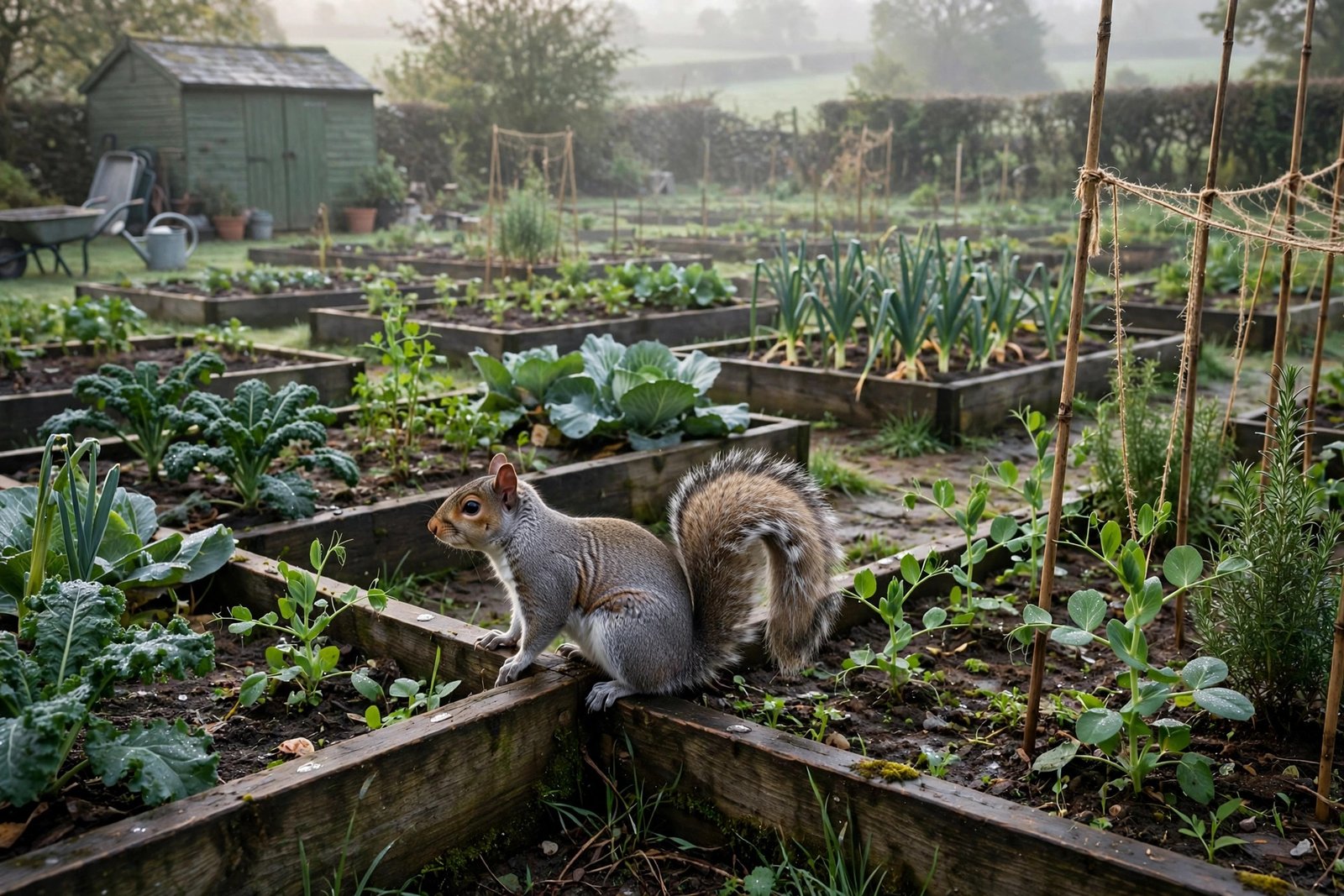
The culprit is the grey squirrel — introduced from North America in the 19th century, now dominant across England and Wales. (Red squirrels, the native species, are protected and rarely garden pests; if you are lucky enough to have reds, protect them.) Greys are intelligent, adaptable, excellent climbers and jumpers (they can leap 2+ metres), and they learn: a deterrent that works in May is a toy by July. This matters because it rules out single-solution thinking — squirrel control is layered defence, not a magic product.
The law matters here. Under the Wildlife and Countryside Act 1981, it is illegal to release a trapped grey squirrel — any grey you trap must be humanely dispatched, not relocated (relocation spreads the problem and is an offence). Live-capture traps must be checked at least daily, and trapped animals must not suffer. Shooting requires the landowner’s permission and must be humane and safe — not an option in most urban gardens. Poisoning is heavily restricted and dangerous to other wildlife. In practice, this means exclusion and deterrence are the home gardener’s tools; lethal control is for professionals and rural situations. The RSPCA provides guidance on humane, legal wildlife deterrence.
Exclusion: the only reliable defence
Against a determined squirrel, physical barriers win and everything else is supporting fire. Fruit cages — walk-in or low frames covered in wire mesh or butterfly netting — are the gold standard for strawberries, blueberries and currants; squirrels chew through plastic netting, so use wire mesh (25mm or smaller) for anything valuable. Cloches and mesh covers protect individual rows of seedlings and salads. Bulb protection: plant bulbs under a layer of chicken wire laid flat just below the surface — shoots grow through, squirrels cannot dig through.
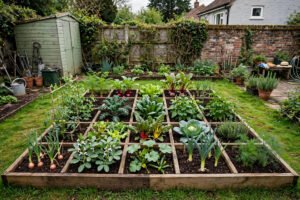
Sweetcorn deserves special mention as the squirrel’s favourite crop: the only reliable protection is a full wire-mesh cage over the block, or individual wire collars. Tree guards (spiral plastic or wire mesh) protect young fruit trees from bark-stripping. Fencing must be buried 30cm deep (they dig) and ideally floppy-topped or overhanging (they climb) — standard garden fencing will not stop a squirrel; think of it as slowing them, not stopping them. Our guide to raised beds pairs well with mesh covers — a framed bed is a caged bed waiting to happen. The Woodland Trust discusses grey squirrel ecology in the wider landscape.
Protecting containers and pots
Pots are squirrel playgrounds — easy digging, tasty bulbs. Cover the soil surface with wire mesh cut to fit, a layer of prickly prunings (holly, berberis), or large stones. Move the most tempting pots (strawberries, newly planted bulbs) into a greenhouse or cold frame during vulnerable periods. A pot of bulbs is a squirrel’s advent calendar; treat it accordingly.
Deterrents: the supporting cast
No deterrent works alone, but layered deterrents raise the cost of raiding your garden until easier pickings elsewhere win. Taste deterrents: chilli-based sprays on plants (reapply after rain), lion dung pellets (the zoo-scat product sold in garden centres — the smell of a predator genuinely unsettles them). Motion-activated sprinklers: effective and entertaining — a sudden jet of water startles without harming, and squirrels learn to avoid the zone. Ultrasonic devices: the evidence is weak; squirrels habituate quickly. Save your money.
Remove attractants: the unglamorous half of deterrence. Clear fallen fruit promptly, secure compost bins (they love them), use squirrel-proof bird feeders (weight-activated or caged — standard feeders are squirrel restaurants), and do not deliberately feed them — feeding trains a local population to treat your garden as territory. Distraction feeding (feeding squirrels away from crops) is debated: it can work short-term but usually just supports a larger local population. Predator presence: a dog with garden access is the most effective deterrent known — not every garden’s solution, but devastatingly effective where available.
Acceptance: the long game
Here is the mature gardener’s perspective: you will not achieve zero squirrels. Urban and suburban Britain has a permanent grey squirrel population, and your garden exists inside it. The goal is acceptable losses — protecting the high-value crops (fruit, sweetcorn, bulbs) with proper exclusion while accepting that some losses to the lower-value stuff are the tax you pay for gardening in a living landscape. Gardeners who cage the strawberries and shrug at the stolen sunflower seeds are happier than gardeners at war with nature.
And keep perspective on the ecological picture: grey squirrels are a genuine conservation problem (they outcompete reds and damage woodland), which is why control programmes exist — but your vegetable garden is not the front line of that war. Exclude, deter, accept, and put the energy into growing more. A garden that produces abundantly can afford to lose a little. For choosing what to grow in the space you successfully defend, see our best plants for a small UK garden.
The bottom line
Keeping squirrels out of a British vegetable garden means: wire-mesh exclusion (fruit cages, cloches, bulb mesh) as the core defence, taste and motion deterrents as backup, attractant removal as the unglamorous essential, and an understanding of the law (never release trapped greys). No single product wins; layered defence does. Protect the valuable crops properly, accept small losses gracefully, and remember — the squirrel is not evil. It is just better at this than you are. For now. And take comfort in one final fact: every gardener in Britain is fighting the same battle, which means the collective wisdom — on forums, allotment sites and over garden fences — is deep. Ask your neighbours what worked for them; the local squirrel population’s weaknesses are best known locally.
Frequently Asked Questions
What is the best squirrel deterrent for vegetable gardens?
Physical exclusion — wire-mesh fruit cages, cloches and bulb mesh. Squirrels defeat most repellents within weeks, but they cannot chew through proper wire mesh. Deterrents (chilli spray, sprinklers) work best as backup.
Is it illegal to trap grey squirrels in the UK?
Trapping is legal, but releasing a trapped grey squirrel is illegal under the Wildlife and Countryside Act 1981 — trapped greys must be humanely dispatched. Traps must be checked daily and not cause suffering.
Do ultrasonic squirrel repellers work?
Poorly — the evidence is weak and squirrels habituate quickly. Motion-activated sprinklers and taste deterrents are more effective, but exclusion beats all deterrents.
How do I stop squirrels digging up bulbs?
Plant bulbs under a flat layer of chicken wire just below the surface — shoots grow through, squirrels cannot dig through. Or cover pots with wire mesh, prickly prunings or stones.
Will feeding squirrels keep them away from my crops?
Usually not — distraction feeding tends to support a larger local population that still raids crops. Remove attractants (fallen fruit, unsecured feeders) instead of adding them.