Ask ten British dog owners how often they bathe their dog and you will get ten different answers — from “every Sunday without fail” to “only when he rolls in something unspeakable on the village green.” The truth is that over-bathing is one of the most common grooming mistakes in the UK: wash too often with the wrong products and you strip the natural oils that keep your dog’s skin healthy, leaving them itchy, flaky, and miserable. So how do you find the sweet spot between a pongy pooch and a dried-out coat?
The short answer: most dogs need a bath every 4–8 weeks
For the average healthy dog, bathing once a month to once every two months is plenty. Dogs’ skin has a different pH from human skin and produces oils (sebum) that protect against dryness, bacteria, and the elements. Washing too frequently strips these oils faster than the skin can replace them, which ironically leads to more itching, dandruff-like flaking, and even a stronger “doggy” smell as the skin overcompensates.
That said, the right frequency depends heavily on breed, coat type, lifestyle, and skin health. A mud-loving Labrador who swims in the local pond weekly will need more baths than a short-haired Whippet who mostly lounges on the sofa. The Kennel Club’s bathing guidance emphasises tailoring the routine to the individual dog rather than following a rigid schedule.
How coat type changes the bathing schedule
Short, smooth coats (Labradors, Boxers, Beagles)
Every 6–8 weeks is usually enough. These coats are naturally low-maintenance; regular brushing removes loose hair and dirt far more effectively than frequent washing.
Long or double coats (Golden Retrievers, Collies, Huskies)
Every 4–6 weeks, always with thorough brushing before and after. Never bathe a matted double coat — water tightens mats into felt-like clumps that can only be cut out.
Oily or wrinkle-prone breeds (Basset Hounds, Bulldogs, Shar-Peis)
These dogs genuinely need more frequent washing — every 2–4 weeks — because skin folds trap moisture and bacteria. Use a gentle, vet-approved shampoo and dry folds thoroughly afterwards.
Hairless breeds (Chinese Crested)
Weekly or fortnightly baths are normal here, since there is no coat to protect the skin — but moisturising after bathing is essential.
Choosing a shampoo that will not dry the skin
This is where most owners go wrong. Human shampoo — even baby shampoo — is formulated for human skin pH (around 5.5), while dog skin sits closer to neutral (6.5–7.5). Using human products regularly disrupts the skin’s acid mantle and causes dryness. Always choose a shampoo made specifically for dogs, and for regular bathing pick one labelled “gentle,” “oatmeal,” or “sensitive skin.”
Oatmeal-based shampoos are the gold standard for dogs prone to dryness: colloidal oatmeal soothes irritation and helps the skin retain moisture. Avoid anything with heavy fragrances, and skip medicated or flea shampoos unless your vet has specifically recommended them — these are harsher by design. The RSPCA’s dog care guidance offers further advice on grooming routines suited to different breeds. A conditioner or moisturising rinse designed for dogs after shampooing makes a real difference for long-coated breeds in particular.
The bath itself: technique matters as much as frequency
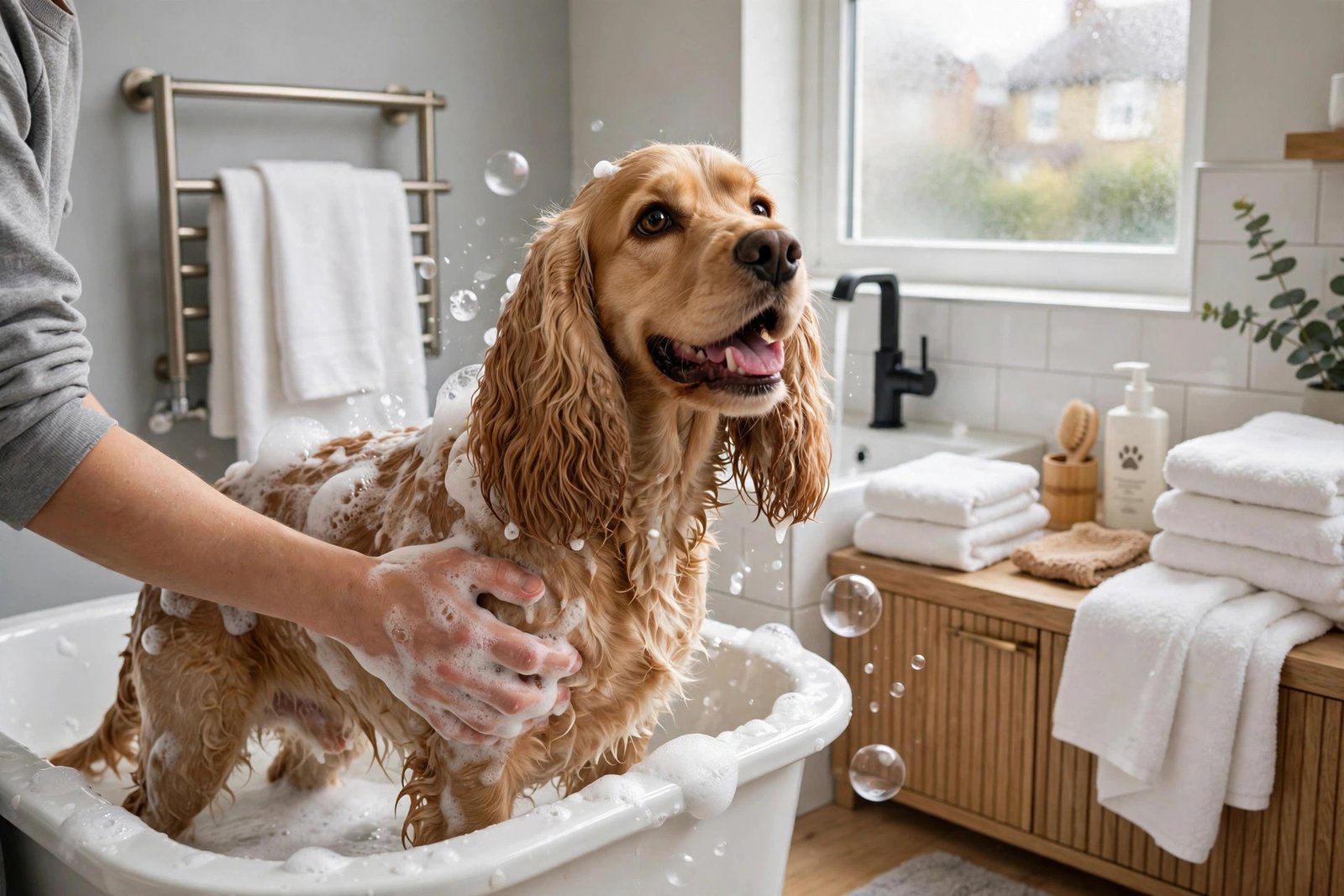
Use lukewarm water — never hot, which dries skin faster — and wet the coat thoroughly before applying shampoo. Work from the neck backwards (keeping shampoo away from eyes and ears), massage gently rather than scrubbing, and then rinse, rinse, and rinse again. Leftover shampoo residue is a leading cause of post-bath itching, so spend at least twice as long rinsing as you did lathering. In hard-water areas of the UK, which cover much of the South East, a final rinse with a jug of lukewarm water can help remove mineral residue.
Drying matters too. Towel-dry thoroughly, then let the dog air-dry in a warm room — avoid sending a damp dog straight out into a cold British winter. If you use a hairdryer, keep it on the coolest, lowest setting and keep it moving; concentrated heat on one spot can burn skin under a thick coat.
Between baths: keeping your dog fresh without water
Much of what sends dogs to the bath can be handled without one. A daily brush-down removes dirt, distributes natural oils, and keeps the coat smelling fresher for longer — five minutes with a slicker brush does more for a muddy spaniel than most owners realise. Pet-safe grooming wipes handle muddy paws after wet walks, and a dry bath foam or waterless shampoo works well for spot-cleaning between full baths.
Diet plays a role too: dogs fed a complete, balanced diet with adequate omega-3 and omega-6 fatty acids tend to have healthier, less smelly skin. If your dog’s coat smells bad even shortly after bathing, that can signal a skin infection or ear problem rather than a bathing-schedule issue. This kind of routine upkeep sits alongside the other habits in keeping a clean home with pets — regular grooming means less doggy odour on the sofa as well.
Signs you are bathing too often
Watch for these red flags that your schedule needs stretching out:
- Flaky, dandruff-like skin appearing a day or two after bathing
- Persistent scratching or chewing at paws with no fleas present
- A dull, brittle coat that feels straw-like to the touch
- Red or irritated patches, especially on the belly and inner legs
- The dog smelling worse than before — over-washed skin overproduces oils
If you spot these, cut bathing frequency in half, switch to a gentler shampoo, and give the skin three to four weeks to recover. If irritation persists, see your vet — chronic dryness can also indicate allergies, thyroid issues, or dietary deficiencies.
When more frequent bathing is genuinely needed
There are legitimate exceptions. Dogs with diagnosed skin conditions may be on a vet-prescribed bathing regime — sometimes twice weekly with a medicated shampoo — and that overrides all general advice. Dogs who swim regularly in the sea should be rinsed with fresh water afterwards to remove salt, which is very drying. And muddy-paw season (roughly October to March in Britain) may mean more frequent leg-and-belly washes — but wash just the dirty bits rather than the whole dog, which spares the rest of the coat.
Conclusion
For most dogs, a bath every 4–8 weeks with a gentle, dog-specific shampoo keeps them clean without drying their skin. Match the schedule to the breed and lifestyle, brush regularly between baths, rinse thoroughly, and watch for the tell-tale signs of over-bathing — flaking, itching, and dullness. Get the balance right and your dog stays comfortable, their coat stays glossy, and bath time stays a pleasant routine rather than a skin-damaging chore. And when bath day coincides with a countryside break, knowing the best pet-friendly holidays in the UK means muddy adventures without the stress.
Frequently Asked Questions
Can I use baby shampoo on my dog?
Occasionally in an emergency it will not cause harm, but baby shampoo is still formulated for human skin pH and will dry your dog’s skin with regular use. A proper dog shampoo is inexpensive and far safer long-term.
How do I bathe a dog that hates water?
Go slowly: introduce the bath area with treats over several days, use a non-slip mat, keep water lukewarm and shallow, and reward calm behaviour. Forcing a terrified dog makes every future bath harder.
Should I bathe my dog in winter?
Yes, but less often if possible, and always dry them thoroughly in a warm room afterwards. Never put a damp dog outside into freezing weather.
Why does my dog smell bad even after a bath?
Persistent odour despite bathing often points to skin infections, ear infections, dental disease, or anal gland issues rather than dirt. If the smell returns within days, book a vet check.
Is it okay to just rinse my dog with water between baths?
Absolutely — a plain lukewarm water rinse removes mud and salt without stripping oils, making it ideal after beach trips or muddy walks. Save the shampoo for proper bath days.