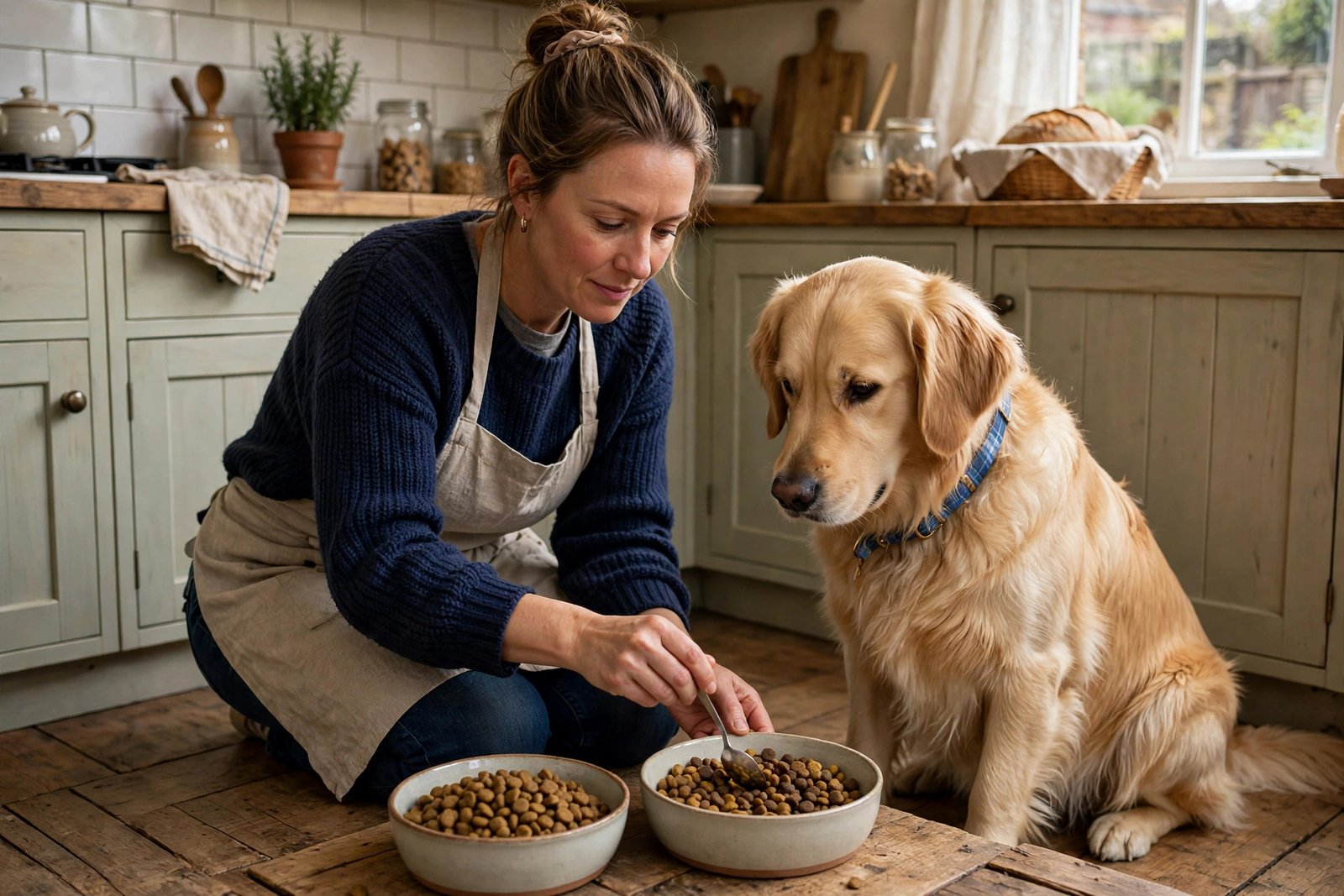
Changing your pet’s food sounds simple — until your dog or cat’s stomach stages a full-blown protest. Vomiting, diarrhoea, refusing to eat at all: sudden diet changes are one of the most common causes of digestive upset in British pets, and vets see it every week. The good news is that with a slow, structured transition, most pets switch foods without a single dodgy tummy day. Here is exactly how to do it, what the timeline looks like, and when a grumbly stomach means you should ring the vet instead of waiting it out.
Why sudden food changes upset pet stomachs
A pet’s gut is home to a delicate community of bacteria that has adapted to digest their current diet. Swap the food overnight and that bacterial balance is thrown into chaos — the gut cannot adjust its enzymes fast enough, and the result is loose stools, wind, or vomiting. This is true for dogs, cats, and even small pets like rabbits. Cats are particularly sensitive: an abrupt change can trigger food refusal, and a cat that stops eating for more than a day or two can develop a serious liver condition called hepatic lipidosis.
Protein source matters too. Moving from a chicken-based kibble to a lamb or fish recipe changes the amino acid profile the gut is used to. Even switching between two products from the same brand can cause trouble if the recipes differ substantially. According to RSPCA guidance on dog nutrition, any dietary change should be introduced gradually so the digestive system can adapt.
The vet-approved 7–10 day transition plan
This is the schedule most UK vets recommend, and it works for both dogs and cats:
Days 1–2: 75% old food, 25% new food
Mix a small amount of the new food into the old. For fussy cats, you may need to start even smaller — a teaspoon stirred through the usual meal is enough for day one. Watch the litter tray and food bowl closely.
Days 3–4: 50% old food, 50% new food
An even split. Stools should remain firm. If you notice softening at this stage, hold at this ratio for an extra day or two rather than pushing ahead.
Days 5–6: 25% old food, 75% new food
The new food now dominates the bowl. Most pets are fully comfortable by this point, and you may notice improved coat condition or energy if the new diet suits them better.
Days 7–10: 100% new food
Drop the old food entirely. For cats, or pets with historically sensitive stomachs, stretch this final step over the full ten days. Patience here saves you a carpet-cleaning bill later.
Special cases: sensitive stomachs, puppies and kittens
Some pets need an even gentler approach. If your dog has had digestive trouble before — recurring diarrhoea, a diagnosed sensitive stomach, or a recent course of antibiotics — extend the transition to 14 days. Start with just 10% new food and increase by roughly 10% every day or two. The PDSA’s nutrition advice notes that pets recovering from illness may need veterinary guidance before any diet change at all.
Puppies and kittens switching from breeder food to their new home’s diet deserve the same gradual approach, even though young animals often seem to have cast-iron stomachs. Ask the breeder for a small bag of the current food so you can transition properly over the first week or two at home.
What to do if your pet reacts badly
Mild soft stools for a day or two during transition are common and usually resolve if you slow down. Step back to the previous ratio that produced firm stools, hold it for two to three days, then advance more slowly.
Call your vet promptly if you see any of the following:
- Vomiting more than once, or any vomiting in cats combined with food refusal
- Diarrhoea lasting longer than 48 hours, or any blood in the stool
- Lethargy, drooling, abdominal pain, or bloating
- A cat that has not eaten for 24 hours
These can signal something beyond a simple transition wobble — an intolerance to an ingredient in the new food, or an unrelated illness that happened to coincide with the switch.
Choosing the new food wisely in the first place
A smooth transition starts before you open the bag. In the UK, look for foods labelled “complete” — this is a legal term under European pet food regulations meaning the product meets full nutritional standards. Check that the food suits your pet’s life stage: puppy, adult, or senior formulas differ meaningfully in protein, fat, and mineral content.
If you are switching because of a suspected allergy, talk to your vet about an elimination diet rather than guessing. True food allergies in pets are less common than owners think, and a proper diagnostic diet saves months of trial and error. And if you are moving between feeding styles — say, from kibble to raw or to home-cooked — get professional advice first, because balancing nutrients yourself is genuinely difficult.
Practical tips for a drama-free switch
Keep mealtimes, portions, and feeding locations exactly the same during the transition; the only thing changing should be the food itself. Serve the new food at room temperature — cold food straight from the fridge can itself cause stomach upset in sensitive animals. Store the old food properly so it stays fresh through the transition period, and resist the urge to add toppers, treats, or table scraps while you are switching, since these muddy the waters if problems appear.
It also helps to keep a simple log: date, ratio, stool quality. It sounds fussy, but if your vet needs the history, you will be glad you wrote it down. A calm, consistent routine — the same principle behind keeping a clean home with pets — makes the whole process easier on everyone.
Conclusion
Switching your pet’s food without stomach upset comes down to one principle: go slowly. A 7–10 day gradual transition, starting with just a quarter of the new food, lets your pet’s gut bacteria adjust without drama. Extend the timeline for sensitive stomachs, fussy cats, or young animals, and step back a stage at the first sign of soft stools. Do that, and the chances are excellent that your pet will be happily crunching the new recipe within a fortnight — with no midnight dashes to the garden and no emergency vet bill.
Frequently Asked Questions
How long does it take to switch a dog’s food safely?
Most vets recommend 7–10 days, moving from 25% new food up to 100% in stages. Pets with sensitive stomachs may need up to 14 days.
Can I switch my cat’s food cold turkey?
No — cats should never have their food changed suddenly. Abrupt changes can cause food refusal, and a cat that stops eating risks serious liver problems. Always transition gradually.
Is it normal for my dog to have soft stools when changing food?
Mild softening for a day or two can be normal. Slow the transition and return to the last comfortable ratio. Persistent diarrhoea beyond 48 hours warrants a vet visit.
Should I mix wet and dry food during the transition?
Keep the format consistent — transition within the same format (dry to dry, wet to wet) first. Changing both recipe and format at once makes it harder to identify the cause of any upset.
What if my pet refuses the new food entirely?
Try warming it slightly to release aroma, or ask your vet about appetite-friendly transition strategies. For cats especially, never let food refusal continue beyond 24 hours without veterinary advice. If you are travelling with a fussy eater, planning around pet-friendly holidays across the UK becomes much easier once the diet is settled.