You have a small garden — a typical British new-build plot, a patio, a balcony — and big ambitions for homegrown vegetables. Traditional row gardening wastes most of a small space on paths and empty soil between rows. Square foot gardening, the method American gardener Mel Bartholomew popularised in the 1980s, was designed for exactly your situation: maximum harvest from minimum space, with a grid system so simple a child can plan it. If you are asking what is square foot gardening for small spaces in Britain, here is the method adapted for our climate: the grid, the soil mix, the spacing rules, and how to make 16 square feet outgrow a whole allotment row.
The method: a grid, not rows
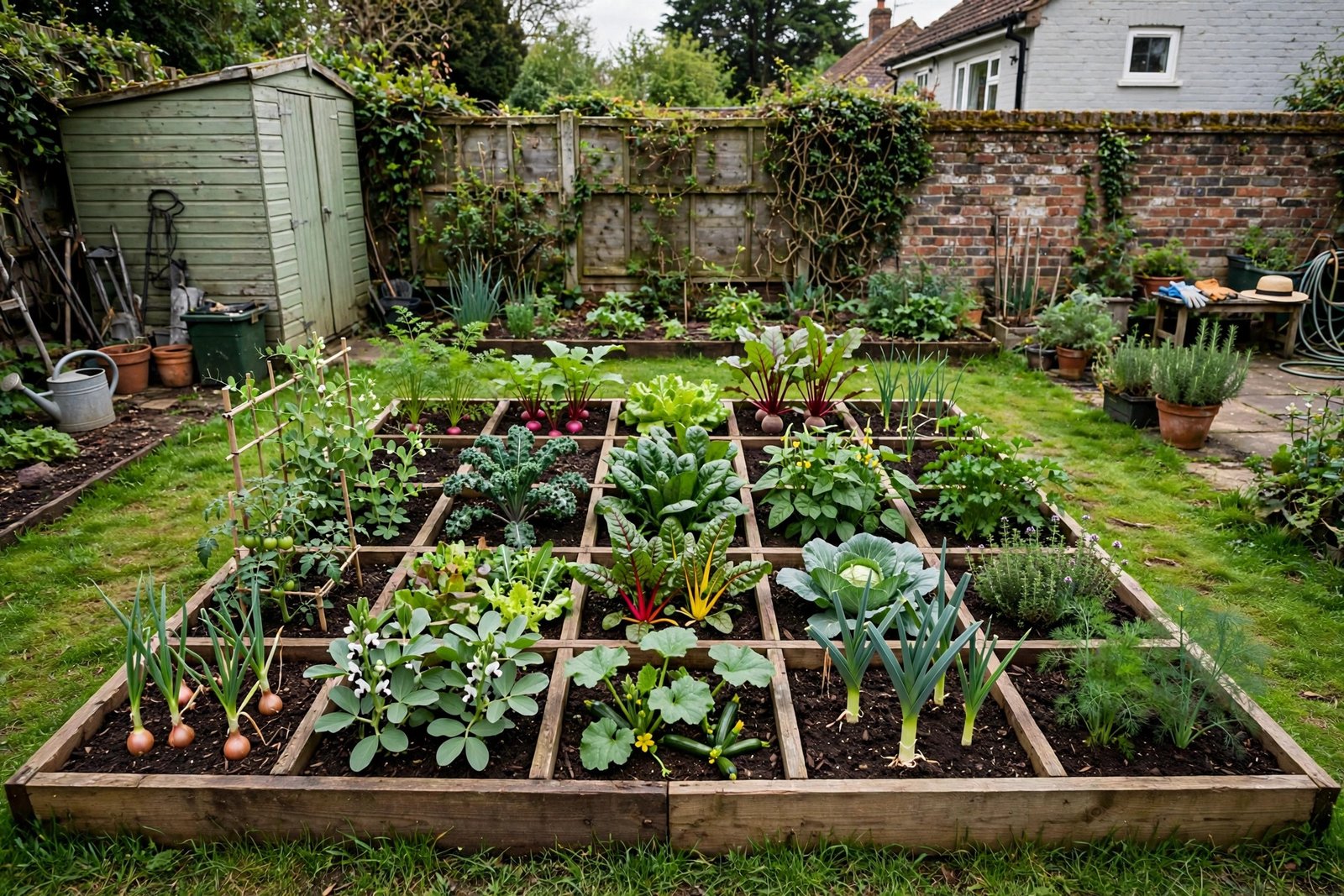
The classic square foot garden is a 1.2×1.2m (4×4ft) raised bed divided into 16 one-foot squares, each planted intensively according to the plant’s size. The spacing rule is beautifully simple: 1 plant per square for large plants (cabbage, broccoli, pepper), 4 per square for medium (lettuce, chard, marigold), 9 per square for small (spinach, beetroot, bush beans), 16 per square for tiny (carrots, radishes, spring onions). No rows, no wasted path space inside the bed, no thinning-induced guilt — every square is a calculated planting.
The benefits for British small-space gardeners are immediate: water efficiency (dense planting shades soil, cutting evaporation — real money in a metered-water household), weed suppression (no bare soil for weeds to colonise), pest visibility (problems spotted instantly in a small grid), and planning simplicity — the grid turns garden planning into arithmetic. A single 4×4 bed holds 16 lettuces, 32 spinach plants and 64 carrots simultaneously, in different squares. Our guide to building a raised garden bed in the UK covers the construction; the grid is what you do with it.
Mel’s Mix: the soil recipe (and UK adaptations)
Bartholomew’s original recipe — one-third compost, one-third peat moss, one-third coarse vermiculite — needs British adaptation: swap peat moss for peat-free compost or coir (the peat phase-out makes this non-negotiable), and note that coarse vermiculite is expensive in the UK — perlite is the cheaper, widely available alternative, though it migrates to the surface over time. The principle matters more than the recipe: a light, moisture-retentive, nutrient-rich, weed-free growing medium, 15–20cm deep, that never compacts because you never walk on it.
The pragmatic UK version: a 50/50 mix of quality peat-free multipurpose compost and garden compost or well-rotted manure, with a few handfuls of perlite or grit for drainage. It costs less than imported vermiculite and performs excellently. Top up each square with fresh compost between plantings (a trowelful per square) rather than digging the whole bed — the no-dig principle applies perfectly to square foot beds. Never use garden soil alone in the bed: it compacts, contains weed seeds, and defeats the method’s purpose. The RHS container and raised-bed guidance supports the same principles.
Building the grid
The bed itself: 1.2m square (or 1.2×2.4m for 32 squares), 15–30cm deep, in untreated timber, with weed membrane underneath if placing on weedy ground. Divide with string, lath or thin battens pinned in a grid — the physical grid is psychologically important: it stops you “just squeezing one more in” and keeps spacing honest. Position with the long side east–west if possible, tallest plants on the north side so nothing shades its neighbours. Reach every square from the edge — if you must step in, the compaction undoes the method.
What to plant: the square foot all-stars
Square foot gardening rewards high-value, continuous-harvest crops: salad leaves (cut-and-come-again, 4 per square, re-sow monthly), spinach (9 per square), radishes (16 per square, ready in a month — sow between slower crops), spring onions (16 per square), carrots (16 per square, choose short varieties like ‘Paris Market’ for shallow beds), beetroot (9 per square), bush beans (9 per square), lettuce (4 per square). Vertical squares multiply the yield: one square of climbing French beans or cucumbers on a trellis at the north edge produces kilos from a single square foot.
Avoid space-hogs in small grids: sprawling squashes (unless trained vertically), sweetcorn (needs a block for pollination — minimum 9 squares), and maincrop potatoes (productive but space-hungry; first earlies in a deep square work). Succession is the multiplier: as each square finishes, replant immediately — a square that grows radishes in April, lettuce in June and spinach in September produces three crops from one foot. Keep a simple plan on paper: 16 squares, what is in each, when it finishes. For variety selection in tight spaces, our best plants for a small UK garden is the companion guide. The Square Foot Gardening Foundation maintains the official method resources.
Adapting to the British climate
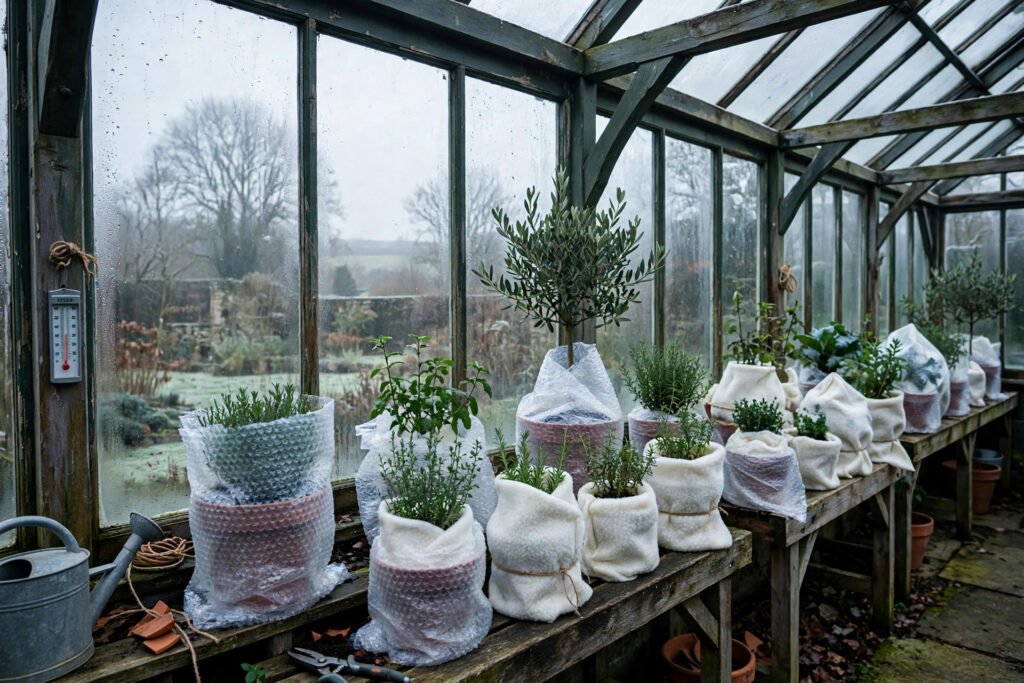
Three UK-specific adjustments. Slugs: dense, moist square foot beds are slug paradises — use copper tape on bed edges, wool pellets, beer traps, or nematodes, and check under the grid laths where slugs hide by day. Rain: British downpours compact exposed compost — mulch squares between plantings and avoid working the bed when saturated. Season extension: the small bed size makes protection cheap — a simple cloche or fleece over one bed extends the season by weeks each end; cold frames fit 4×4 beds perfectly. Sow the first squares under cover in March and the method effectively gains a month.
Crop rotation still applies, even in 16 squares: do not grow the same family in the same square two years running (especially brassicas — clubroot persists). With the grid, rotation is easy: shift families one square clockwise each year on paper. And feed lightly but regularly: intensive planting is hungry planting — the trowelful of compost per square between crops, plus liquid seaweed in the growing season, keeps yields high without the feast-famine cycle of annual manuring.
The bottom line
Square foot gardening means: a 1.2m raised bed divided into 16 squares, planted at 1/4/9/16 per square by plant size, in a light peat-free compost mix you never walk on, replanted in succession all season. It turns Britain’s small gardens, patios and even balconies (a 60cm box gives 4 squares) into serious food production — less weeding, less watering, more harvesting. The grid looks almost comically simple. That is the point: the method does the thinking, so you can do the growing.
Frequently Asked Questions
What is square foot gardening?
A method by Mel Bartholomew: a 1.2×1.2m raised bed divided into 16 one-foot squares, each planted intensively (1, 4, 9 or 16 plants per square depending on size). Maximum yield from minimum space, with no rows or wasted paths.
What soil mix for square foot gardening in the UK?
A light, peat-free mix: 50/50 quality multipurpose compost and garden compost/well-rotted manure, with perlite or grit for drainage. Never use garden soil alone — it compacts and contains weed seeds.
What grows best in a square foot garden?
Salads, spinach, radishes, spring onions, carrots, beetroot, bush beans and herbs — high-value continuous-harvest crops. Train climbers vertically on the north edge; avoid space-hogs like sprawling squash.
How many plants per square foot?
1 for large (cabbage, broccoli), 4 for medium (lettuce, chard), 9 for small (spinach, beetroot), 16 for tiny (carrots, radishes, spring onions). The rule scales to any bed size.
Does square foot gardening work in Britain?
Yes, with adaptations: defend against slugs (copper tape, nematodes), mulch against heavy rain, and use cloches for season extension. The intensive method suits our small gardens perfectly.