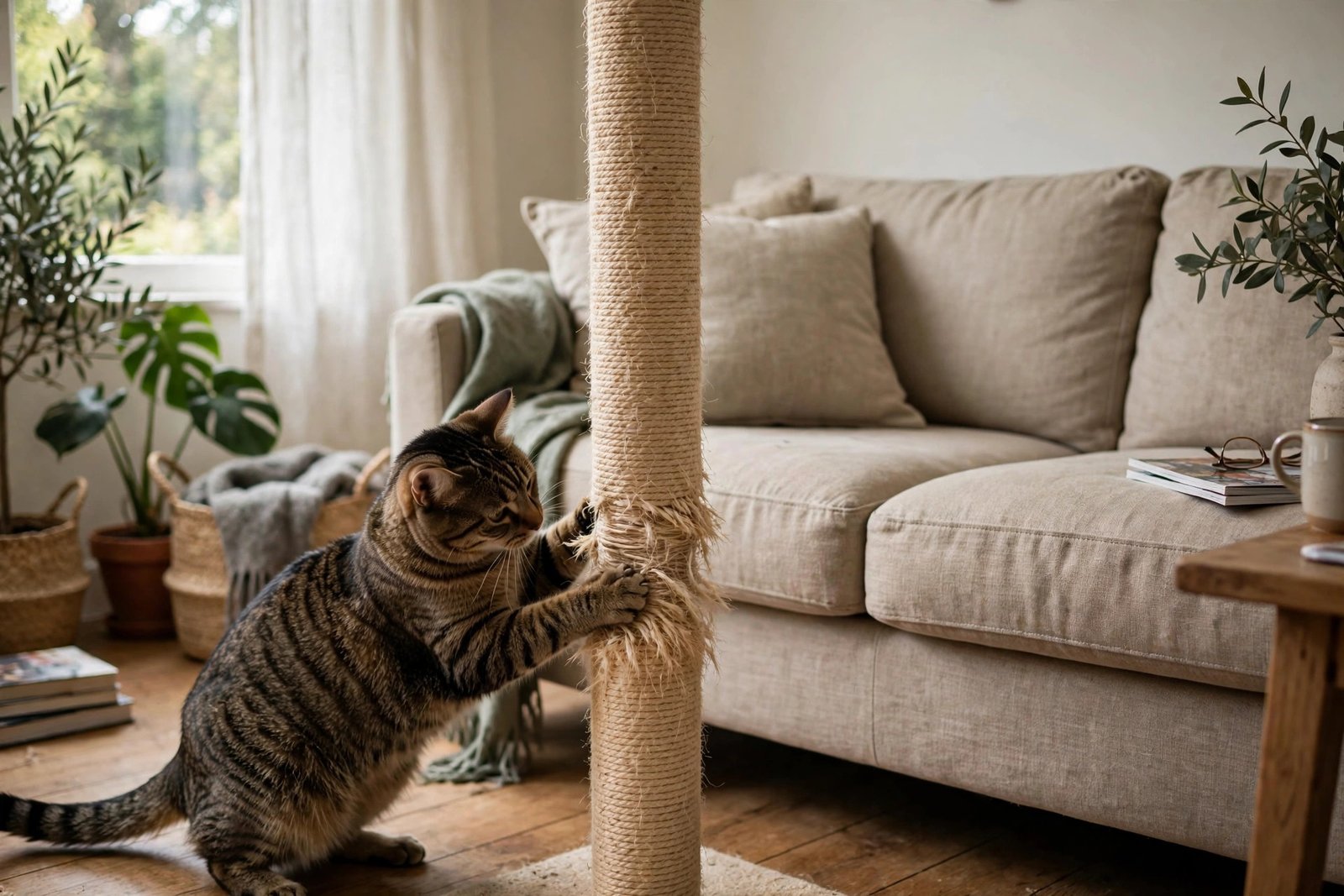
The sofa arm is shredded. The wallpaper is hanging. The brand-new rug has a frank assessment of its texture. If your cat is scratching the furniture, you are not alone — it is the single most complained-about cat behaviour in Britain, and also one of the most misunderstood. Your cat is not being spiteful, badly behaved or “getting revenge”. Scratching is a deep biological need, and the furniture is simply the most convenient outlet. Work with the instinct instead of against it, and the sofa survives.
Why cats scratch: three needs in one behaviour
Scratching serves three functions simultaneously. First, claw maintenance: the outer sheath of the claw sheds through scratching, keeping the claws sharp and healthy — it is feline manicure. Second, stretching: the full-body pull of a good scratch stretches the back, shoulders and paws, which is why cats so often scratch after waking. Third — and most important for furniture — territorial marking: paw pads contain scent glands, and scratching deposits both a visual mark and a scent signal saying “I live here, this is mine”.
This is why punishment fails so completely. Shouting at a scratching cat does not remove the biological need; it just teaches the cat to scratch when you are not looking — and adds stress, which increases marking behaviour. It is also why the scratched spots are rarely random: they are prominent, socially significant locations (the sofa arm where the family sits, the doorframe at the room’s entrance) — prime territory-marking real estate. Understanding the why is the key to redirecting the where. International Cat Care describes scratching as a normal maintenance behaviour that must be accommodated, not suppressed.
The scratching post: getting it right
Most scratching posts fail because they are wrong, not because the cat is stubborn. The rules: tall enough for a full stretch (at least 70–80cm for an average cat — most cheap posts are laughably short), stable enough not to wobble (a wobbling post teaches the cat that posts are untrustworthy; the sofa never wobbles), and the right texture — sisal rope for most cats, though some prefer carpet, cardboard or wood. Offer variety until you learn your cat’s preference.
Placement is as important as the post itself. Put posts where the cat already scratches — right next to the sofa arm, not exiled to the utility room — and near sleeping spots (cats scratch on waking). Multiple posts for multiple rooms is not indulgence; it is strategy. Make the post irresistible: rub catnip on it, dangle a toy from the top, reward every use lavishly. And the crucial companion step: make the furniture unattractive at the same time — double-sided sticky tape (cats hate the texture), a throw over the favoured arm, or a vinyl carpet runner (nub-side up) draped over the spot. Redirect, do not just forbid. And for the scuffs already inflicted on doorframes and walls, a fresh coat works wonders — see our guide to painting a room like a professional to erase the evidence. Protecting your home and your cat’s needs together is the theme of our guide to keeping your house clean with pets.
Deterrents, claw care and what never to do
For persistent spots, deterrents bridge the gap while the new habit forms. Double-sided tape designed for furniture, citrus scents (most cats dislike them), and aluminium foil all work as temporary discouragements — always paired with an attractive alternative inches away. Pheromone products (Feliway) scratched onto the post area can encourage use. Trim claws regularly — just the sharp tips every 2–3 weeks — which reduces damage without touching the behaviour itself.
What never to do: declawing is illegal in the UK under the Animal Welfare Act except for genuine medical necessity — it is amputation of the last bone of each toe, causing chronic pain and behavioural problems. “Spray bottles” and shouting create a fearful cat, not a non-scratching one. And rehoming the cat over the sofa is, bluntly, a failure of understanding rather than a failure of the cat. If scratching is truly excessive — every surface, constantly, alongside other stress signs — consult your vet: pain, anxiety and cognitive decline in seniors can all drive it, and the Cats Protection helpline can talk through persistent cases.
Living with a scratcher: the realistic outlook
Here is the honest endpoint: you will probably never have a cat and pristine furniture. The goal is managed, redirected scratching — the posts take 90% of it, the sofa survives, and the occasional lapse is handled with tape and good humour. Choose cat-compatible furnishings where you can: tightly woven fabrics resist claws better than loose weaves, leather is actually fairly resilient (scratches buff out), and washable throws protect the highest-risk arms.
Reframe the behaviour and it stops being an outrage: your cat is maintaining their health, stretching their body and marking their beloved home — including you, the family and the sofa, as theirs. A scratching cat is an engaged, territorially secure cat. Give them the posts, protect the furniture, trim the claws, and accept the occasional battle scar as the price of living with one of nature’s most fastidious and fascinating animals. The sofa is replaceable. The cat is family.
Kitten training: building the habit early
Kittens learn scratching preferences fast, which makes early training disproportionately effective. From day one, place a small sturdy scratcher beside every spot the kitten naps — they will use it on waking, and the habit wires itself in within weeks. Reward every use with praise or a treat; kittens are magnificently trainable when the reward is immediate. Gently guide paws onto the scratcher (never force them) and let the texture do the teaching.
The critical kitten rule is consistency from every human in the house: if one person allows sofa scratching “because she’s cute” while another scolds, the kitten learns that scratching rules are random — which produces a cat that scratches everywhere. Trim kitten claws from the start so handling paws becomes routine rather than a battle in adulthood. And provide horizontal options too — many kittens prefer cardboard scratch pads flat on the floor, and a £5 pad that gets used beats a £40 tower that gets ignored. Habits built in kittenhood last a lifetime; so do the ones you accidentally allow.
Frequently Asked Questions
Why does my cat scratch furniture instead of the post?
Usually the post is wrong (too short, wobbly, wrong texture) or wrongly placed (far from where the cat scratches). Put a tall, stable sisal post right beside the scratched spot and make the furniture temporarily unattractive.
Is declawing cats legal in the UK?
No — declawing is illegal in the UK except where medically necessary for the cat’s own health. It involves amputating the last bone of each toe and causes chronic pain.
Do scratching deterrent sprays work?
Citrus-based sprays deter some cats temporarily, but they work best paired with an attractive alternative post nearby. Deterrent alone, without redirection, just moves the scratching elsewhere.
How often should I trim my cat’s claws?
Every 2–3 weeks, trimming just the sharp transparent tip and avoiding the pink quick. Indoor cats need it more than outdoor cats, who wear claws naturally.
Conclusion
Your cat scratches because they are a cat — maintaining claws, stretching muscles and marking home. Punishment cannot remove a biological need, but a tall stable post in the right place, deterrents on the sofa, and regular claw trims can redirect it almost entirely. Work with the instinct, protect the furniture, and make peace with the occasional mark. It is, after all, their home too.