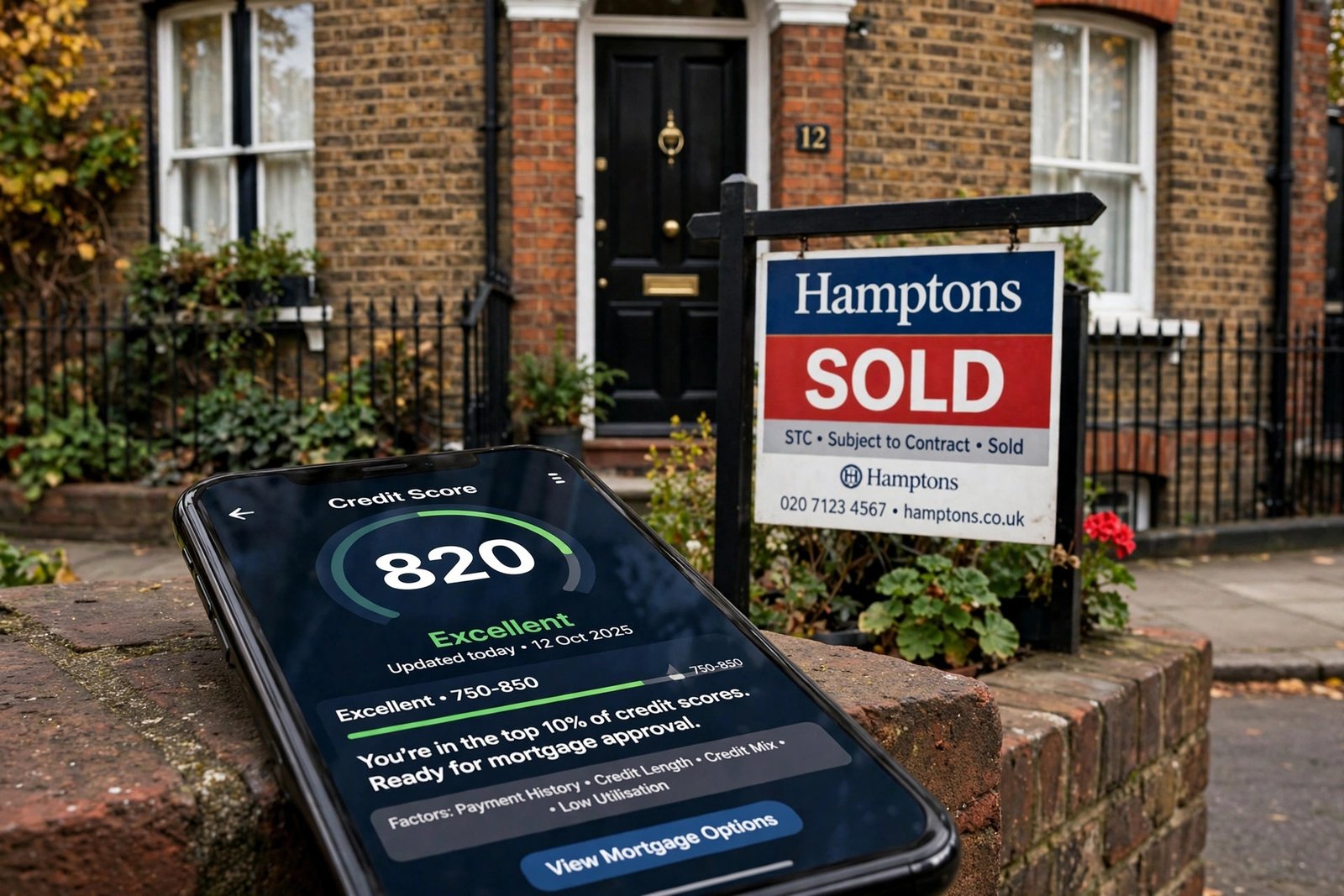
London house prices are a national punchline — the average first-time buyer property in the capital now costs well over £400,000, roughly double the national average. Against that backdrop, your credit score isn’t just a number; it’s a gatekeeper standing between you and the biggest purchase of your life. But here’s what most guides won’t tell you plainly: there is no single magic score that unlocks a London mortgage. Lenders don’t work that way. What matters is how your whole credit file looks to a lender’s underwriting system — and that’s something you can actively improve. Here’s the real picture.
The honest answer: there’s no magic number
Let’s kill the myth first. UK mortgage lenders don’t publish minimum credit scores, and they don’t all use the same agency or scale. What they do is assess your credit file — the underlying data — against their own criteria, alongside affordability (income versus the loan), deposit size, and employment stability. A “good” score with a recent default can still be declined; a “fair” score with clean recent history and a 25% deposit can be accepted. The agencies’ own bands are still useful orientation: Experian 881–999 is “good/excellent,” Equifax 811–1,000, TransUnion 628–710 — and for a London mortgage, you generally want to be in the “good” range or above on all three files, because London lending means large loans where lenders scrutinise hardest.
Why London is stricter in practice: bigger loans mean bigger risk, so lenders’ scorecards weight adverse history more heavily; affordability stress-tests (can you pay at 8%+ rates?) bite harder on large multiples; and competition for the best rates is fiercest at lower loan-to-values, where the cleanest files win. Check your three files free (Experian directly, ClearScore for Equifax, Credit Karma for TransUnion) — and read our full walkthrough of checking your UK credit score for free before you apply.
What lenders actually look at (beyond the score)
Payment history: the single biggest factor. Missed or late payments in the last 2–3 years hurt most; anything in the last 12 months is close to fatal for prime lenders. Defaults and CCJs: a satisfied default over three years old is often workable with specialist lenders; recent or unsatisfied ones severely restrict options. Electoral roll: not being registered at your current address is a shockingly common decline reason — it verifies identity and stability. Registration is free and takes minutes on GOV.UK. Credit utilisation: maxed-out cards signal distress; under 25% utilisation looks controlled. Hard searches: multiple applications in quick succession look desperate — space mortgage-related applications and use soft-search eligibility checkers first. Financial associations: joint accounts link your file to others’; sever dead links. Deposit source: lenders probe large deposits — gifted deposits need gifted-deposit letters; unexplained cash is a money-laundering red flag.
And the factor people underestimate: affordability dwarfs score. Lenders typically lend 4–4.5x your income (sometimes more for high earners). On a £60,000 salary, that’s ~£270,000 — needing a £150,000+ deposit for the average London first-time-buyer property. The deposit is usually the binding constraint in London, not the score. Our house deposit guide tackles that mountain directly.
The 12-month improvement plan
If you’re a year from applying, this is your program. Months 1–2: pull all three credit files, dispute every error (wrong addresses, settled accounts showing open, unfamiliar accounts — fraud markers need immediate action), register to vote at your current address, and sever dead financial associations. Months 3–6: pay every bill on time without exception (direct debits for minimums as a backstop), pay down card balances below 25% utilisation, don’t apply for any new credit, and don’t close old well-managed accounts. Months 7–12: maintain the pattern, avoid changing jobs if possible (employment stability matters), keep saving the deposit in one place (lenders like clean savings trails), and use soft-search mortgage-in-principle checkers to gauge your position without hard footprints.
Special cases: thin file (young, new to UK) — build history with a credit-builder card used lightly and paid in full, plus rent-reporting services. Past adverse — time heals; a default’s impact fades significantly after 3 years and it’s gone at 6. Specialist adverse-credit brokers exist for recent issues, though rates are higher. Throughout, keep your emergency fund intact — lenders notice financial resilience, and life doesn’t pause for house-buying.
How the score affects your rate (real money)
This is where the score translates to pounds. The best mortgage rates go to the cleanest files at the lowest LTVs; impaired credit can add 1–3 percentage points to your rate or push you to specialist lenders entirely. On a £350,000 London mortgage, a 1% rate difference costs roughly £200 a month — £2,400 a year, £12,000 over a five-year fix. That’s the true price of a messy credit file: not just approval versus decline, but thousands in extra interest over the years. Viewed that way, a year of disciplined credit repair isn’t delay — it’s one of the highest-paid activities in personal finance. MoneyHelper’s mortgage guidance is worth reading alongside your preparations.
What if you’re declined? The recovery playbook
A declined mortgage application isn’t the end — it’s data. Ask the lender (or better, a whole-of-market mortgage broker) why: the reason is usually specific and fixable — a missed payment still within the penalty window, an affordability stretch, an undisclosed commitment. Get the reason in writing, fix it, wait, and reapply — ideally through a broker who knows which lenders suit your profile, since scattergun applications compound the damage with hard searches. Many successful London homeowners were declined first; the difference between them and those who gave up was treating the decline as a diagnostic, not a verdict. And while you repair, keep saving — every extra month of deposit growth improves both your LTV and your negotiating position.
The bottom line
There’s no single credit score that buys a house in London — but there’s a clear standard: clean recent payment history, registered on the electoral roll, low utilisation, no recent adverse marks, and stable affordability, across all three credit files. A year of disciplined repair can move you from “declined” to “approved,” or from expensive rates to cheap ones — a difference worth tens of thousands on a London loan. Check your files now, fix what’s fixable, protect what’s clean, and let time do the rest. In the capital’s brutal market, your credit file is one of the few things entirely within your control. Use that.
Frequently Asked Questions
What credit score do I need for a mortgage in London?
There’s no published minimum — lenders assess your whole file. Aim for “good” or above on all three agencies (Experian 881+, Equifax 811+, TransUnion 628+) with clean recent history for the best London rates.
Can I get a London mortgage with bad credit?
Possibly, via specialist adverse-credit lenders — but expect higher rates, larger deposit requirements, and fewer options. Recent defaults or CCJs are the hardest to place.
How long before applying should I check my credit file?
At least 12 months — that gives time to dispute errors, build positive history, and let recent issues age. Check all three agencies, not just one.
Does renting affect my mortgage application?
Rental payment history isn’t automatically on your credit file (unless you use a rent-reporting service), but lenders may ask for bank statements showing consistent rent payments as affordability evidence.
Will a mortgage in principle affect my credit score?
Soft-search agreements in principle don’t affect your score. Only full mortgage applications leave hard footprints — so use eligibility checkers first and apply formally once.