It starts as one brown spot. Then three. By August the lawn looks like a map of somewhere war-torn, and you have no idea whether it is dying of thirst, being eaten alive underground, or suffering some mysterious turf disease with a Latin name. Brown patches in summer are the commonest lawn complaint in Britain — and the causes range from the completely harmless to the genuinely destructive. If you are asking why is my lawn full of brown patches in summer in Britain, here is the diagnostic guide: how to tell drought from grubs from fungus from the dog, and what to do about each.
Cause one: drought dormancy (the harmless one)
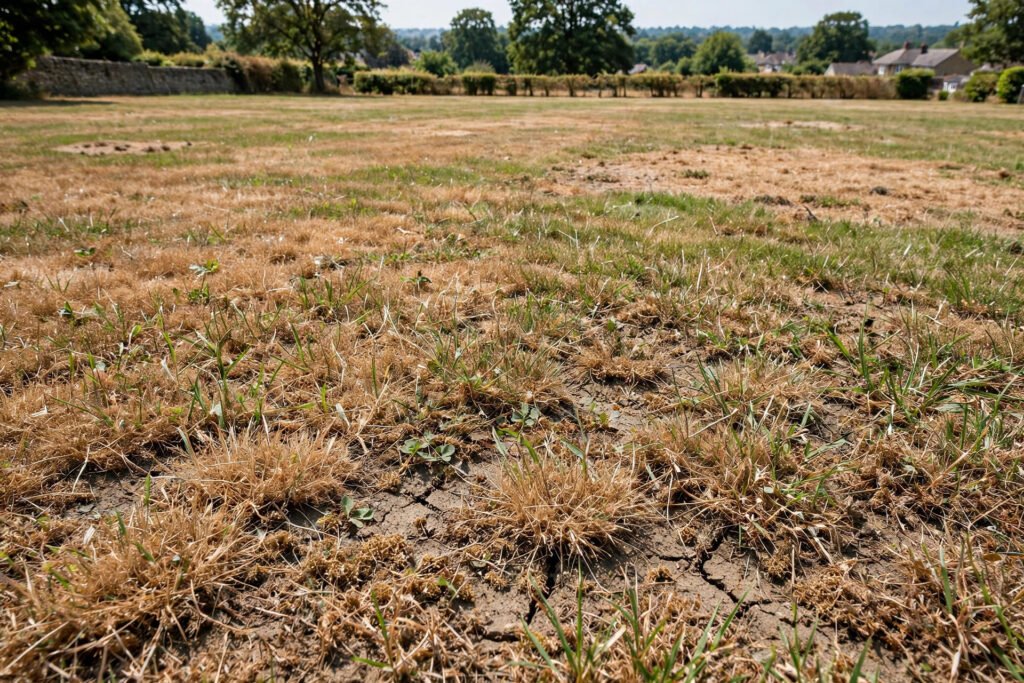
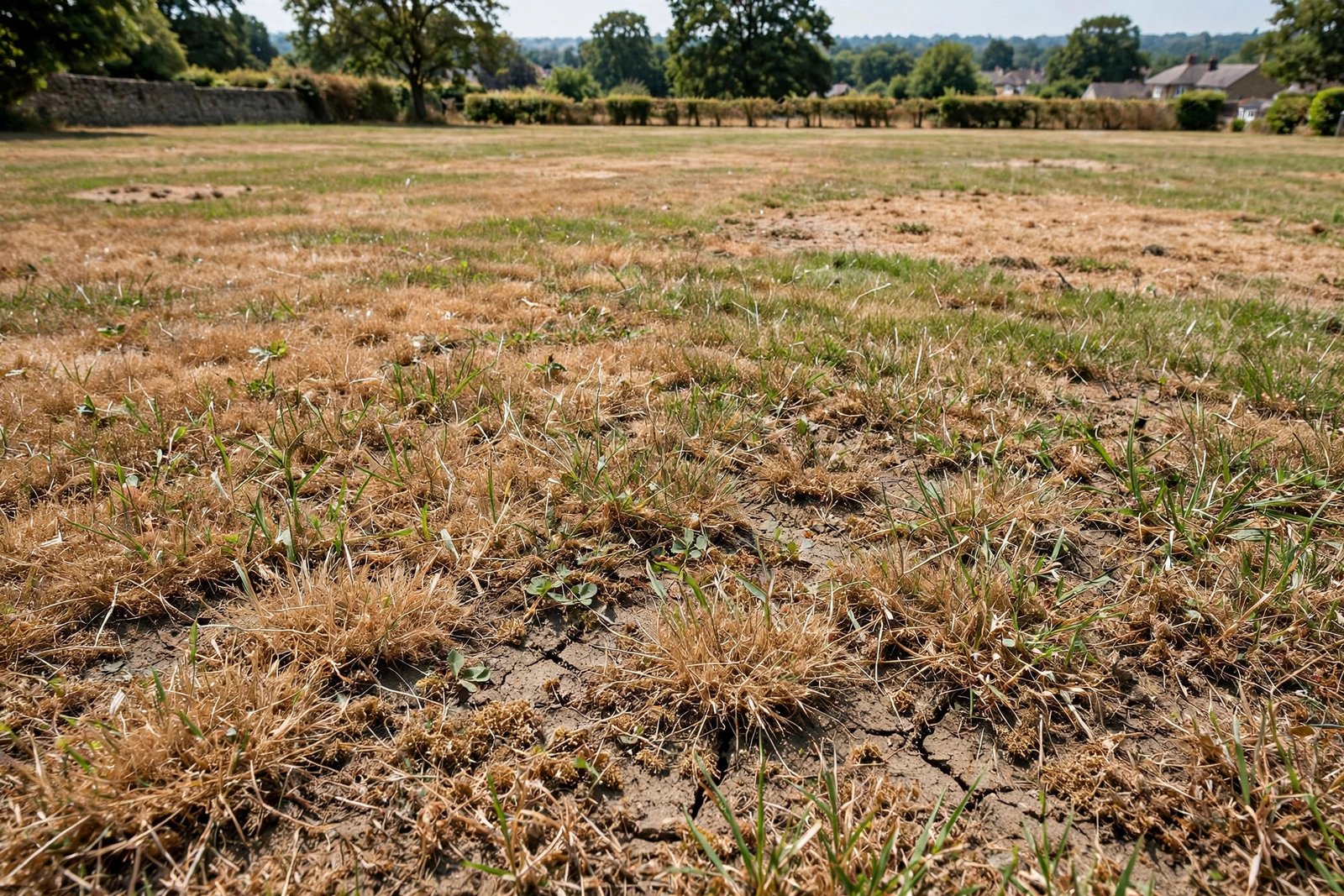
The commonest cause by far: drought dormancy. UK lawn grasses shut down in dry spells, turning brown as they retreat to their crowns to wait for rain. Signs it is dormancy: the brown areas are widespread and diffuse rather than sharp-edged patches; the grass still has spring when you walk on it; and — the clincher — it greens up within 1–2 weeks of rain. Dormant grass is alive; it is just asleep.
The fix is patience plus the habits in our turf-laying guide‘s establishment section applied in reverse: water deeply and infrequently if no hosepipe ban applies, mow high (7–10cm), leave clippings, and keep off it. Do not fertilise dormant grass. If the whole lawn is evenly brown and it has not rained for weeks, this is almost certainly your answer — and the lawn will recover by September without you doing anything at all. The RHS confirms dormancy as the primary summer browning cause in UK lawns.
Cause two: chafer grubs and leatherjackets (the eaten-alive one)
If patches are irregular, spreading, and the turf lifts like a carpet — roots eaten away — you have grubs. Chafer grubs (fat white C-shaped larvae of chafer beetles) and leatherjackets (grey-brown crane fly larvae) feed on grass roots from late summer through spring, with damage peaking in autumn and spring — but the weakened turf shows as brown patches in the following summer’s drought stress. Secondary signs: birds pecking at the lawn (crows and magpies ripping up turf to get at grubs is diagnostic), and badgers or foxes digging.
Diagnosis: cut a 30cm square of turf and peel it back — more than 5–10 grubs per square foot confirms the problem. Treatment: nematodes (Heterorhabditis for chafer, Steinernema for leatherjackets) watered into moist soil in autumn when grubs are small and near the surface — the biological, wildlife-safe option and the one to try first. Chemical controls are heavily restricted for home gardeners now. Prevention: healthy dense turf resists grubs; overseed thin areas in autumn, and accept that some grub presence is normal — treatment is for infestations, not single grubs. Birds are your allies here: a grub-damaged lawn with feeding birds is a lawn being cleaned for free.
Leatherjackets vs chafer grubs
Leatherjackets (crane fly larvae) are legless grey grubs near the surface, active autumn–spring; damage appears as yellowing patches. Chafer grubs are white, C-shaped, with legs and brown heads, deeper in the soil; damage is more severe and the turf lifts easily. Nematode species differ, so identify before buying treatment — or buy the combined autumn treatment that targets both.
Cause three: fungal diseases (the spotty one)
Summer turf diseases show as distinct patches with defined edges, often with visible fungal signs. Red thread — the commonest UK lawn disease — makes pinkish-red patches with tiny red threads on the blades, worst in damp, under-fed lawns in late summer. Fusarium patch (Microdochium) makes small brown spots that merge, commonest in autumn but present in cool wet summers. Dollar spot makes small silver-dollar-sized bleached circles.
The good news: most lawn diseases are cosmetic and self-limiting — they look dreadful and the lawn outgrows them. Treatment is cultural, not chemical: improve airflow (prune overhanging shrubs), avoid evening watering (wet grass overnight breeds fungus), scarify in autumn to remove thatch where fungi overwinter, and feed appropriately — red thread specifically strikes undernourished lawns, so an autumn feed often cures it. Fungicides are not available to UK home gardeners for lawns; the cultural approach is the only approach, and it works. The BBC Gardening lawn problem pages illustrate each disease with photos for comparison.
Cause four: dogs, mowers and compaction (the human ones)
Dog urine makes unmistakable patches: a dead brown centre with a dark green ring around it (the nitrogen scorches the middle and fertilises the edge). Female dogs cause worse spots (single concentrated squat). Fixes: dilute with water immediately after (the diligent owner’s solution), train a designated toilet area on gravel, or accept it — the green ring fades and the centre recovers. Mower scalping — cutting too low, especially on bumpy lawns — browns the high spots; raise the cutting height and the pattern disappears. Compaction from paths, goalmouths and garden furniture makes oval brown worn areas; aerate (spike or hollow-tine) in autumn and overseed.
Buried debris — the new-build special: rubble, buried timber or thin topsoil over hardcore creates brown patches that follow the debris shape and never improve until dug out. If patches persist in the same spots year after year despite perfect care, dig a test hole — you may find the builder’s legacy. For small-space alternatives to struggling lawns, our small garden plant guide offers lower-maintenance options.
The bottom line
Diagnosing brown summer patches means: widespread diffuse browning that recovers with rain is dormancy (do nothing); turf that lifts like carpet with birds pecking is grubs (nematodes in autumn); defined patches with visible threads or spots is fungus (cultural care, it passes); brown centres with green rings are the dog (dilute and accept). Most brown lawns are thirsty, not dying — and the British rain, eventually, fixes almost everything. When autumn arrives, scarify out the dead material, overseed the thin areas, and your detective work this summer becomes next year’s prevention: the lawn you understand is the lawn you can keep green.
Frequently Asked Questions
Why has my lawn got brown patches in summer?
Most commonly drought dormancy (widespread, recovers with rain). Also: chafer grubs/leatherjackets (turf lifts, birds pecking), fungal diseases like red thread (defined patches), dog urine (brown centre, green ring), or compaction.
How do I know if brown patches are grubs?
Cut a 30cm turf square and peel it back — 5+ white C-shaped grubs per square foot confirms chafer grubs. Turf that lifts like a carpet with eaten roots, plus birds ripping at the lawn, is diagnostic.
Will a brown lawn recover?
Dormant lawns usually green up within 1–2 weeks of rain. Grub- and disease-damaged lawns recover with autumn treatment (nematodes, scarifying, overseeding). Only truly dead patches (no roots, no spring) need re-turfing or re-seeding.
What is red thread in lawns?
The commonest UK lawn disease: pinkish-red patches with tiny red threads on blades, striking under-fed lawns in damp late summers. Usually cosmetic — an autumn feed and scarifying typically cure it.
How do I stop dog urine killing the grass?
Dilute the spot with water immediately after, train a gravel toilet area, and accept some damage — the brown centre recovers and the dark green ring fades within weeks.