You apply your red lipstick with care. An hour later, it has migrated into the fine lines around your mouth like ink bleeding through paper. Lipstick feathering — colour bleeding outside the lip line — is one of makeup’s most ageing and frustrating problems, and it gets more common with age as lips lose definition. The fix is not giving up bold colour. It is a combination of preparation, the right products, and application techniques that lock colour precisely where it belongs.
This guide explains why lipstick bleeds, the prep routine that prevents it, the products that act as barriers, and the application method makeup artists use for bulletproof lip colour.
Why lipstick bleeds in the first place
Feathering happens when lip colour travels along fine lines and into the skin’s texture around the mouth. The culprits are usually creamy, emollient formulas (which migrate more than mattes), skipping lip liner, dry or textured skin around the lips that gives colour channels to travel along, and natural loss of lip border definition with age. Talking, eating and drinking accelerate the migration.
Understanding this points to the solution: you need to fill in the channels (hydration and primer), build a fence (liner and concealer barrier), and choose colour that stays put (long-wear or matte formulas). No single step does it alone; the combination is what works.
Prep: the foundation of bleed-proof lips
Start with gentle exfoliation — a soft toothbrush, a damp flannel, or a sugar scrub used lightly once or twice a week removes flaky skin that catches colour unevenly. Follow with hydration: a proper lip balm applied ten minutes before makeup, blotted down so lips are supple but not slippery. Hydrated lips hold colour better; dry, cracked lips invite feathering.
Then prime. A dedicated lip primer, or a thin layer of foundation or concealer over the lips and slightly beyond the lip line, creates a grippy base and neutralises your natural lip colour so the shade applies true. This step takes thirty seconds and makes a disproportionate difference — it is the most-skipped step among people who complain about bleeding.
The liner barrier: your fence against feathering
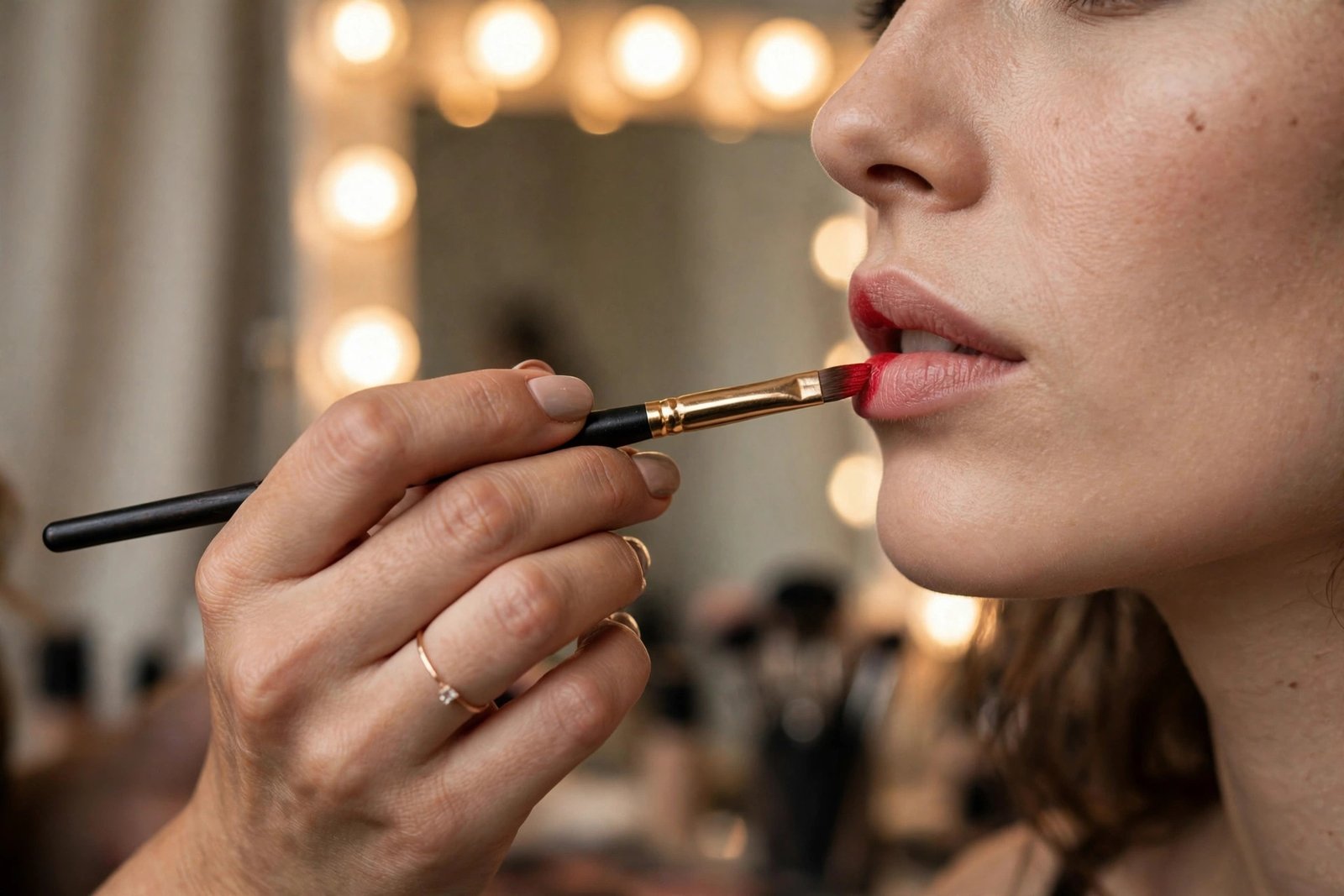
Lip liner is the single most effective anti-bleed tool, and the technique matters. Choose a liner matching your lipstick or your natural lip tone (clear “invisible” liners also exist and work with any shade). Line just at — not outside — your natural lip border, then fill in the entire lip with the liner. This creates a waxy base layer that grips the lipstick and a defined edge that resists migration.
For maximum security, add a concealer barrier: after lipstick, trace just outside the lip line with a small brush and concealer, then blend outward. This creates a crisp, sealed edge that physically blocks feathering. It is the trick makeup artists use for red-carpet longevity, and it works as well on a Tuesday in Tesco. Stock up affordably at the UK’s best affordable high-street brands, where excellent liners cost a fraction of luxury prices.
Formula choices that stay put
Matte and long-wear liquid lipsticks bleed least because they set in place; creamy satins and glossy formulas migrate most. If you love a creamy finish, blot it down: apply, press lips onto tissue, dust the tiniest amount of translucent powder through a tissue layer, then reapply. This “sandwich” method dramatically extends wear and reduces bleeding.
Consider the shade too: the bolder and darker the colour, the more visible any feathering. That is not a reason to avoid red — our guide to removing stains from clothes even covers the inevitable collar mishaps — but it is a reason to deploy the full barrier routine with your brightest shades. Which? lipstick reviews regularly test longevity claims, helping you find formulas that genuinely last.
Touch-ups and all-day maintenance
Even perfect application needs maintenance. Carry the lipstick (or at least the liner) for touch-ups after eating — reapply to the centre of the lips and blend outward rather than layering over the whole mouth repeatedly, which builds up and cracks. Blotting and reapplying fresh colour beats piling new layers onto migrated old ones.
At the end of the day, remove long-wear formulas properly with an oil-based remover or micellar water; scrubbing at stubborn colour irritates the delicate lip area. Healthy, well-maintained lips bleed less over time — the prep routine is cumulative.
Long-wear routines for special occasions
Weddings, long workdays and evenings out demand the full arsenal. Start with the complete barrier routine — exfoliated, hydrated, primed lips — then apply lip liner across the entire lip, followed by a matte liquid lipstick in your shade. Blot, dust translucent powder through a tissue, and apply a second thin layer. This layered “sandwich” survives eating far better than a single application, and touch-ups need only address the centre of the lips.
Carry the liner rather than the lipstick for touch-ups: redefining the edge keeps everything looking fresh without layer buildup. And eat strategically — blot before meals, avoid very oily foods when wearing bold colour, and reapply after. With the right prep, a morning application can genuinely last until evening. All cosmetics sold in Britain must meet strict safety standards enforced by the Office for Product Safety and Standards, so long-wear claims on UK products have regulatory backing — choose formulas from reputable retailers and they will perform as promised.
Lip liner shades: the cheat sheet
Building a liner wardrobe need not mean dozens of pencils. Three cover almost everything: a clear “invisible” liner (works with every shade, the ultimate anti-feathering tool), a nude liner matched to your natural lip tone (defines without visible lines, ideal for workdays), and a red liner matched to your signature red (for statement looks). Sharpen regularly — a blunt liner cannot draw the precise edge that prevents bleeding — and store liners away from heat so the wax stays firm. One quality liner outperforms three dried-out cheap ones, so replace them yearly; waxy formulas degrade and drag with age.
Conclusion
Stopping lipstick from bleeding outside your lips is a system, not a product: exfoliate and hydrate, prime the base, line and fill as a barrier, choose stay-put formulas, and seal the edge with concealer. Each step is small; together they are transformative. Bold lip colour is for everyone and every age — it just needs the right scaffolding. Master the routine once, and feathering becomes a problem you used to have.
Frequently Asked Questions
Why does my lipstick bleed more as I get older?
Lips lose volume and border definition with age, and fine lines around the mouth give colour channels to travel along. The liner-plus-concealer barrier technique counteracts this effectively.
Do lip plumpers make bleeding worse?
They can — plumping ingredients increase blood flow and can make formulas migrate more. If you love plumpers, use them under a strong liner barrier and a long-wear formula.
Are expensive lipsticks less likely to bleed?
Not necessarily. Bleeding depends more on formula type (matte/long-wear vs creamy) and your prep routine than on price. Many affordable liners outperform luxury ones as barriers.
How do I stop lipstick getting on my teeth?
After applying, put a clean finger in your mouth, close your lips around it and pull it out — this removes the excess colour from the inner lip that transfers to teeth.