Scroll through any skincare forum and microneedling glows with five-star reviews: smoother texture, faded acne scars, plumper skin. Then you check UK clinic prices — £150 to £350 per session, with three to six sessions recommended — and the crucial question lands: is microneedling at a UK clinic worth the cost, or is it an expensive facial with good PR? The treatment sits in an awkward middle ground between at-home gadgets and serious dermatology, which is exactly why it needs an honest assessment.
This guide explains what clinical microneedling actually does, what results are realistic, what it costs across Britain, who benefits most, who should avoid it, and how clinic treatment compares with at-home rollers.
What microneedling actually does
Clinical microneedling (collagen induction therapy) uses a device with fine needles — typically 0.5mm to 2.5mm in clinic settings — to create thousands of controlled micro-injuries in the skin. The body responds as it would to any wound: a healing cascade that stimulates new collagen and elastin production over the following weeks and months. It is the remodelling, not the needling itself, that improves texture.
The evidence base is reasonable for specific concerns: atrophic acne scarring, fine lines, enlarged pores and general textural unevenness show measurable improvement in clinical studies. It is not a facelift, it does not lift sagging skin significantly, and it does nothing for pigmentation on its own. The British Association of Dermatologists’ guidance on cosmetic procedures stresses realistic expectations and practitioner qualifications as the two factors that most determine satisfaction.
What it costs at UK clinics
Expect £150 to £250 per session at reputable clinics outside London, and £200 to £350 in the capital, with most concerns needing three to six sessions spaced four to six weeks apart. That puts a full course at roughly £600 to £1,800. Add-ons — PRP (“vampire facial”), exosomes, or LED — inflate the bill further with thinner evidence behind them.
Price correlates imperfectly with quality: the practitioner’s training matters more than the postcode. Look for treatments performed by or under the supervision of a doctor, dentist or nurse prescriber, in a CQC-registered clinic. Bargain microneedling from unqualified providers risks infection, scarring and wasted money. For context on private treatment costs generally, our guide to private GP appointment costs in the UK helps calibrate what private healthcare pricing looks like.
Who benefits most — and who should skip it
Best candidates: people with mild to moderate acne scarring, textural roughness, or early fine lines, with realistic expectations and patience — full results take three to six months as collagen rebuilds. It suits most skin tones, though darker skin needs an experienced practitioner to minimise post-inflammatory pigmentation risk.
Skip it or postpone if you have active acne, eczema, psoriasis or rosacea flares in the treatment area; a history of keloid scarring; are pregnant; or take blood thinners or isotretinoin. Anyone with unrealistic expectations — hoping for dramatic lifting or overnight transformation — will be disappointed regardless of practitioner skill. A frank consultation should screen all of this out; a clinic that will treat anyone with a credit card is a red flag.
Clinic vs at-home rollers: an honest comparison
At-home dermarollers (0.2mm to 0.5mm) cannot replicate clinical treatment — the needles are shorter, the technique less controlled, and the collagen response proportionally smaller. They may modestly improve product absorption and give a temporary plumping glow, but they will not remodel acne scars.
Worse, improper home use carries real risks: shared or unsterilised rollers spread infection, excessive pressure tears skin, and rolling over active breakouts spreads bacteria. If budget is the barrier, you are better off investing in proven topicals (retinoids, vitamin C, sunscreen) than a cheap roller. The NHS guidance on cosmetic procedures advises researching practitioner credentials thoroughly before any invasive treatment — a standard home rollers cannot meet.
What the appointment is actually like
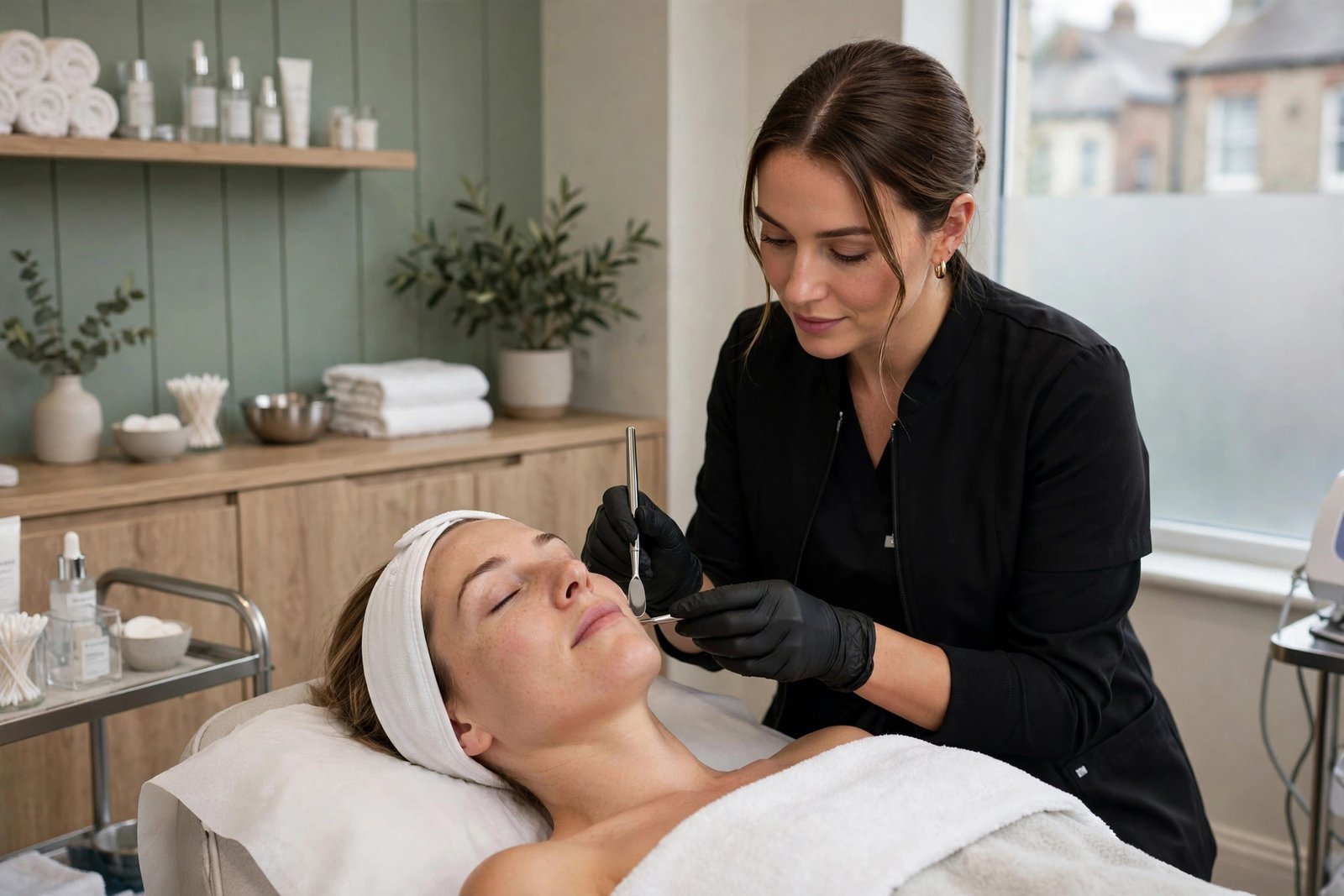
Expect numbing cream for 20 to 30 minutes, then 15 to 30 minutes of needling — uncomfortable but tolerable for most. Afterwards your face looks sunburned for 24 to 72 hours; plan downtime accordingly and avoid makeup for at least 24 hours. Strict sun protection for the following weeks is non-negotiable, as needled skin is highly photosensitive. Most people return to normal activities within two to three days.
Results build gradually: subtle improvement after the second session, meaningful change after three to four, with continued improvement for months after the final treatment. Maintenance sessions once or twice yearly preserve gains. If a gentler reset appeals more, our guide to planning a spa day at home offers restorative, needle-free alternatives.
Aftercare: protecting your investment
The weeks after microneedling determine how much of your investment you keep. Strict sun protection is non-negotiable — needled skin is highly photosensitive, and UV exposure during healing can cause the very pigmentation you sought to fix. Use a gentle cleanser, a simple barrier-supporting moisturiser, and bland SPF; avoid actives (retinoids, acids, vitamin C) for at least a week, and skip makeup for 24 hours minimum. Do not pick at flaking skin, however tempting — let it shed naturally.
Support collagen rebuilding from the inside too: adequate protein, vitamin C-rich foods, good sleep and no smoking all influence wound healing quality. And manage expectations on timing — the collagen cascade peaks around three months post-treatment, so judging results at week two misses the point. Photograph your skin in consistent lighting before each session; gradual change is invisible day-to-day but obvious across months.
Combining microneedling with other treatments
Clinics often propose combination protocols — microneedling plus chemical peels, LED, or injectables — and some combinations genuinely outperform solo treatment. Microneedling pairs well with LED therapy (which supports healing) and with medical-grade skincare introduced after recovery. It pairs poorly with aggressive peels in the same session (excessive trauma, longer downtime) and should be carefully sequenced with Botox or fillers (typically injectables first, microneedling weeks later, to avoid displacing product). Be wary of package deals that bundle everything indiscriminately — a good practitioner sequences treatments with recovery time between them and can explain why each element earns its place.
Conclusion
Is microneedling at a UK clinic worth the cost? For the right candidate — mild to moderate scarring or texture issues, treated by a qualified practitioner, with realistic expectations and a £1,000-plus budget — yes, it is one of the better-evidenced cosmetic treatments available. For everyone else — wrong indications, bargain providers, or hopes of transformation — it is an expensive disappointment. The treatment works; the question is whether you are the person it works for. A candid consultation with a medical professional, not a salesperson, is how you find out.
Frequently Asked Questions
Does microneedling hurt?
With proper numbing cream, most people describe it as uncomfortable rather than painful — a scratchy, vibrating sensation. Pain thresholds vary, and deeper needle depths for scarring are more intense.
How many sessions do I need?
Typically three to six sessions, spaced four to six weeks apart, for concerns like acne scarring. Maintenance sessions once or twice a year help preserve results.
Can microneedling damage my skin?
In qualified hands, serious complications are rare. Risks rise sharply with unqualified providers, unsterile equipment, or treatment over active skin conditions — choose a medical professional in a registered clinic.
Is there an age limit for microneedling?
Clinics generally treat adults 18 and over. There is no upper age limit, though very thin or fragile skin needs conservative settings and experienced hands.