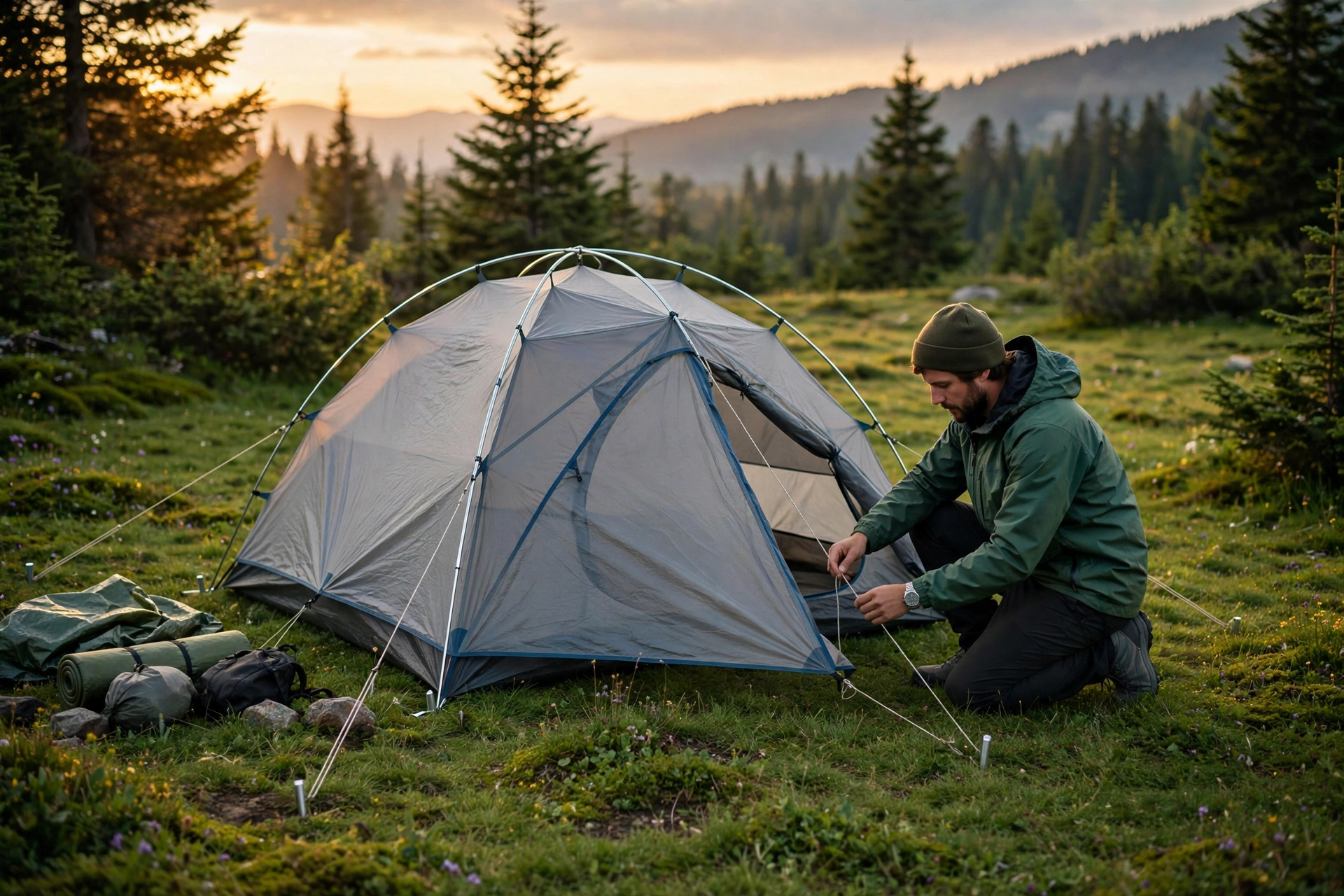
Arriving at a campsite as the light fades, wrestling with poles and guy ropes while the family watches, is a scenario every camper wants to avoid. So how long does tent take to pitch in real life? The honest answer is that it depends on your tent type, its size, your experience, and the weather, but most tents go up far faster than beginners fear. This guide gives you realistic pitching times for every common tent type, a step-by-step method that works every time, and practical tips for getting quicker.
Quick Answer: Typical Pitching Times
As a rough guide: a pop-up tent takes 2 to 5 minutes; a small two-person dome takes 10 to 15 minutes; a four-person tunnel tent takes 20 to 30 minutes; an inflatable air tent takes 15 to 25 minutes; and a large family tent sleeping six or more takes 30 to 60 minutes. Packing away usually takes slightly less time than pitching, since you are not faffing with peg angles and guy-line tension.
These figures assume one reasonably competent adult, or two people working together on larger tents. Your first pitch of a new tent will always take longer, often twice as long, because you are learning the pole sleeves and clip positions as you go.
Pitching Times by Tent Type
Pop-Up Tents: 2 to 5 Minutes
Pop-up tents are the sprinters of the camping world. You release the strap, give the coiled frame a flick, and the tent springs into shape. Pegging out the corners and guy lines adds a few minutes. The trade-off is bulk: they pack down into a large disc that can be awkward to fit in a small car boot.
Dome Tents: 10 to 20 Minutes
The classic two-pole dome is the backbone of festival and backpacking camping. Threading or clipping two flexible poles, raising the inner, then throwing the flysheet over takes a practised camper about ten minutes. Colour-coded poles and clips, now standard on most models, make the job nearly foolproof.
Tunnel Tents: 20 to 40 Minutes
Tunnel tents give superb living space for the weight, which is why families love them. They take longer because you must peg the rear, insert three or four poles, walk the tent upright, then tension everything evenly. Rushing this stage leaves a saggy, flappy tent, so take your time and do it once, properly.
Inflatable Air Tents: 15 to 25 Minutes
Air tents replace poles with inflatable beams that you pump up, which removes the most fiddly part of pitching. Peg the corners, attach the pump, inflate each beam to the marked pressure, then peg and guy out. The pumping itself takes about ten minutes on a large tent, and an electric pump cuts that further.
Large Family and Bell Tents: 30 to 60 Minutes
Big canvas bell tents and eight-person polyester palaces are genuinely a two-person job. Centre poles, A-frame poles, dozens of pegs, and acres of guy lines all add up. On the plus side, you only pitch once per holiday, and the palatial result is worth the effort.
What Affects How Long Pitching Takes
Experience is the biggest factor. Someone who has pitched the same tent twenty times will do it in half the time of a first-timer, because the sequence becomes muscle memory. Weather is next: wind turns a flysheet into a sail, rain makes everything slippery and urgent, and fading light slows everyone down. Hard or stony ground fights your pegs, while soft, wet ground means pegs pull out and need repositioning.
Tent condition matters too. Missing pegs, a tangled guy line, or a pole section that has split since last summer will all cost you minutes at the worst moment. A quick check of the bag before you leave home is the cheapest time-saver in camping.
Step-by-Step: Pitching Any Tent Efficiently
Follow this sequence and you will pitch faster and better, whatever the design:
- Pick your spot. Look for flat, well-drained ground, clear of stones and dips. In the UK, avoid hollows where rainwater collects. Note the wind direction and face the door away from it.
- Lay out a footprint. If you use a groundsheet protector, lay it first. It marks your pitch area and protects the tent floor.
- Unpack methodically. Lay the inner tent out flat and arrange poles, pegs, and the flysheet beside it. Untangle guy lines now, not later.
- Peg the windward corners first. Securing two corners stops the tent blowing away while you work, which is essential on breezy sites.
- Assemble and fit poles or inflate beams. Join pole sections fully before threading them; a half-joined pole snaps under load. For air tents, inflate beams one at a time to the indicated pressure.
- Raise and position. Lift the tent into shape, working from the pegged end. Clip or sleeve everything before moving on.
- Fit the flysheet. Drape it over, align doors and vents, and attach the clips or toggles. Keep it centred so the overhang is even.
- Peg and tension everything. Peg guy lines at roughly 45 degrees, then walk around tensioning evenly. A well-tensioned tent is quieter and far more weatherproof.
- Final check. Open and close the doors, check vents are open to reduce condensation, and make sure nothing is touching the inner where rain could wick through.
How to Get Faster at Pitching
The single best trick is a practice pitch at home. Putting the tent up once in the garden or a local park, in daylight and without pressure, teaches you the sequence and reveals any missing bits. Photograph each stage on your phone; those photos are gold when you arrive at a dark campsite six months later.
Keep your tent bag organised with poles, pegs, and repair kit in the same pockets every time, and replace bent pegs with sturdy replacements rather than tolerating them. Work as a team with defined roles: one person on poles, one on pegs. And always peg the tent out fully, even if the evening looks calm. British weather changes fast, and a midnight re-peg in a storm is nobody’s idea of fun.
Camping in Typical UK Weather
British campsites throw the full menu at you: drizzle, gusts, and the occasional heatwave. In rain, get the flysheet on as fast as possible and sort the fine tensioning later; a damp inner dries, but a soaked sleeping bag ruins the night. In wind, keep your body weight on the tent while pegging, work with a partner, and never let go of an unpegged flysheet. The British Mountaineering Council’s advice on camping and mountain safety is worth reading before any exposed or high-level trip.
For general campsite know-how, the Camping and Caravanning Club’s pitching guides cover everything from choosing a pitch to campsite etiquette, and are written specifically for UK conditions.
Bringing the Dog?
Dogs love camping, but muddy paws and claws are brutal on tent floors. If your four-legged friend is joining the trip, read our guide on how to protect your tent floor from your dog before you go. A cheap footprint, a dedicated dog blanket, and trimmed claws will save your groundsheet and keep the peace inside the tent.
Planning an Activity Holiday?
Camping trips pair brilliantly with adventure activities. If your itinerary includes an aerial course, check the zipline weight limit and how to determine weight limit rules for your venue before you book, so nobody in your group faces disappointment on the day. A little research up front keeps the whole holiday running smoothly.
Frequently Asked Questions
How long does it take to take a tent down?
Usually 10 to 20 minutes for small tents and 20 to 40 for large family tents, assuming it is dry. A wet tent takes longer because you must shake off water and pack carefully to avoid mildew.
Should I practice pitching before a trip?
Yes, absolutely. One practice pitch at home typically halves your time on site and reveals missing pegs or damaged poles while you can still fix them.
Can one person pitch a large family tent?
It is possible but slow and frustrating, especially in wind. Large tents are designed for two people; recruit a helper or choose a smaller tent if you camp solo.
Does an air tent really save time?
It saves faff rather than huge amounts of time. You skip pole threading, but pumping and careful pegging still take 15 to 25 minutes on a big model.