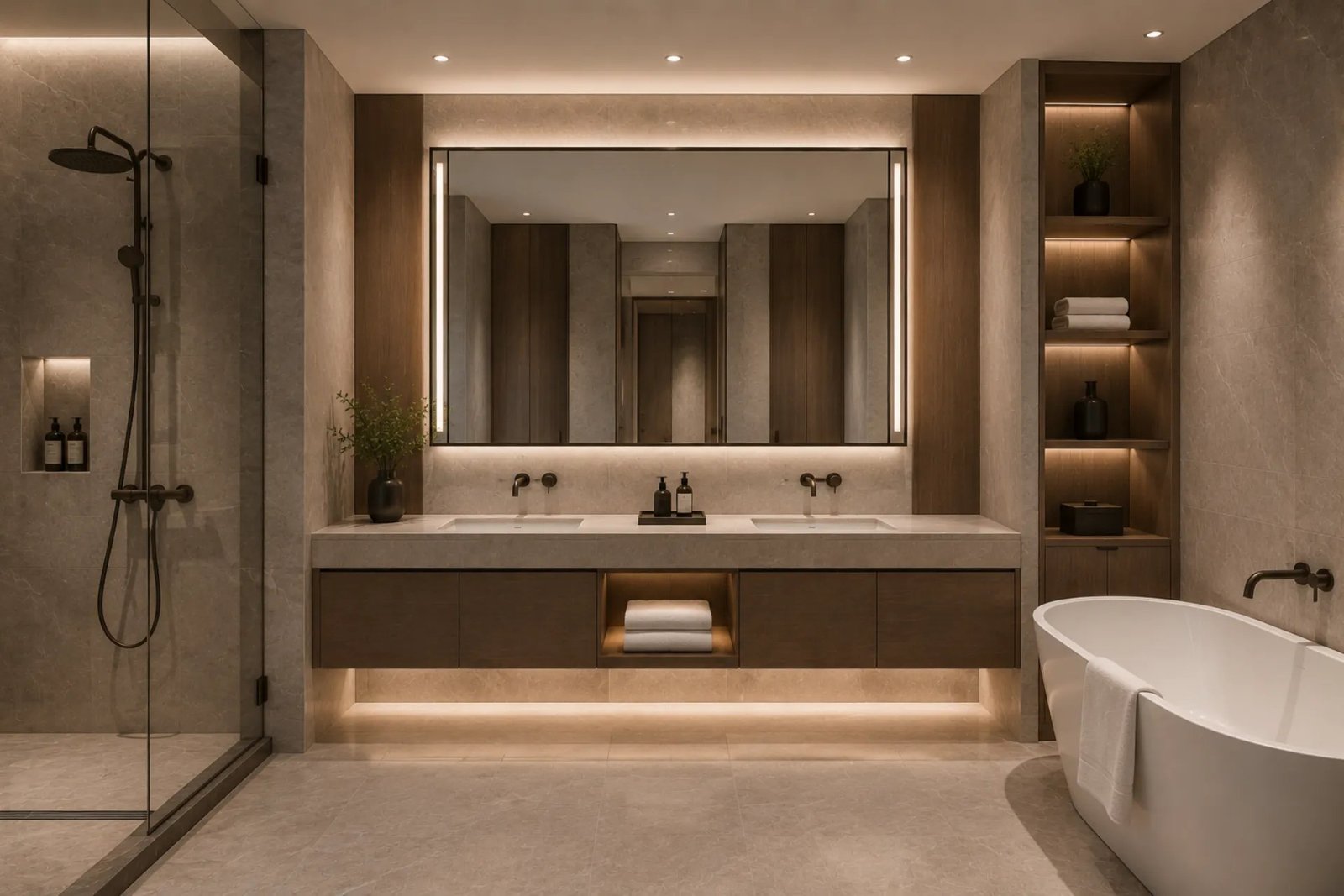
Bathroom renovations have a reputation for spiralling — and it’s deserved, because behind those innocent tiles lurk plumbing, electrics, waterproofing and a dozen trades. But they don’t have to break the bank. So how much does a new bathroom cost in the UK? A budget refresh runs £3,000–£5,000, a proper mid-range renovation £6,000–£10,000, and luxury wet-room territory starts at £12,000+. Here’s the breakdown.
These figures cover a typical UK family bathroom (around 4–6m²), fitted by professionals, keeping the existing layout. Moving the soil pipe or repositioning everything adds £1,500–£3,000 fast — layout changes are the great budget-killer in bathrooms.
How Much Does a New Bathroom Cost in the UK? The Full Breakdown
Sanitaryware: £800–£3,000
The suite itself: a decent mid-range bath, WC, basin and taps from Vitra, Roca or Ideal Standard runs £800–£1,500. Step up to Villeroy & Boch, Duravit or wall-hung designer pieces and £2,000–£3,000 is easy. Budget suites from Wickes or Victoria Plum start around £400 — perfectly functional, just less refined. A walk-in shower enclosure adds £400–£1,200 depending on glass quality and tray type.
Tiles and wall finishes: £500–£2,500
Tiling is brutally labour-intensive: materials might be £200–£800, but tiling labour runs £40–£60 per m², so a fully tiled bathroom can carry £1,500+ in tiling alone. Money-saving moves: tile only the wet areas (shower, behind the basin) and paint the rest with bathroom emulsion; use large-format tiles (fewer to lay, fewer grout lines to clean); or consider waterproof wall panels — quicker to fit, cheaper, and genuinely good now. Our guide to cleaning grout explains why fewer grout lines is a lifestyle choice.
Labour: £2,000–£5,000
A bathroom needs a plumber, tiler, electrician and often a plasterer — coordination is half the battle. A bathroom fitter who project-manages all trades typically charges £2,500–£4,500 for labour on a standard job; separate trades can be cheaper but you’re the project manager. Always get three itemised quotes and vet thoroughly — our tradesperson guide was written for exactly this.
Extras: £500–£2,000
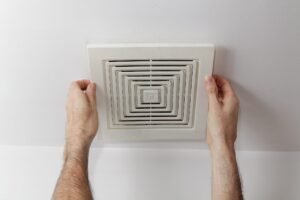
Heated towel rail (£150–£400 fitted), extractor fan with humidistat (£150–£250 — essential, not optional; see our bathroom ventilation guide), underfloor heating (£400–£800), LED mirror (£100–£300), new lighting circuits, and the inevitable “while the floor’s up” extras.
The Budget Bathroom: £3,000–£5,000
Yes, it’s doable. The formula: keep the layout identical (no plumbing moves), choose a budget suite, tile only wet areas, paint the rest, use vinyl or lino flooring instead of tiles, and do the rip-out and painting yourself. Buy the suite in a sale — bathroom retailers discount heavily and ex-display suites go for a song. The result won’t grace a magazine, but it’ll be clean, modern and fully functional. The golden rule of budget bathrooms: spend on what you touch daily (taps, shower valve, WC flush mechanism) and save on what you look at.
Where People Overspend
- Moving the layout. Every moved waste pipe is money and risk. The existing soil stack position dictates more than people realise.
- Designer tiles everywhere. £80/m² handmade-look tiles across a whole bathroom is a £3,000 decision. Use them as a feature wall; use plain tiles elsewhere.
- Body-jet shower systems. Expensive to buy, expensive to run, and most households use two settings forever.
- Cheap extractor fans. The £30 basic fan vs the £80 humidistat model is the difference between a bathroom that stays fresh and one growing mould within a year. This is not the place to save £50.
Which?’s bathroom guides compare suites and fitters with independent testing — worth consulting before committing thousands.
Timeline and Living Through It
A standard bathroom takes 2–3 weeks: rip-out and first-fix plumbing/electrics (week 1), plastering, tiling and waterproofing (week 2), second fix and finishing (week 3). You’ll be without that bathroom throughout — plan alternative washing arrangements (gym membership, obliging neighbours, or scheduling around a second WC). Order everything before work starts; a delayed shower tray holds up the tiler, who holds up everyone.
En-Suites and Cloakrooms: The Smaller Jobs
Not every bathroom project is the family bathroom. A cloakroom WC refresh — new WC, basin, taps, paint and flooring in the same layout — runs £1,500–£3,000 and transforms the room guests actually see. An en-suite addition is the bigger commitment: £5,000–£10,000 depending on whether soil-pipe access is straightforward, plus building-regulations compliance for drainage, ventilation and electrics. En-suites add genuine value and daily convenience, but only where the bedroom can spare the space without becoming cramped — a poky en-suite off a poky bedroom helps nobody. And whatever the scale, the same rules apply: three quotes, vetted trades, extractor fan with humidistat, and tile the wet areas properly. Small rooms punish bad workmanship mercilessly because everything’s at arm’s length.
Second-Hand and Ex-Display: The Smart Savings
Bathroom suites are among the best second-hand buys in home improvement. Ex-display suites from showroom refits routinely sell at 50–70% off on eBay and local selling groups — often premium brands, barely handled, with all fittings included. Reclamation yards stock cast-iron roll-top baths for a fraction of new prices (they’re indestructible and refinish beautifully). The parts to buy new: taps’ internal cartridges are cheap to replace, but check any used brassware operates smoothly; always buy new flexible tap connectors, waste fittings and sealants. A £2,000 Duravit suite for £600 changes the entire economics of a mid-range renovation.
Accessibility: Future-Proofing Your Bathroom
If you’re renovating anyway, consider building in accessibility that costs little now and saves thousands later. A level-access (walk-in) shower with a linear drain adds £500–£1,000 over a standard tray but future-proofs the room for ageing or injury; reinforced wall sections behind where grab rails might one day go cost nothing during the build and everything afterwards; a comfort-height WC (£50 extra) is easier on knees at every age; and lever taps beat twist taps for arthritic hands. None of this looks “medical” when designed well — it’s just good design. And if anyone in the household has a disability, check Disabled Facilities Grants from your local council before paying privately; they can fund significant adaptations.
The Takeaway
Budget £6k–£10k for a proper job, keep the layout, tile wet areas only, spend on taps and ventilation, and get three itemised quotes from vetted fitters. Bathrooms reward planning and punish impulse — design it on paper first, down to the last tile.