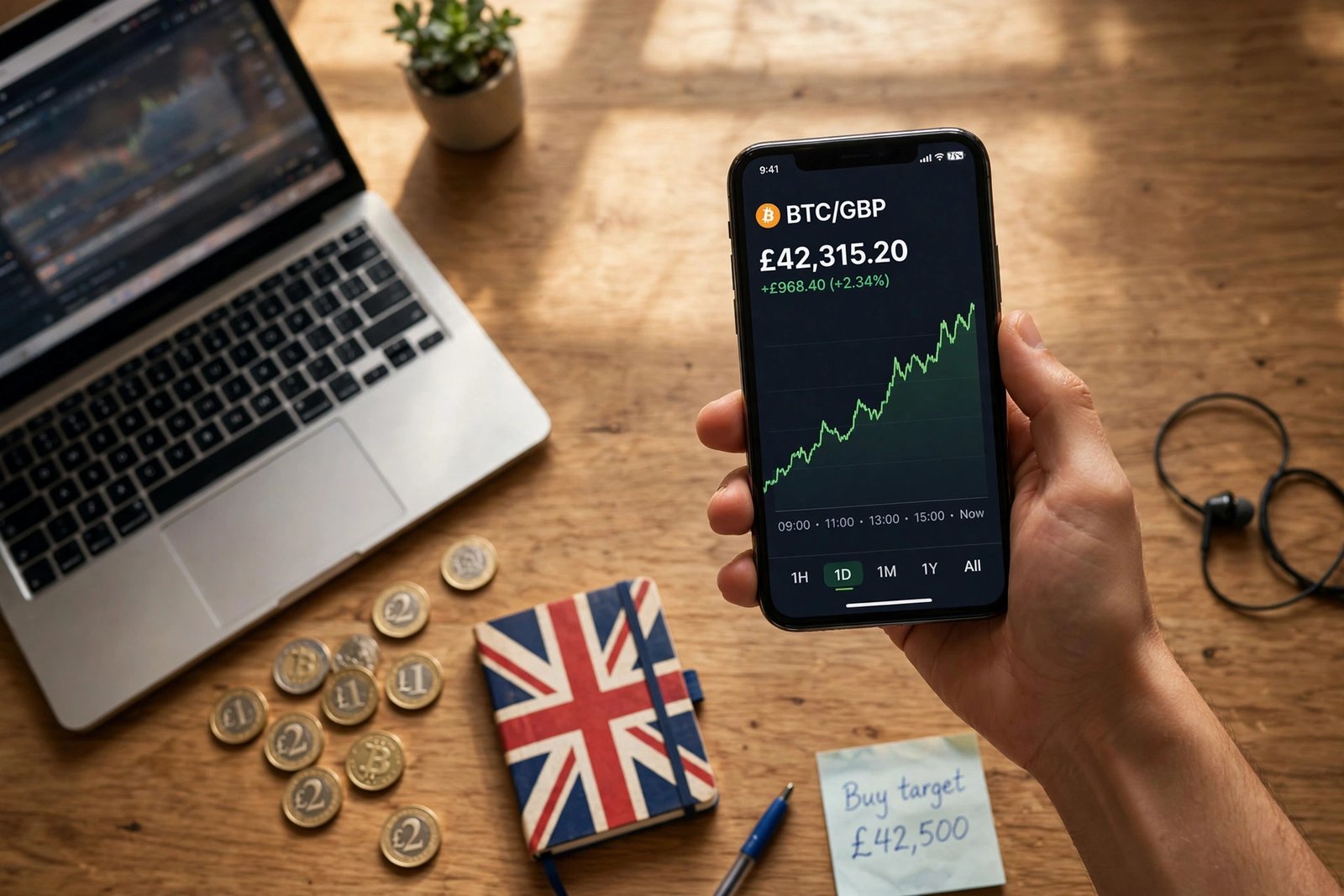
Buying your first Bitcoin in the UK feels a bit like stepping into a foreign currency exchange where half the signs are in a language you don’t speak yet. The good news? Britain is actually one of the more structured places in the world to buy crypto as a beginner, because the Financial Conduct Authority (FCA) has put real guardrails in place. The bad news? Scammers know beginners are nervous, and they prey on exactly that. This guide walks you through the safe, legal, properly-British way to buy your first Bitcoin — from choosing a legitimate exchange to keeping your coins (and your pounds) out of harm’s way.
Why buying Bitcoin in the UK is different from elsewhere
Since October 2023, the UK has operated under the FCA’s cryptoasset financial promotions regime. In plain English, that means any firm marketing crypto to UK consumers must be registered with the FCA (or have its promotions approved by an authorised firm), must show you a clear risk warning — “Don’t invest unless you’re prepared to lose all the money you invest” — and must give first-time buyers a 24-hour cooling-off period before they can complete a purchase. Refer-a-friend bonuses for crypto are banned outright.
Why does this matter to you? Because it gives you a simple first filter: if a platform lets you buy Bitcoin instantly with no risk warning, no cooling-off period and no mention of FCA registration, walk away. Legitimate UK-facing exchanges follow these rules. Shady ones don’t. You can check any firm’s status on the FCA’s register of cryptoasset firms before you deposit a single penny.
One more UK-specific reality: crypto is not covered by the Financial Services Compensation Scheme (FSCS). If your bank goes bust, the FSCS protects up to £85,000 of your money. If your crypto exchange goes bust, there is no equivalent safety net. That single fact should shape every decision you make about how much to invest and where to keep it.
Step-by-step: buying your first Bitcoin safely
1. Choose an FCA-registered exchange
For beginners, the safest route is a well-known exchange that is registered with the FCA for anti-money-laundering purposes and complies with the promotions regime. Names you’ll encounter include Coinbase, Kraken and eToro’s UK operation. Registration is not a gold-plated guarantee — it mainly means the firm meets money-laundering controls — but it’s the minimum bar. Before signing up, take five minutes to learn how to check a website is safe before you hand over money or personal documents; the same checks that protect you when shopping online protect you when choosing a crypto platform.
2. Verify your identity properly
Any legitimate UK exchange will ask for ID verification — typically a photo of your driving licence or passport plus a selfie. This is required by anti-money-laundering law, and it’s actually a good sign. Platforms that let you deposit and trade with no ID checks at all are waving a red flag. The verification process usually takes minutes to a few hours.
3. Deposit pounds the safe way
Most UK beginners fund their account via Faster Payments bank transfer or a UK debit card. Bank transfers are usually free or very cheap; debit card deposits often carry a fee of 1–2%. A few UK banks restrict or block transfers to crypto exchanges — Chase UK, for example, blocked crypto-related payments in 2023, and several high-street banks set limits or require extra confirmation. If your transfer gets declined, it’s usually your bank’s fraud controls doing their job, not a problem with the exchange. Never deposit via a method you can’t trace, and never let someone “help” you buy by sending money to their account first — that’s a classic scam setup.
4. Make your first purchase small
You don’t need to buy a whole Bitcoin. Bitcoin is divisible to eight decimal places, so you can buy £20 or £50 worth — that’s a fraction of a coin, often called “satoshis”. Your first purchase should be an amount you’d be genuinely unbothered about losing entirely. Place a simple market buy, double-check the fees shown before confirming, and then look at your balance. Congratulations: you now own Bitcoin.
The safety checklist most beginners skip
Buying is the easy part. Staying safe afterwards is where beginners get caught out. Run through this checklist the same day you buy:
Turn on two-factor authentication (2FA). Use an authenticator app rather than SMS codes if the exchange offers it — SIM-swap fraud is a real thing. If you’re fuzzy on the details, read our guide to turning on two-factor authentication properly; it takes ten minutes and is the single highest-value security step you can take.
Beware of “support” that contacts you first. No legitimate exchange will phone you, message you on WhatsApp, or ask for your password or recovery phrase. Fake support agents are one of the most common ways UK beginners lose money. If someone contacts you claiming to be from the exchange, hang up and contact the firm through its official website.
Use the 24-hour cooling-off period wisely. The FCA requires it for a reason. Use that day to re-read the risk warnings, check the fees, and make sure you’re comfortable. There is never a legitimate reason to rush a first crypto purchase.
What UK banks actually do about crypto payments
UK banks vary widely — some allow crypto transfers freely, others set limits or block them. Check your bank’s current policy before depositing, and never dodge a block with workarounds like a friend’s account; a transfer from your own account to your own exchange account is the clean pattern.
How much should a UK beginner start with?
The honest answer: only money you could lose without it affecting your life. Financial advisers typically suggest that speculative assets like crypto should be a small slice of your overall finances — and only after the basics are covered. Before putting a pound into Bitcoin, make sure you’ve built an emergency fund that could cover three to six months of essential expenses. Bitcoin’s price can and does fall 50% or more in a matter of months; that volatility is manageable if it’s play money, and devastating if it’s your rent money. Start with a small fixed amount, learn how the exchange works, practise withdrawing, and only then decide whether to invest more — slowly, over time, rather than in one lump sum.
Tax: the bit beginners forget
One surprise for beginners: HMRC treats crypto as property, so selling, swapping or spending Bitcoin can trigger Capital Gains Tax above the £3,000 annual exempt amount, at 10% or 20%. Keep records of every purchase from day one — dates, amounts, fees — and read HMRC’s crypto guidance before tax season arrives.
The bottom line
Buying Bitcoin safely in the UK comes down to a handful of unglamorous habits: use an FCA-registered exchange, verify its credentials, deposit from your own bank account, start small, switch on 2FA, ignore anyone who contacts you first, and keep records for HMRC. None of it is exciting — but exciting is what gets beginners into trouble. Take the 24-hour cooling-off period, treat your first purchase as a learning exercise rather than an investment masterstroke, and you’ll have done what most beginners don’t: started safely. If anything ever feels off — pressure to act fast, guaranteed returns, a “trader” managing money for you — check it against the FCA’s ScamSmart guidance before you go any further.
Frequently Asked Questions
Is Bitcoin legal in the UK?
Yes. Bitcoin is legal to buy, sell and hold in the UK. It isn’t legal tender — shops don’t have to accept it — but owning and trading it is perfectly lawful, and profits are subject to UK tax.
Can I buy less than one whole Bitcoin?
Absolutely. Bitcoin divides into 100 million satoshis, so you can buy £10 or £20 worth on any major exchange. Most UK beginners start with a small fraction of a coin.
Do I need to tell my bank I’m buying crypto?
You don’t need permission, but be aware your bank may query or block crypto-related transfers as part of its fraud controls. Using your own account and starting with small amounts keeps things smooth.
What is the 24-hour cooling-off period?
Under FCA rules, first-time crypto investors in the UK must wait 24 hours between requesting to invest and completing the purchase. It’s designed to stop impulse buying — use the time to double-check everything.
Is my Bitcoin protected if the exchange collapses?
No. Crypto held on exchanges is not covered by the FSCS £85,000 protection that applies to bank deposits. This is a key reason to keep only trading amounts on an exchange and consider moving larger holdings to a wallet you control.