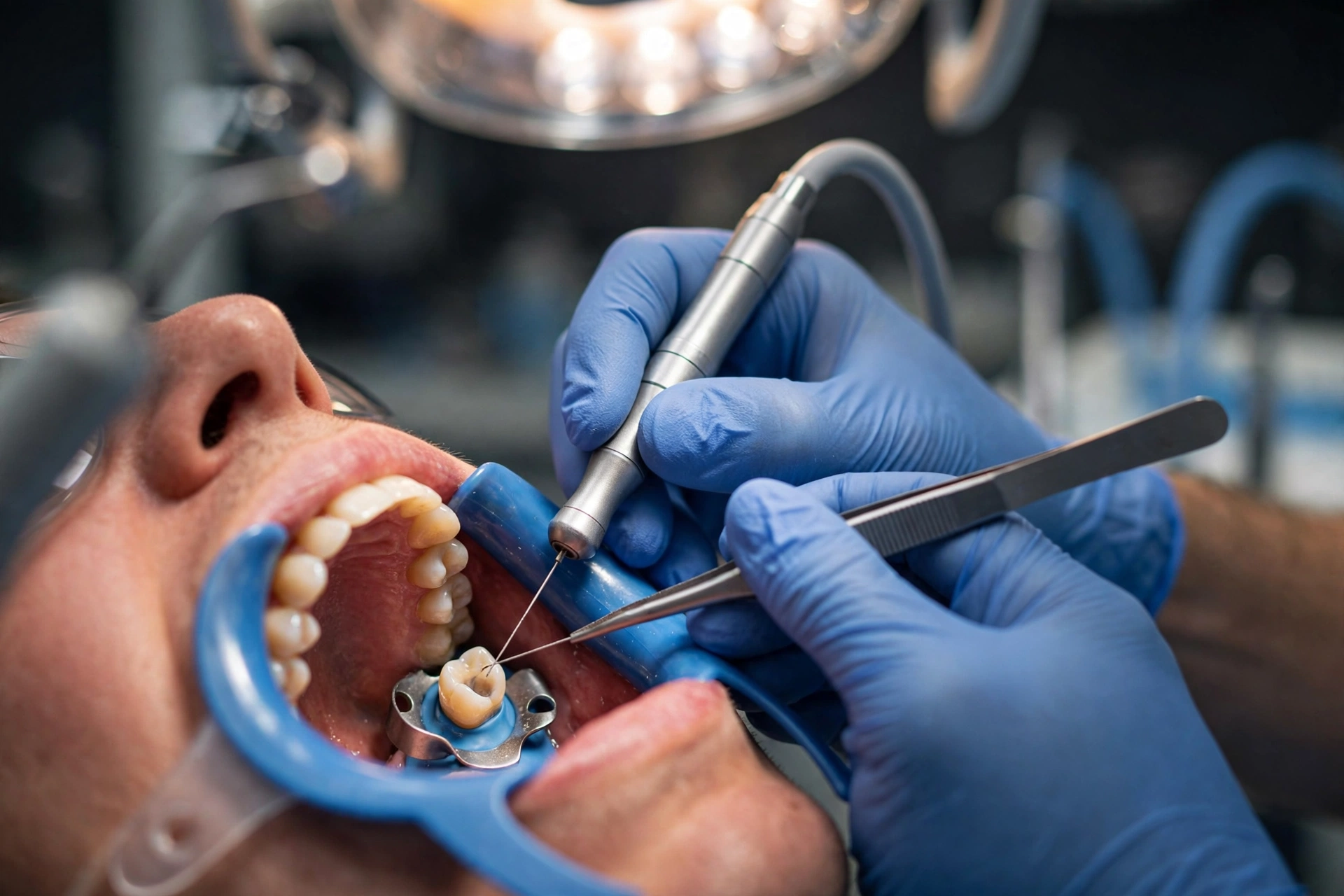
Hearing the words “root canal” can send a shiver down anyone’s spine. The treatment has a fearsome reputation — but much of it is outdated. If you are wondering how painful is a root canal really, the honest answer is: far less painful than most people expect, and almost always less painful than the toothache that makes the treatment necessary in the first place.
This guide explains exactly what a root canal involves, how much discomfort you can realistically expect, how modern anaesthetics keep you comfortable, and how to recover smoothly afterwards. By the end, you will know exactly what to expect — and why there is no need to dread it.
What Is a Root Canal Treatment?
A root canal (the technical term is endodontic treatment) is a procedure to save a tooth whose inner pulp has become infected or damaged. The pulp is the soft tissue inside your tooth that contains nerves and blood vessels. When it becomes infected — usually through deep decay, a cracked tooth, or repeated dental work — it causes pain and can lead to an abscess if left untreated.
Why You Might Need One
The most common sign you need a root canal is persistent, severe toothache, especially pain that wakes you at night or throbs when you eat or drink something hot or cold. Other signs include a tooth that has darkened, swollen gums near the tooth, a small pimple-like bump on the gum, or lingering sensitivity long after the hot or cold stimulus is gone. Your dentist will confirm the diagnosis with an X-ray.
The Alternative: Losing the Tooth
It is worth understanding the alternative. Without a root canal, an infected tooth usually cannot be saved — it will eventually need to be extracted. Keeping your natural tooth is almost always better: extraction leads to gaps that can cause neighbouring teeth to shift, affect your bite, and require a bridge or implant to fix. A root canal lets you keep your own tooth, often for decades.
How Painful Is a Root Canal? The Honest Answer
Here is the truth most dentists wish more patients knew: a modern root canal feels about the same as having a filling done. That is not marketing speak — it is the experience reported by the vast majority of patients who have had one.
During the Procedure: What You Actually Feel
Before anything begins, your dentist numbs the area thoroughly with a local anaesthetic. Many dentists apply a numbing gel first, so you barely feel the injection. Once the area is numb, you should feel pressure and vibration, but not sharp pain. If you feel anything uncomfortable at any point, tell your dentist immediately — they can top up the anaesthetic. You are never expected to just endure it.
The procedure itself usually takes between 30 and 90 minutes depending on the tooth. Molars with multiple roots take longer than front teeth. Most of that time is the dentist carefully cleaning and shaping the inside of the tooth — methodical work, not painful work.
Why the Reputation Is Outdated
Root canals earned their scary reputation decades ago, when anaesthetics were less effective and techniques were cruder. Modern rotary instruments, better imaging, and highly effective local anaesthetics have transformed the experience. For authoritative detail on the procedure itself, the NHS guidance on root canal treatment describes each stage clearly.
After the Procedure: Recovery Pain
Once the anaesthetic wears off, it is normal to feel some tenderness or mild aching in the treated tooth for a few days. This is your body’s response to the work done inside the tooth, and it is usually easily managed with over-the-counter painkillers like ibuprofen or paracetamol, following the packet instructions.
The soreness should steadily improve day by day. If pain gets worse after a few days, or you develop swelling, contact your dentist — this is uncommon but worth checking.
Step-by-Step: What Happens During a Root Canal
Knowing the steps in advance removes the fear of the unknown. Here is the typical sequence.
Step 1: Numbing and Isolation
Your dentist numbs the tooth and surrounding gum with local anaesthetic, then places a small rubber sheet (called a rubber dam) around the tooth. This keeps the area clean and dry and stops you from tasting or swallowing anything. It may feel slightly odd at first, but most patients forget it is there within minutes.
Step 2: Opening the Tooth
The dentist makes a small opening in the top of the tooth to access the pulp chamber. Because you are numb, you feel vibration but no pain.
Step 3: Cleaning and Shaping the Canals
Using fine instruments, the dentist removes the infected pulp from inside the tooth and its roots, then cleans, disinfects, and shapes the empty canals. This is the longest part of the procedure and is completely painless under anaesthetic.
Step 4: Filling and Sealing
The cleaned canals are filled with a rubber-like material and sealed to prevent reinfection. A temporary or permanent filling closes the opening in the tooth.
Step 5: The Crown
In most cases — especially for back teeth — your dentist will recommend a crown over the treated tooth. A tooth that has had a root canal can become more brittle over time, and a crown protects it and restores its full chewing strength. This is usually done at a follow-up appointment once the tooth has settled.
Tips for a Comfortable Experience
A little preparation makes the appointment easier. Eat a normal meal beforehand so you are not hungry afterwards while your mouth is numb. Take any regular medication as normal, and let your dentist know about everything you take. If you are nervous, say so — dentists treat anxious patients every day and will pace the appointment to suit you.
Bring headphones if you find the sound of dental instruments unsettling. Agree on a stop signal (usually raising a hand) before treatment starts, so you know you are in control. The American Dental Association’s overview of root canals is another reassuring read if you want a second source on what to expect.
Recovery: Aftercare Tips
Good aftercare speeds healing and keeps discomfort to a minimum.
The First 24-48 Hours
Avoid chewing on the treated tooth until the numbness has fully worn off — you could bite your cheek or tongue without realising. Stick to soft foods for the first day or two. Take painkillers as directed if you feel aching, and avoid very hot drinks while the area is still numb.
The Following Week
Brush and floss normally, being gentle around the treated tooth. The mild tenderness should fade within a few days. Attend your follow-up appointment for the permanent filling or crown — this is an important part of the treatment, not an optional extra, because it protects the tooth long-term.
Warning Signs to Watch For
Contact your dentist if you develop severe pain that does not respond to painkillers, visible swelling in the gum or face, a fever, or if the temporary filling comes out. These are uncommon, but prompt attention keeps small issues from becoming bigger ones.
Frequently Asked Questions
How painful is a root canal compared to a filling?
Most patients say it feels very similar to having a filling — some pressure and vibration, but no sharp pain thanks to modern local anaesthetic. The procedure takes longer than a filling, but the comfort level is comparable.
How long does a root canal take?
A straightforward root canal on a front tooth may take 30-60 minutes. Molars with three or four canals typically take 60-90 minutes. Complex cases are sometimes split across two appointments.
Will I need time off work after a root canal?
Most people return to work the same day or the next day. The anaesthetic wears off within a few hours, and any tenderness is usually manageable with over-the-counter painkillers.
How long does a root canal last?
With a proper crown and good oral hygiene, a root canal-treated tooth can last a lifetime. Studies show very high long-term success rates when the tooth is properly restored afterwards.
Is a root canal better than pulling the tooth?
In almost all cases, yes. Saving your natural tooth preserves your bite, avoids the need for bridges or implants, and is usually cheaper in the long run than replacing an extracted tooth.
Conclusion
So, how painful is a root canal? For the overwhelming majority of patients, it is a comfortable, routine procedure that feels much like getting a filling — and it relieves the often severe pain of the infection that made it necessary. Modern anaesthetics, skilled dentists, and a clear understanding of each step take the fear out of the experience. If your dentist has recommended a root canal, you can go ahead with confidence: you are choosing to save your tooth, and the procedure itself is nothing like its reputation.