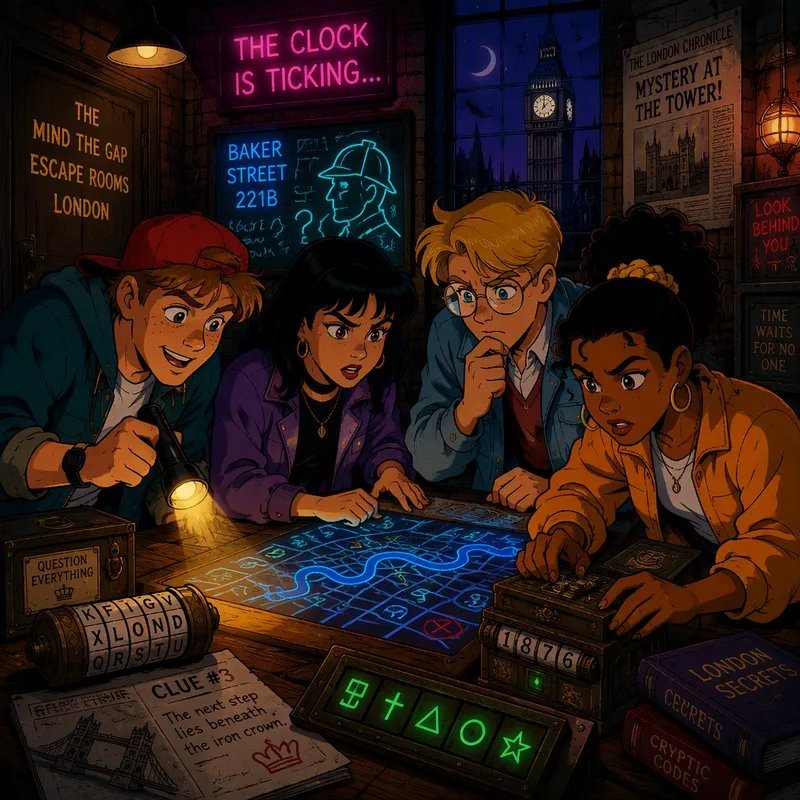
Escape rooms have grown from a novelty into one of London’s best group activities — part puzzle, part theatre, part team-building exercise that doesn’t feel like one. But with hundreds of rooms across the city, quality varies enormously. So what are the best escape rooms in London? Here’s a guide to the top-rated operators and standout rooms, plus how to choose the right one for your group.
What Are the Best Escape Rooms in London: What Makes Them Great
Before the recommendations: the criteria. Puzzle quality (logical, varied, satisfying — not just padlocks), theming and immersion (does the room feel like the story?), game flow (no bottlenecks where one person solves while five watch), hosting (good games masters hint helpfully without giving it away), and the finale (a great final puzzle elevates the whole hour). The best rooms nail all five; the average ones are still fun with the right group.
Related reading: US news today covers this in detail.
The Top Operators
- ClueQuest (King’s Cross): London’s original and still among the best — the “Revenge of the Sheep” and “Operation BlackSheep” rooms are beloved. Excellent hosting, great for beginners and families. The cartoon-spy theming is charming rather than scary.
- Enigma Quests (multiple locations): consistently top-rated — the “Million Pound Heist” is a standout, with clever tech and a satisfying arc. Professional operation, good for corporate groups.
- Handmade Mystery (various): the connoisseur’s choice — beautifully crafted rooms with original puzzles. Smaller operation, higher craft.
- Ai Escape (Aldgate): the tech-forward option — “The Loop” and others use impressive effects. Great for experienced players wanting something different.
- Omescape (Kings Cross): cinematic, story-driven rooms with high production values. The horror-tinged rooms are genuinely atmospheric.
- Escape Hunt (multiple): the big chain — reliable, widespread, good for beginners. Quality varies by branch; check recent reviews.
Best Rooms by Category
- For beginners: ClueQuest’s “Plan52” or any operator’s lowest-difficulty room. Start easy — the mechanics take 15 minutes to click, and an achievable room builds confidence.
- For experts: ask operators for their hardest rooms — Handmade Mystery’s and Ai Escape’s top-difficulty offerings challenge even veteran teams. (A “100+ rooms played” group needs the real thing.)
- For families/kids: ClueQuest and similar family-friendly operators — non-scary themes, puzzles kids can contribute to. Minimum ages are usually 8–10 with adults.
- For horror fans: the live-actor horror rooms (several operators run them) — genuinely frightening, 18+ (or 16+), not for the faint-hearted. The adrenaline is real.
- For big groups: venues with multiple identical rooms for head-to-head competition, or the large-format rooms (8–10 players). Book the whole slot.
- For dates: two-player-friendly rooms exist — intimate, collaborative, and a far better date than the cinema (see our date night guide for the at-home alternative).
Tips for First-Timers
- Communicate constantly. Call out everything you find — the number one beginner mistake is pocketing a clue silently. “I’ve got a key!” “There’s a locked box here!” — narrate everything.
- Don’t overthink. Escape rooms are designed to be solvable in 60 minutes — the answer is usually simpler than you think. If you’ve spent 10 minutes on one puzzle, ask for a hint.
- Use the hints. There’s no prize for struggling hintless. Good games masters nudge; let them. A room completed with 3 hints beats a room failed with pride.
- Search thoroughly first. The first 5 minutes should be a systematic search — every drawer, every pocket, under everything. Most teams find 70% of what they need immediately.
- Organise found items. Pile unused keys and solved puzzle pieces in one spot (“the discard pile”) — it stops the team re-trying solved things.
- Divide and conquer (then regroup). Split up for searching, come together for solving. One person hogging a puzzle while five watch is the fun-killer.
Practicalities: Booking and Prices
Prices: £25–£40 per person typically — cheaper per person with bigger groups (rooms are priced per room, split the cost). Book in advance for weekends; weekday evenings often have availability and occasional discounts. Arrive 15 minutes early — briefings start on time and late arrival eats your 60 minutes. Age limits: usually 10+ with adults, 14–16+ for horror rooms. Accessibility: ask in advance — many rooms involve crouching, low light or stairs; good operators will advise honestly. Photos: most venues do a post-game photo with props — embrace the silliness.
Beyond London
The escape room boom is nationwide — every major UK city has quality operators now, often cheaper than London (£18–£28 per person). The principles above apply everywhere: check recent reviews (the industry evolves fast — a 2019 review is ancient history), start with the operator’s recommended beginner room, and look for the independents — they often out-craft the chains. For more group activities, our games night guide and quiz night guide keep the competitive spirit going at home.
Escape Rooms for Special Occasions
Escape rooms have become the go-to celebration activity — and for good reason. Birthdays: book the slot, add a meal after (the post-game debrief over food is half the fun). Many venues do birthday packages. Stag/hen dos: the horror rooms are hen-do classics; the heist rooms suit stags. Split into competing teams for maximum chaos. Team building: genuinely effective — escape rooms reveal communication styles, leadership and grace under pressure better than any workshop. Book the debrief room if offered. Proposals: yes, people do this — some venues will hide the ring in the final puzzle box. Coordinate with the games master in advance. Christmas parties: the December slots book out fast — reserve early. Whatever the occasion, the formula works: shared challenge, shared triumph (or hilarious failure), and a story you’ll retell. It’s the rare group activity that suits 25-year-olds and 55-year-olds equally.
The Future: What’s Next for Escape Rooms
The industry keeps evolving. Outdoor escape games: city-wide puzzle hunts (several London companies run them) — the escape room unchained from the room, using the city as the set. VR escape rooms: the tech is finally good enough — fantastical settings impossible physically, though the tactile joy is less. Tabletop escape games: the at-home versions (the Exit series — £12–£15 a box) bring the experience to your living room; our board games guide and games night guide cover the home-gaming world. Bigger narratives: the trend is toward longer, more theatrical experiences — 90-minute epics, multi-room sagas, actor-led adventures. The 60-minute box room was the beginning; the immersive adventure is the future. London, as ever, leads the way.
For more London inspiration, Visit London lists the city’s best experiences.
The takeaway: ClueQuest for beginners and families, Handmade Mystery for craft, Ai Escape for tech, horror rooms for the brave. Communicate everything, use your hints, and book the beginner room first — you’ll be back for the hard ones.