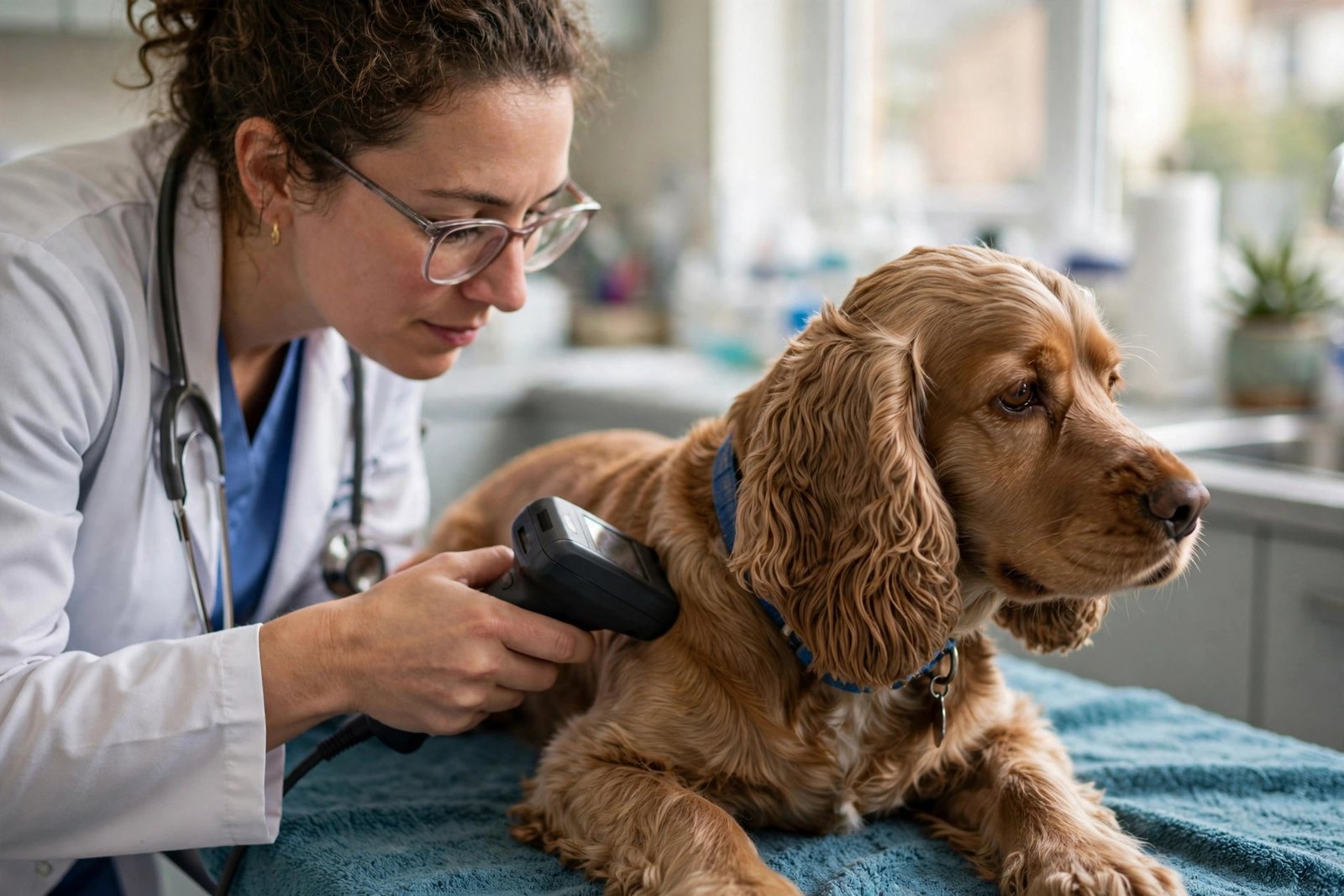
Since April 2016, every dog in England, Scotland and Wales must be microchipped by law — it is not optional, not a nice-to-have, and the fine for ignoring it is £500. Yet many owners are fuzzy on the details: when it must be done, what it actually involves, which databases count, and what happens if you move house and forget to update the details (the most common way owners fall foul of the law). Here is everything UK dog owners need to know.
The law: what is actually required
The rules are straightforward. Every dog over eight weeks old must be microchipped, and the chip must be registered on a DEFRA-compliant database with the keeper’s current details. Puppies must be chipped before they leave the breeder — a breeder handing over an unchipped puppy is breaking the law, which tells you something about the breeder. If your dog is not chipped, you have 21 days to comply once caught, after which the £500 fine applies.
The critical bit most owners miss: the law requires your details to be up to date. Move house, change phone number, rehome the dog — and fail to update the database — and you are non-compliant, chip or no chip. Updating is usually free or a few pounds via the database’s website; there is no excuse for stale details. Enforcement is typically by local authority dog wardens, and while prosecutions are not daily occurrences, the fine is real and the 21-day notice is not a suggestion. The official requirements are set out on gov.uk — the definitive source.
What microchipping actually involves
Despite the sci-fi name, it is gloriously mundane. The chip is the size of a grain of rice, implanted with a needle between the dog’s shoulder blades — no anaesthetic, no surgery, about as uncomfortable as a vaccination, over in seconds. Most puppies barely notice; nervous dogs notice the restraint more than the chip. Your vet does it in a routine appointment, and many nurses’ clinics offer it cheaper.
Cost: £10–£30 at a vet, often £10–£15 at charity microchipping events run by the Dogs Trust, RSPCA and Blue Cross — and sometimes free during campaigns. There is no annual fee for the chip itself, though some databases charge for “premium” services like change-of-keeper transfers; the basic legal requirement (chip + current details on a compliant database) costs nothing ongoing. Sixteen databases are DEFRA-compliant in the UK — your vet or implanter will register the chip, but confirm which database and keep the paperwork with the chip number. Registering a pet is one of life’s small admin tasks, much like registering with a GP — do it once, keep it current.
What the chip does — and does not — do
A microchip is not a GPS tracker. It does not broadcast location, cannot be tracked from your phone, and has no battery — it is a passive RFID chip that only reveals its 15-digit number when scanned. Its power is reunification: a lost dog scanned by a vet, warden or rescue is matched to your details in seconds. The RSPCA and Dogs Trust both report that chipped dogs are reunited far faster than unchipped ones — and unchipped strays can be legally rehomed after seven days, while chipped dogs trigger active owner searches.
The chip also proves ownership in disputes — invaluable given rising dog theft, where a scanned chip is hard evidence. But it only works if the details are current: a chip pointing to a disconnected 2019 phone number is nearly useless, which is why the update requirement exists. When you get a rescue dog, the transfer of keepership must be formally recorded (some databases charge £10–£20 for this — pay it). And if you travel with your dog, the chip number must match the pet passport/AHC documentation exactly — mismatches cause real problems at borders.
Common mistakes and how to avoid them
Mistake one: assuming the breeder or rescue “did the paperwork”. Chips are sometimes implanted but never registered, or registered to the breeder. Ask for the chip number in writing, check it yourself on a database lookup, and confirm your details are the ones on record. Mistake two: moving house and forgetting the database — set a reminder alongside your driving licence and bank updates.
Mistake three: buying a puppy too young to be chipped. Legal chipping age aligns with the legal sale age (eight weeks) — a breeder offering six-week-old puppies is breaking multiple laws, and you should run. Mistake four: confusing microchipping with ID tags. The Control of Dogs Order 1992 separately requires dogs in public to wear a collar with the owner’s name and address on a tag — the chip does not replace this. Both, always. And mistake five: assuming cats need it too — as of June 2024, cats in England must also be microchipped (separate law, same principle), so multi-pet households should check both species are compliant.
What about cats? The 2024 microchipping law
Dog owners were first, but cats followed: since 10 June 2024, all cats in England over 20 weeks old must also be microchipped and registered on a compliant database, with the same £500 fine for non-compliance. Scotland and Wales have consulted on similar rules, so check your nation’s position. The procedure, databases and update requirements mirror the dog rules exactly.
If you have both species, audit the whole household at once: confirm every chip is registered, every database has your current details, and every keeper transfer (for rescues) was formally completed. Vets can scan and verify chip numbers in seconds during routine appointments — ask at the next visit. And remember that the cat law, like the dog law, is about reunification: the Cats Protection charity reports thousands of unidentified cats in its care each year, many of whom could have gone home in hours with a £15 chip. Whether it barks or purrs, if it is yours, chip it and keep it current.
Frequently Asked Questions
Does microchipping hurt the dog?
Barely — it is a quick injection between the shoulder blades, comparable to a vaccination. Most dogs react more to being held still than to the chip itself. No anaesthetic or recovery time needed.
How much does it cost to microchip a dog?
£10–£30 at a vet, often £10–£15 or free at charity events. There is no ongoing fee for the basic legal requirement, though some databases charge for premium services.
What if I move house?
Update the microchip database immediately — it is a legal requirement, and it is usually free online. Stale details make the chip useless for reunification and leave you non-compliant.
Is my dog’s chip a GPS tracker?
No. Microchips are passive — they only reveal an ID number when scanned at close range. For live tracking you need a separate GPS collar device, which is a different product entirely.
Conclusion
Microchipping is cheap, quick, nearly painless — and the law. Get it done by eight weeks, register it on a DEFRA-compliant database, and keep the details current through every move and new number. It is the smallest investment in your dog’s safety you will ever make, and the one most likely to bring them home if they ever get lost.