
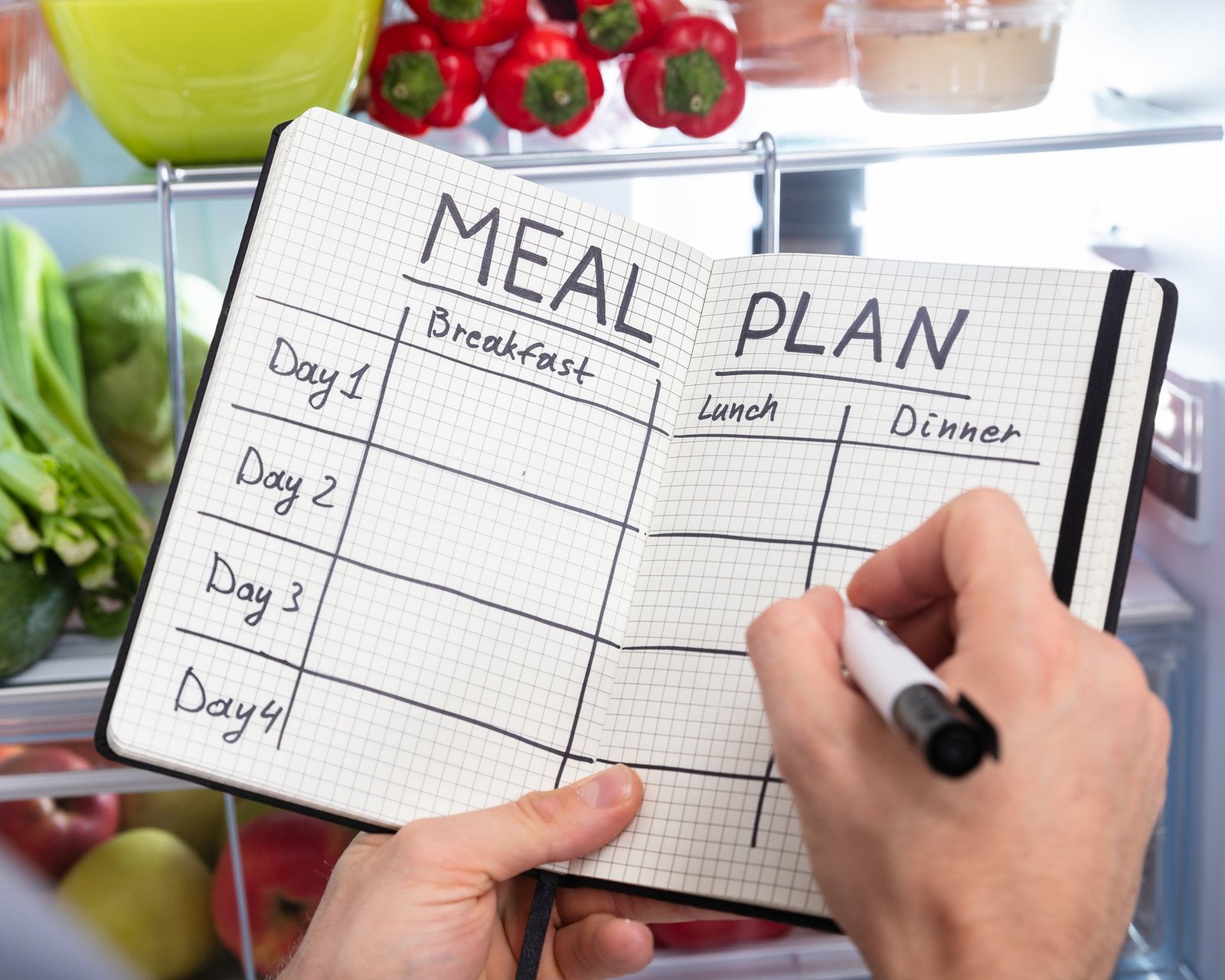
The 5pm “what’s for dinner?” panic is one of modern life’s most unnecessary stresses. You stare into the fridge, nothing inspires, and twenty minutes later you’re ordering a takeaway or doing an emergency supermarket run. Learning how to plan a weekly dinner menu UK-style eliminates all of it — one planning session a week, one proper shop, and every evening’s decision is already made. I resisted this for years as “too organised”; now I’d never go back.
The benefits compound fast: less money (planned shops cut impulse buys dramatically — most families save £30–£50 a month), less waste (you buy what you’ll use), less stress (decisions made in advance), and better eating (planned meals beat “whatever’s easy” nutritionally).
How to Plan a Weekly Dinner Menu: The 20-Minute System
- Check the calendar (2 minutes). Late meeting Thursday? That’s a slow-cooker or freezer night. Kids at clubs Wednesday? Quick pasta. Match meals to your actual week, not an idealised one.
- Check what you’ve got (3 minutes). Fridge, freezer, cupboard — note anything that needs using. Build at least one meal around it. This is where waste dies.
- Pick 5–7 dinners (10 minutes). Not seven new recipes — that’s madness. Use a template: see below. Aim for a mix of quick (under 30 mins), batch (cook once, eat twice), and one “project” meal if you enjoy cooking.
- Write the shopping list (5 minutes). Go through the meals, list what you need, cross off what you have. Organise by shop section (produce, meat, dairy, cupboard) to make the actual shop fast.
- Shop once. One big shop (or one online order) beats five top-up trips. Top-ups are where impulse spending lives.
The Template That Makes It Easy
Decision fatigue kills meal planning. A weekly template removes it:
- Monday: Meat-free (lentil dahl, veggie chilli, bean quesadillas)
- Tuesday: Quick pasta or stir-fry (under 25 minutes)
- Wednesday: One-pot (chilli, curry, casserole — double it, freeze half)
- Thursday: Slow cooker or freezer meal (zero effort night)
- Friday: Fun food (homemade pizza, fajitas, fakeaway curry)
- Saturday: The “proper” cook — roast, steak night, something you enjoy making
- Sunday: Leftovers / use-it-up (soup, fried rice, frittata — whatever needs eating)
Rotate 3–4 weeks of templates and you’ll never get bored, but you’ll also never face a blank page. New recipes slot into the template where they fit.
The “Cook Once, Eat Twice” Principle
The highest-leverage trick in weekly planning: deliberately cook double. Wednesday’s bolognese becomes Friday’s chilli (same base, different spices — nobody notices, everybody’s happy). Sunday’s roast chicken becomes Monday’s curry and Tuesday’s soup. A big pot of rice on Sunday covers two dinners. This isn’t leftovers-as-punishment; it’s planned-overs — cooking with tomorrow in mind. It halves your cooking nights without halving your variety.
Shopping Strategies That Save Real Money
- Online shopping kills impulse buys — you can’t be seduced by end-of-aisle displays. Most supermarkets offer delivery slots for £1–£4, or free click-and-collect.
- Aldi/Lidl for staples, supermarket for specifics. The discounters win on basics (tins, frozen, dairy, produce); the big four have better range for specific ingredients.
- Frozen and tinned are your friends. Planned menus work best when half the ingredients don’t go off. Frozen veg, tinned beans, passata — the backbone of reliable planning.
- Buy meat strategically. Plan pricier proteins (steak, salmon — see our salmon guide) for 1–2 nights; use cheaper cuts and mince for the rest. A whole chicken on Sunday gives you three meals.
- Seasonal veg is cheaper. Courgettes in August cost pennies; in February they’re luxury items. Let the seasons shape your template.
Tools: Paper, Apps, or Spreadsheets?
Honestly? A notebook on the fridge works as well as anything. But if you like tech: notes apps (shared lists for households), meal-planning apps (Plate Up, Mealime — decent free tiers), or a simple spreadsheet with your 4-week rotation. The tool doesn’t matter; the habit does. Start analogue and simple — you can optimise later. The enemy of meal planning is a system so complex you abandon it by week three.
When Plans Fall Apart (They Will)
Keep two or three “emergency meals” that need no planning: pasta with tinned tomatoes and garlic, omelettes, beans on toast, egg fried rice from freezer staples. If Tuesday’s planned meal doesn’t happen, it just slides to Wednesday — the plan is a servant, not a master. And build in one takeaway or eat-out night if that’s your thing; planning isn’t about perfection, it’s about making the default easy. For honest numbers on what UK households actually spend on food, MoneySavingExpert and the ONS both publish useful data.
Planning for Special Diets in One Household
The modern complication: one vegetarian, one gluten-free, one fussy eight-year-old, all at the same table. The trick is modular meals — a base everyone eats, with additions for those who need them. Chilli: make the veggie base, cook mince separately for the meat-eaters. Curry: coconut-based sauce for all, protein added per portion. Pasta: gluten-free pasta cooks in a separate small pan in the same time. Tacos, fajitas, jacket potatoes, stir-fries — all naturally modular.
Build your template around 3–4 modular meals and the dietary jigsaw solves itself. It also means you’re not cooking two entirely separate dinners, which is where multi-diet households usually break down. Our budget meals guide has more naturally adaptable recipes, and the afternoon tea guide covers catering for dietary requirements when you’re hosting.
Seasonal Menu Planning: A Year at a Glance
Letting the seasons shape your menus saves money and improves flavour. Spring: lighter meals, new potatoes, asparagus, lamb. Summer: salads, picnic food, barbecues, berries — minimal cooking, maximum freshness. Autumn: the golden season for planners — squashes, apples, game, hearty soups and stews, batch cooking as the nights draw in. Winter: casseroles, roasts, citrus to cut the richness, and the freezer full of autumn’s batch cooking. You don’t need to overhaul everything four times a year — just nudge the template: swap the summer’s stir-fries for autumn’s stews and your menus stay fresh, cheap and seasonal without any extra effort.
The takeaway: 20 minutes on Sunday — calendar, inventory, template, list, one shop. Cook double twice a week. Keep emergency meals for chaos days. That’s the whole system, and it works.







One thought on “How to Plan a Weekly Dinner Menu (UK Guide)”