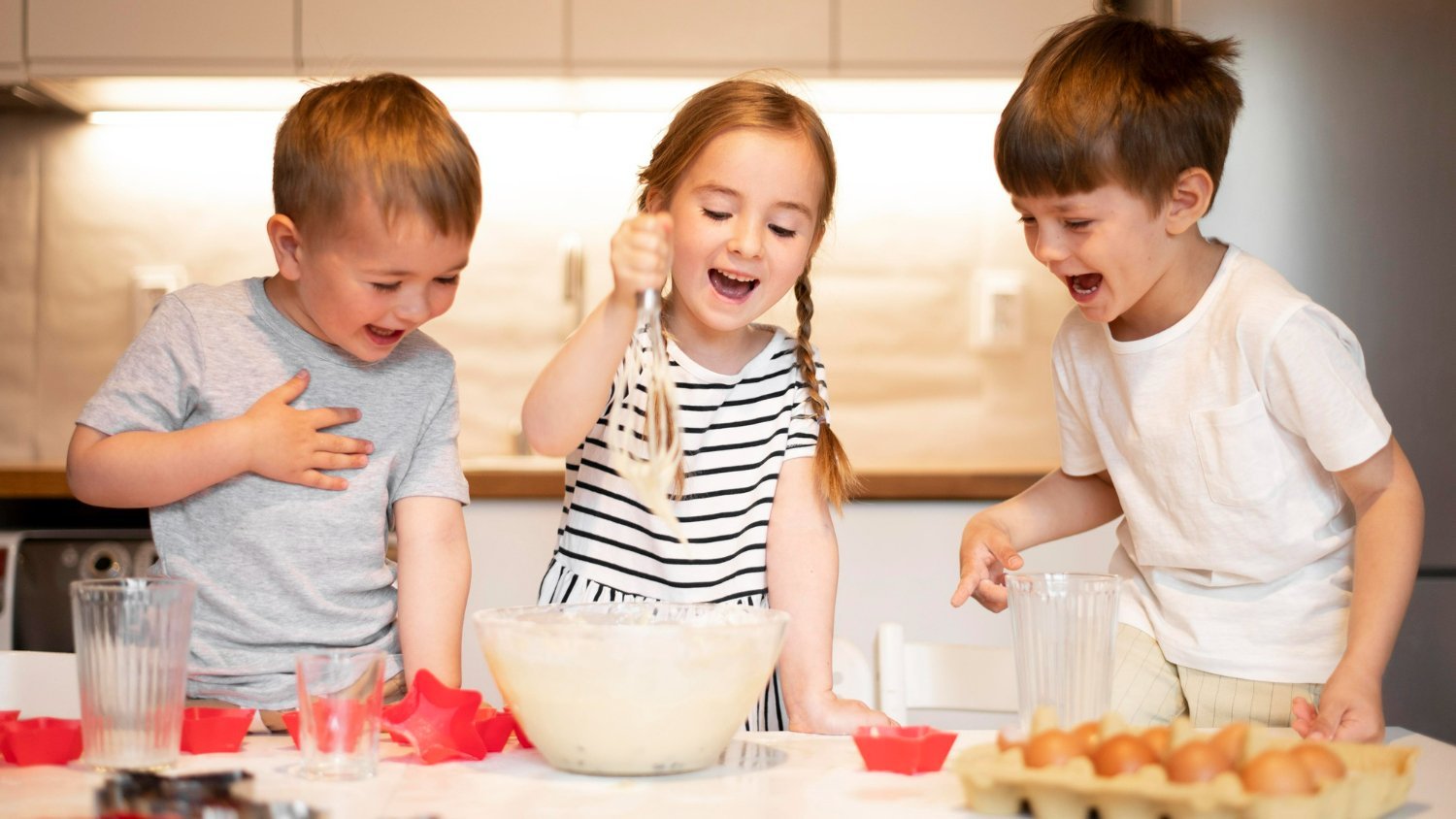
Baking with kids is wonderful and chaotic in equal measure — the results are often lopsided, the kitchen looks like a flour bomb went off, and it’s absolutely worth it. The question of what to bake with kids really means finding easy UK recipes for what they can actually do (not just watch), what won’t end in tears (yours or theirs), and what tastes good enough to make the mess worthwhile. These easy UK recipes tick all three boxes — tested with real children of various ages and patience levels.
What to Bake With Kids Easy UK Recipes: Golden Rules
- Prep before they arrive. Measure tricky ingredients, preheat the oven, line tins. Kids’ attention spans cover the fun parts, not the faff.
- Give them real jobs. Pouring, stirring, mashing, rolling, cutting shapes — not just “watch Mummy do the hard bit”. Even toddlers can tear herbs and press cookie cutters.
- Accept the mess. Put a cheap tablecloth under the work area, dress them in old clothes, and let go. The flour washes off; the memory sticks.
- Match the recipe to the age. Under 5s: no-bake and minimal-step recipes. 5–8: simple bakes with clear steps. 9+: they can follow a real recipe with supervision.
- Lower your standards. Lopsided cupcakes taste the same. Praise the effort, eat the results, take the photo.
What to Bake With Kids: Easy UK Recipes
1. Fairy cakes (ages 3+) — the starter bake
The classic for a reason: simple creaming method, 15 minutes in the oven, and decorating is the main event. Use our Victoria sponge batter baked in fairy cake cases (12–15 minutes). Then: buttercream, sprinkles, glacé cherries, mini marshmallows. Let them go wild — this is about creativity, not patisserie.
2. Sugar cookies with cutters (ages 3+)
200g butter, 200g sugar, 1 egg, 400g flour, vanilla. Mix, chill 30 minutes (crucial — stops spreading), roll, cut shapes, bake 10–12 minutes at 180°C. Rolling and cutting is endlessly entertaining for little ones, and the dough is forgiving. Decorate with icing pens when cool.
3. Banana bread (ages 4+) — the mashing bake
Mashing bananas is deeply satisfying for small hands. Our overripe banana guide has the recipe — one bowl, minimal technique, and the result is genuinely delicious. Kids who “helped” will eat it with enormous pride.
4. Pizza from scratch (ages 5+)
Our pizza dough recipe is a brilliant kid project: kneading is basically play-dough with a purpose, shaping is hilarious, and choosing toppings gives them ownership. Everyone makes their own — even fussy eaters eat pizza they built themselves. This one works as a rainy-day activity and dinner.
5. Fluffy pancakes (ages 5+)
Weekend-morning magic. Kids can whisk the batter (lumps allowed — see our fluffy pancake tips), and older ones can flip with supervision. Set up a toppings bar and let them build their own stacks.
6. Rocky road (ages 4+, no baking)
Melt chocolate and butter, stir in crushed biscuits, marshmallows, raisins and anything else, press into a tin, chill. No oven, no raw-egg worries, minimal washing up. Perfect for hot days, parties, or when the oven’s busy.
7. Cheese scones (ages 6+)
Rubbing butter into flour is great sensory play, and cheese scones bake in 12 minutes — fast enough for impatient bakers. Serve warm with butter. Savoury baking is underrated with kids; the cheese pulling is very exciting.
8. Gingerbread people (ages 5+)
A cut above sugar cookies at Christmas: spiced, sturdy, and made for decorating. The dough needs chilling, so make it a two-stage project — mix after lunch, cut and bake mid-afternoon. Icing faces on gingerbread people never gets old.
Skills by Age: What They Can Actually Do
- 2–4: pouring pre-measured ingredients, stirring, mashing bananas, pressing cookie cutters, sprinkling toppings. Keep sessions to 20 minutes.
- 5–7: cracking eggs (teach over a separate bowl), measuring with cups, rolling dough, simple mixing, decorating. They can follow 3–4 step recipes.
- 8–10: reading a recipe, creaming butter and sugar, using a hand mixer with supervision, shaping dough. Growing independence — stay nearby.
- 11+: most simple recipes solo with you in the kitchen. This is when the real skills build — and when they start making you cakes.
Safety Without the Lecture
A few non-negotiables, stated matter-of-factly: oven and hob are adult-only zones until they’re older (they can watch, you handle). Raw batter with egg in it isn’t for tasting — keep a clean spoon for the pre-egg taste test if they must. Wash hands before starting and after touching eggs. Tie back long hair. And keep the floor clear — flour on tiles is an ice rink. Frame it as “chef rules” rather than warnings and kids generally buy in.
Beyond the Kitchen: Why It Matters
Baking with kids isn’t really about the cakes. It’s maths (measuring, timing), science (why does it rise? — our raising agents explainer has the answers), reading (following recipes), and patience — all disguised as fun. It’s also one of the few activities where a five-year-old and a grandparent are genuine collaborators. The cakes are a bonus; the time together is the point. For more rainy-day inspiration, our rainy day ideas have plenty beyond baking.
No-Bake Recipes for Hot Days (or Broken Ovens)
Sometimes the oven’s not an option — or it’s August and nobody wants it on. No-bake baking (if that’s not a contradiction) is perfect: chocolate cornflake cakes (melted chocolate + cornflakes in fairy cases — the school-fair classic); cheesecake pots (crushed biscuits, sweetened cream cheese, fruit on top, layered in glasses); energy balls (oats, peanut butter, honey, chocolate chips, rolled and chilled — kids love the rolling); and icebox cake (layers of biscuits and whipped cream, chilled overnight into a sliceable “cake” — magic). These are also ideal for very young children since there’s no hot oven involved at all.
Turning Baking Into Learning
Sneaky education is the best kind. Baking teaches maths naturally — weighing, doubling recipes (“if we need 200g for 12, how much for 24?”), setting timers. It teaches science — why does the cake rise, what does the egg do, why do we chill the dough (our raising agents guide is the cheat sheet). It teaches reading and following instructions — a genuine life skill. And it teaches patience and resilience — the sunken cake is a lesson, not a failure. Teachers have known this forever; it’s why baking appears in every primary school curriculum. You’re not just making fairy cakes — you’re building a competent human, one lopsided sponge at a time.
For step-by-step photos, BBC Good Food’s baking with kids collection is brilliant.
The takeaway: start with fairy cakes and cookies, give them real jobs, embrace the mess, and match the recipe to the age. The goal isn’t perfect bakes — it’s kids who love being in the kitchen.