Cold at the top, warm at the bottom? Your radiators have air trapped in them, and it’s making your heating work harder for less warmth. Bleeding radiators is the classic autumn DIY job — it takes minutes per radiator, needs one cheap tool, and the difference is immediate. Here’s how to bleed radiators UK step by step, plus what to do when bleeding doesn’t fix it.
Air gets into heating systems naturally over time — through the feed tank, during refills, or via tiny leaks drawing air in. It collects at the high points (the tops of radiators), blocking hot water from filling the whole radiator. Bleeding simply lets that trapped air out.
How to Bleed Radiators UK Step by Step
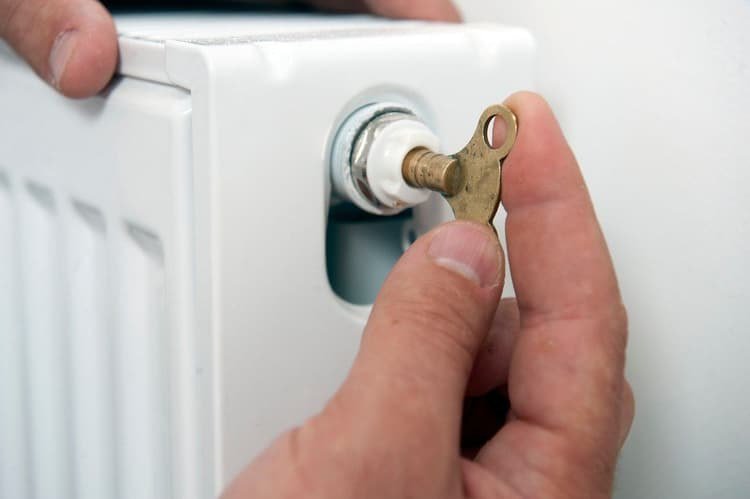
You need: a radiator bleed key (£1–£3 from any DIY shop — buy two, they vanish), an old cloth or small jug, and optionally gloves. Then:
- Turn the heating on and let it run until radiators are fully hot. Then identify which radiators need bleeding — feel for cold spots at the top while the bottom is hot. Mark them.
- Turn the heating OFF and wait 20–30 minutes for the system to cool slightly and the air to settle at the tops of radiators. Bleeding with the pump running draws more air in — this step matters.
- Start with the ground-floor radiator furthest from the boiler, working toward the boiler and then upstairs. (The furthest-first order is debated; what matters more is doing them all.)
- Locate the bleed valve — the small square-topped valve at the top corner of the radiator, usually at the opposite end from the thermostatic valve.
- Hold the cloth under the valve, fit the bleed key, and turn it anticlockwise about a quarter to a half turn. You’ll hear hissing — that’s the trapped air escaping. Don’t open it fully; a small opening is all you need.
- Wait for water. When the hissing stops and water starts dribbling or spurting out steadily (it may be discoloured — normal), close the valve firmly clockwise. Don’t overtighten — bleed valves snap.
- Move to the next radiator and repeat. Check each valve is closed before moving on — a forgotten open valve drains the system.
- Check the boiler pressure. Bleeding releases water as well as air, dropping system pressure. At the boiler’s pressure gauge (or digital display), top up via the filling loop until it reads 1–1.5 bar cold (check your manual — most combis want 1 to 1.5). Too low and the boiler won’t fire; too high risks the pressure relief valve discharging.
- Turn the heating back on and check every radiator heats fully and every bleed valve is dry. Wipe valves and check again in an hour — a weeping valve needs nipping up or its seal replacing.
How Often Should You Bleed Radiators?
Once a year, ideally in early autumn before heating season — it belongs in the same routine as booking your boiler service. Bleed again mid-winter if cold spots return. If you’re bleeding the same radiators every few weeks, that’s not normal — it signals air being drawn in continuously, usually through a tiny leak, a failing pump seal, or corrosion generating hydrogen gas (which smells eggy and indicates sludge — see below).
When Bleeding Doesn’t Fix It
- Radiator cold at the bottom, hot at top: that’s sludge (magnetite), not air — the system needs a powerflush (£300–£500) or at least a chemical cleanse and a magnetic filter fitted.
- Radiator completely cold: check the thermostatic valve pin isn’t stuck (remove the head and press the pin — it should spring back), and that lockshield valves are open.
- Whole system underperforming after bleeding: check boiler pressure, check the pump setting, and consider whether the system needs balancing — adjusting lockshield valves so nearer radiators don’t hog all the hot water.
- Discoloured or smelly bleed water with hydrogen: corrosion is active — get the system water tested and consider inhibitor dosing plus a magnetic filter.
The Energy Saving Trust’s heating advice covers system efficiency more broadly — bleeding is one piece of a well-maintained system that also includes the right boiler flow temperature and proper controls.
Safety Notes
Bleed water can be scalding if the system hasn’t cooled — hence the wait in step 2 and the cloth. The water is also filthy (black magnetite sludge stains everything — protect carpets and light-coloured walls). Never bleed a radiator on a system you’re unfamiliar with in a rental without checking with the landlord first — though most landlords are delighted when tenants do this basic maintenance. And if a bleed valve is seized solid, don’t force it with pliers — snapped bleed valves mean draining the radiator. A drop of penetrating oil and patience, or a new valve fitted during the next service.
Bleeding Towel Rails and Unusual Radiators
Heated towel rails bleed exactly like radiators — the bleed valve is at the top, usually under a small cap — but they’re often the highest point in the system and collect air first, so a cold towel rail is the classic early warning. Column radiators (the Victorian-style ones) have larger water volumes and take longer to bleed; be patient with the hissing. Underfloor heating doesn’t have bleed valves per room — air in UFH manifests as cold patches in the floor and needs purging at the manifold, which is a slightly more involved job (your installer’s manual covers it, or it’s a quick visit during the annual boiler service). And electric radiators never need bleeding at all — they’re sealed units. If you’re “bleeding” an electric radiator, stop; you’re looking for a different problem entirely.
A last tip: bleed keys are tiny and radiators are many — tie the key to the boiler manual with a bit of string, or keep it in the same drawer as the boiler instructions. Future-you, shivering in October and hunting through the junk drawer, will be grateful for past-you’s foresight. And if you’re doing the full autumn heating prep, pair bleeding with checking the boiler pressure, testing the thermostat, and confirming the carbon monoxide alarm works — ten minutes that buys a winter of reliable warmth.
Further Reading
You might also find our guide to choosing the best heating system useful.
The Takeaway
Heating off, bleed key quarter-turn anticlockwise, wait for steady water, close, check boiler pressure at 1–1.5 bar, heating back on. Ten minutes a year per house, warmer rooms, lower bills. If cold spots keep returning, look deeper — persistent air means a system problem, not a bleeding problem.