Carp are the ultimate prize for many UK anglers — big, powerful, and famously clever. A double-figure carp peeling line off your reel is a thrill that keeps fishermen coming back to the bank for decades. But carp did not get their reputation by being easy to catch. They are wary, they learn from pressure, and they demand more thought than most coarse fish.
Whether you are a complete beginner or a coarse angler looking to step up, this guide explains how to catch carp: the right venues, tackle, bait, and tactics that actually work on UK waters.
Start at the Right Venue
Your choice of water matters more than anything else. As a beginner, pick a well-stocked commercial fishery with a good head of carp. These venues are designed for action — you will get bites, learn the basics, and build confidence. Ask in the tackle shop which lakes suit newcomers; they will know.
Once you have the fundamentals, you can graduate to club waters and estate lakes, where carp are warier and the challenge is greater. Save the famous, pressured day-ticket waters for when your skills are sharper. And always make sure you have the right permission — a rod licence from the Environment Agency is a legal requirement for freshwater fishing in England and Wales, plus the venue’s own day ticket or membership.
Basic Carp Tackle: What You Actually Need
Carp tackle can get absurdly specialised and expensive, but the essentials are straightforward:
- Rod: a 12ft carp rod with a 2.5–3lb test curve handles most UK situations.
- Reel: a baitrunner-style reel lets carp take line without feeling resistance.
- Line: 12–15lb monofilament is the standard all-rounder.
- Landing net: a large, carp-safe net with a long handle.
- Unhooking mat: essential for the fish’s welfare — never lay a carp on hard ground.
- Rig bits: hooks (size 6–8), leads, swivels, and hooklink material.
Do not overcomplicate rigs as a beginner. A simple hair rig — where the bait sits on a short “hair” below the hook — catches carp everywhere and is easy to tie. There are countless rig tutorials online, but master one simple rig before experimenting.
Bait: Keep It Simple
Carp eat a huge range of baits, which confuses beginners. Start with the proven classics:
- Boilies: the modern standard carp bait. Fish one on the hair with a few free offerings around it.
- Sweetcorn: cheap, visible, and carp love it. Brilliant for beginners.
- Bread: floating crust or flake for surface fishing on warm days — incredibly exciting.
- Pellets: fishery pellets match what the carp are already fed.
The biggest bait mistake is using too much. A handful of free bait around your hookbait is usually enough. Carp that are stuffed full of free food have no reason to pick up your hookbait. Little and often beats one massive bed of bait, especially on pressured waters.
Finding the Fish: Location Is Everything
You cannot catch carp that are not there. Before casting, spend time watching the water. Look for:
- Showing fish — carp rolling, boshing, or jumping reveal their location.
- Bubbles and fizzing — feeding carp disturb the bottom and release bubbles.
- Features — islands, overhanging trees, lily pads, and marginal shelves all hold carp.
- Wind direction — carp often follow the wind to the bank it blows towards.
Walk the lake before choosing a swim. The angler who finds the fish usually outfishes the angler with the fanciest tackle. Polarised sunglasses are one of the best investments you can make — they cut surface glare and let you spot fish in the margins.
Core Tactics That Catch Carp
Fish the Margins
Beginners cast to the middle of the lake; experienced anglers know big carp patrol the edges, especially early and late in the day. A bait placed quietly two rod-lengths out in the margin often outfishes a long chuck to the horizon. Keep noise and movement to a minimum — carp feel vibrations through the bank.
Be Patient but Active
Carp fishing involves waiting, but not passive waiting. If you have had no action in a couple of hours and you are confident fish are elsewhere, move. Recast regularly to keep your bait fresh and attractive. A bait that has sat for six hours is far less appealing than a fresh one.
Fish at the Right Times
Dawn and dusk are prime carp feeding times, particularly in summer. Overnight sessions can be productive, but for day fishing, arrive early or fish into the evening. In winter, the middle of the day — when the water is warmest — is often best.
Handling Carp Properly
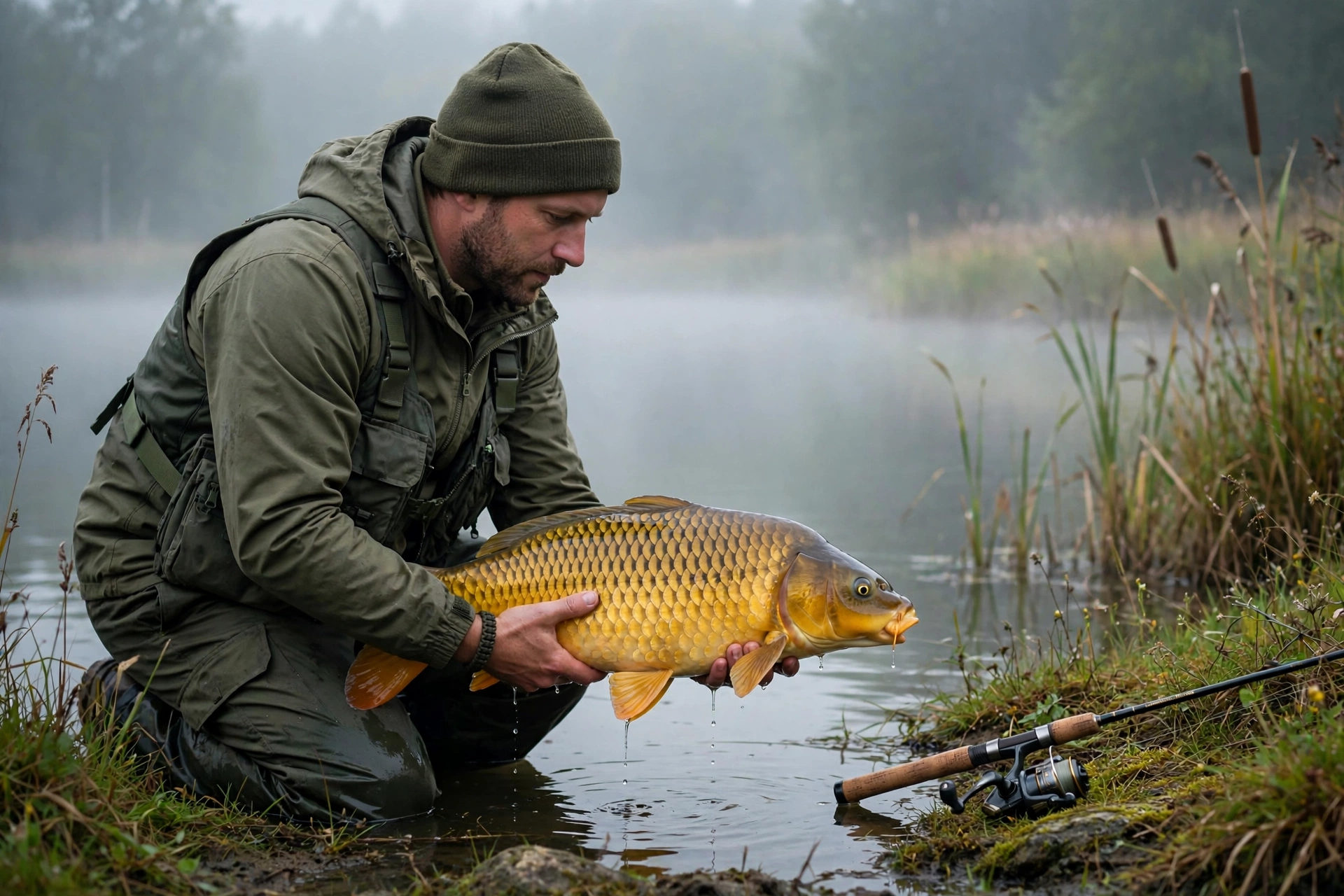
Carp welfare is taken seriously in UK angling, and rightly so. Always use an unhooking mat, keep the fish wet, support its weight properly for photographs, and return it quickly and gently. Barbless or micro-barbed hooks make unhooking easier and safer. The Angling Trust provides excellent guidance on fish care and responsible angling.
Never keep a carp out of water longer than necessary, and never hold it by the gill covers. Treat every fish as if it is someone’s prized capture — because on many waters, it is.
Common Beginner Mistakes
- Casting over the fish — accuracy beats distance. Cast to where you have seen signs of carp.
- Too much bait — as above, little and often.
- Noisy bankside behaviour — stamping around, slamming car doors, and shouting spook fish.
- Striking too early — with a baitrunner and hair rig, let the carp hook itself against the lead, then lift into it firmly.
- Ignoring the weather — low pressure and warm rain often trigger feeding; bright, high-pressure days can be tough.
Night Fishing for Carp
Carp often feed most confidently after dark, which is why night fishing is so popular. If your venue allows it, try an evening session running into darkness. Keep noise to an absolute minimum, use minimal lighting (a dim headtorch with a red filter spooks fewer fish), and make sure your rods are secure in alarms or rests. Bite alarms are almost essential at night — you cannot watch your lines in the dark. Always check venue rules on night fishing and never fish alone at night on remote waters.
Reading the Weather for Carp
Weather patterns influence carp behaviour enormously. Warm, overcast days with low pressure are often the best — carp feed confidently when they feel secure under cloud cover. A warm wind pushing into a bank concentrates natural food there, and carp follow. Conversely, bright blue-sky high-pressure days can make carp lethargic and hard to tempt; on those days, fish early or late, scale down your tackle, and target shaded areas. After learning the basics, watching the forecast becomes as important as choosing your bait.
One final tip: keep a simple fishing diary. Note the venue, weather, bait, and results each trip. Patterns emerge over a season that no amount of tackle-shop advice can give you — and that personal knowledge becomes your biggest edge.
The Bottom Line
To catch carp consistently: pick a suitable venue, keep your tackle and rigs simple, use proven baits sparingly, find the fish before you cast, and handle everything you catch with care. Carp fishing rewards watercraft — the ability to read the water — more than expensive gear. Put in the hours on the bank, watch and learn, and those powerful runs will come. Tight lines.