
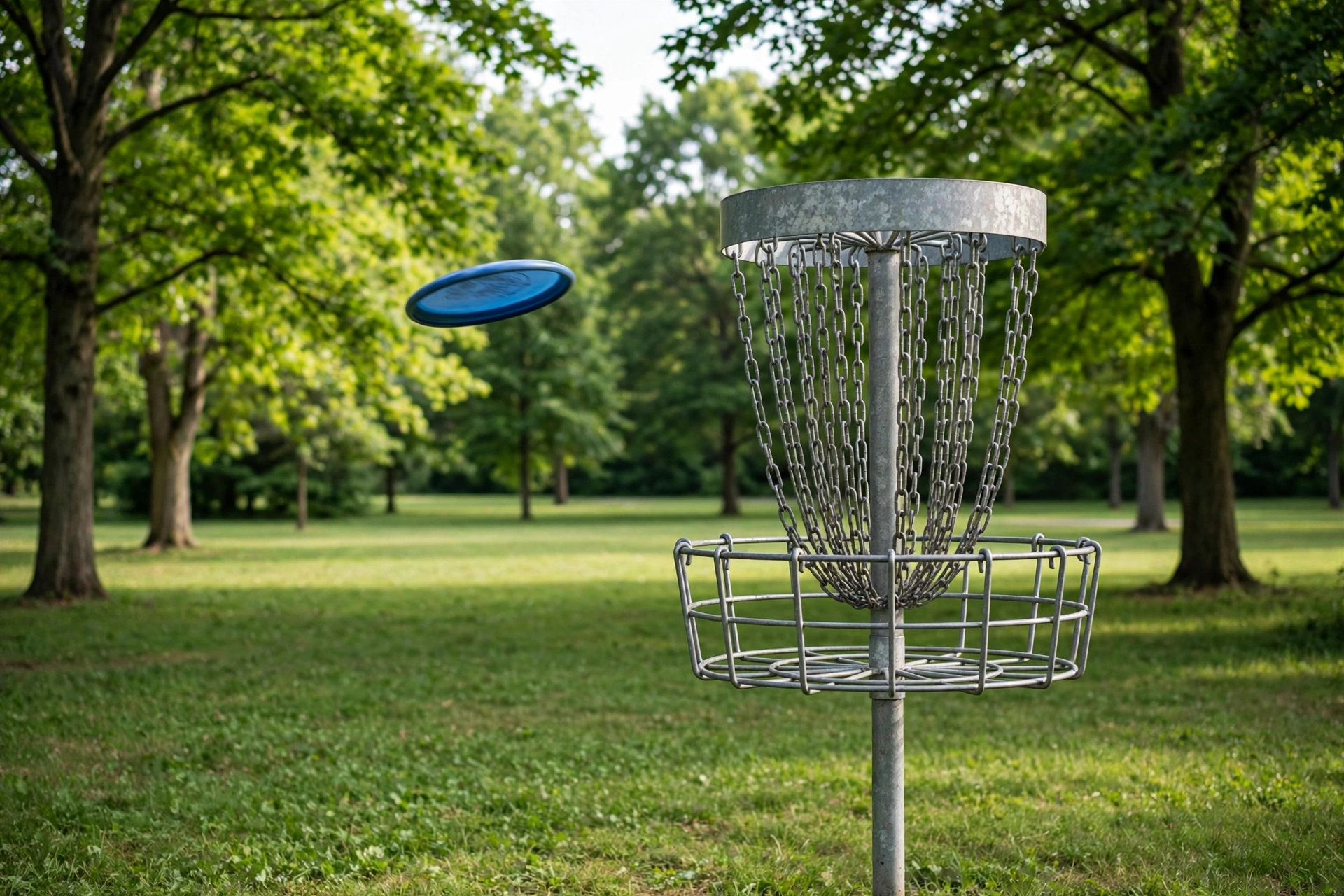
Disc golf looks simple: throw a flying disc at a metal basket. But anyone who has watched their drive sail twenty metres wide of the fairway knows that accuracy is the real skill in this sport. Power without control just loses discs in brambles faster. Learning how to improve disc golf accuracy will cut strokes off your round more reliably than adding distance ever will, and the techniques transfer to every throw you make, from tee shots to nervy short putts.
What Accuracy Actually Means in Disc Golf
Accuracy in disc golf has two parts: hitting your intended line and controlling your distance. A perfectly straight 60-metre throw that lands beside the basket beats a 100-metre monster that finishes in the woods. The best players think in terms of landing zones rather than raw distance, picking a target area and throwing the shot shape most likely to finish there.
The good news is that accuracy is highly trainable. Unlike raw arm speed, which has genetic limits, clean form, smart disc choice, and deliberate practice can make any player dramatically more accurate within a few months.
Start With Your Grip
Almost every accuracy problem traces back to the grip. The two main grips are the power grip and the fan grip. In the power grip, all four fingers tuck tightly under the rim with the thumb on top; it gives maximum control of the release angle for drives. In the fan grip, the fingers spread across the underside of the disc, which suits touch shots and putts where feel matters more than speed.
Whichever grip you use, the golden rule is firm but not tense. A death grip creates tension in the forearm that ruins your release timing, while too loose a grip lets the disc slip early. The disc should pivot cleanly out of your hand at the hit point, not be muscled or steered. If your throws wobble out of your hand, your grip pressure is the first thing to check.
Stance and Footwork
Accurate throws start from the ground up. For a standstill throw, set your feet shoulder-width apart with your weight balanced, and rotate your hips and shoulders as one unit. For a run-up, keep your steps smooth and under control; a wild sprint-up generates speed you cannot aim. The final plant step, the brace, is where accuracy is won or lost: plant firmly on your front foot, keep your weight over it, and let your upper body coil against that solid base.
Film yourself from the side if you can. Most players are shocked to discover their plant foot lands open or their weight falls away from the target. A stable, repeatable brace is the foundation every accurate throw is built on.
The Throwing Motion: Reach Back, Pull Through, Follow Through
Think of the backhand throw as three phases. The reach back extends your arm straight behind you, keeping the disc on the line you intend to throw. The pull through brings the disc across your chest in a straight line, with your elbow leading and the disc tight to your body. The release happens when your arm is fully extended toward the target, and the follow through lets your arm continue naturally across your body.
The most common accuracy killer is rounding: letting the disc swing wide around your body instead of pulling straight through. Rounding sends throws off to the right for right-handed backhand throwers and robs them of power. A useful cue is to imagine pulling the disc along an invisible rail from your reach back to your release point.
Aiming: Pick a Target, Commit to It
Vague aiming produces vague throws. Before every shot, pick a specific target: a gap between two trees, a patch of grass, the basket itself. Stare at it for a second, visualise the flight path, then throw with commitment. Hesitation mid-throw is a classic cause of pulled shots.
Learn to aim with your body alignment, not just your eyes. Your plant foot, hips, and shoulders should all point at your target line. Many players aim their eyes at the basket while their feet point somewhere else, and then wonder why the disc follows the feet.
Choose the Right Disc
Disc selection is an underrated accuracy tool. Beginners often buy fast, overstable drivers they saw professionals throw, then wonder why everything hyzers out early or flips into the ground. Slower, neutral discs fly straighter with less effort and punish small form errors less severely. A mid-range disc thrown smoothly will outscore a distance driver thrown badly every time.
As a rule, throw the slowest disc that can comfortably reach your target. Check the PDGA’s official rules and disc specifications to understand flight ratings, and build your bag around discs you can throw accurately rather than discs you aspire to throw far.
Putting: Where Rounds Are Won
Putting accounts for a huge share of strokes, and it is the purest test of accuracy in the game. Develop one consistent putting style, whether push putt or spin putt, and stick with it. Set your feet, find your line, and use a smooth, repeatable motion with a clean follow through toward the basket.
The best putting drill is brutally simple: putt from 5 metres until you make twenty in a row, then move back a metre. Most missed putts come from rushing or changing routine under pressure, so practice your full pre-putt routine on every rep, exactly as you would in a round.
Practice Drills That Build Accuracy
Field Work With Targets
Take three discs to an open field and set out markers at 40, 60, and 80 metres. Throw each disc at each marker in turn, focusing purely on landing close, not on distance. Track how many land within a few metres. This is the single most effective accuracy practice there is.
The Standstill Round
Play an entire casual round using standstill throws only. Removing the run-up forces you to generate clean form and exposes timing flaws. When the run-up returns, your throws will be noticeably straighter.
One-Disc Rounds
Play a round with a single mid-range disc. Learning to shape different shots with one disc teaches touch, angle control, and creativity, all of which feed directly into accuracy.
Common Mistakes That Destroy Accuracy
- Gripping too tightly. Tension kills clean releases. Stay firm but relaxed.
- Rounding the pull through. Keep the disc on a straight rail across your chest.
- Looking away early. Watch your target through the release instead of peeking at the flight.
- Throwing too hard. Back off to 80 percent effort; most players are more accurate and barely shorter.
- Ignoring the wind. Throw stable discs into headwinds and understable discs downwind, and aim off to let the wind bring the disc back.
Playing Accurately in Wind
British courses are rarely calm, so wind play is an essential accuracy skill. Into a headwind, throw lower and with more stable discs, because wind exaggerates turn and lift. With a tailwind, discs fly farther but fade harder at the end, so aim shorter than you think. Crosswinds demand committed hyzer or anhyzer angles rather than hopeful straight shots. When in doubt, choose the safer landing zone and take your par; heroes lose discs.
Disc Golf and Ball Golf: Shared Skills
Disc golf and traditional golf share more than a name. Both reward course management, routine, and a calm short game over raw power. If you play both, you may enjoy tracking formal progress in the ball game too; our guide on how to get a golf handicap explains the UK system step by step. And if you are planning a full day out, it helps to know how long a round of golf takes so you can fit both sports into your weekend.
The UK Disc Golf Scene
Disc golf is growing fast in Britain, with courses in public parks, universities, and dedicated woodland venues from Scotland to the south coast. The British Disc Golf Association lists courses and events and runs the national tour, which is a brilliant way to test your accuracy under friendly competitive pressure. Most courses are free to play and beginner-friendly, so grab a couple of discs and get throwing.
Frequently Asked Questions
How long does it take to become accurate at disc golf?
Most players see major accuracy gains within two to three months of deliberate practice, especially from field work and putting drills. Consistency over years is what separates good players from great ones.
Should beginners use drivers?
Sparingly. Learn accuracy with putters and mid-ranges first; add fairway drivers once you can throw straight, and leave high-speed distance drivers until your form is solid.
Does a run-up help accuracy?
A controlled run-up adds distance, but a messy one destroys accuracy. Master the standstill throw first, then add footwork gradually.
What is the best disc for accurate throws?
A neutral-flying mid-range disc. It holds whatever line you put it on without flipping or fading aggressively, which makes it the most honest feedback tool in your bag.


