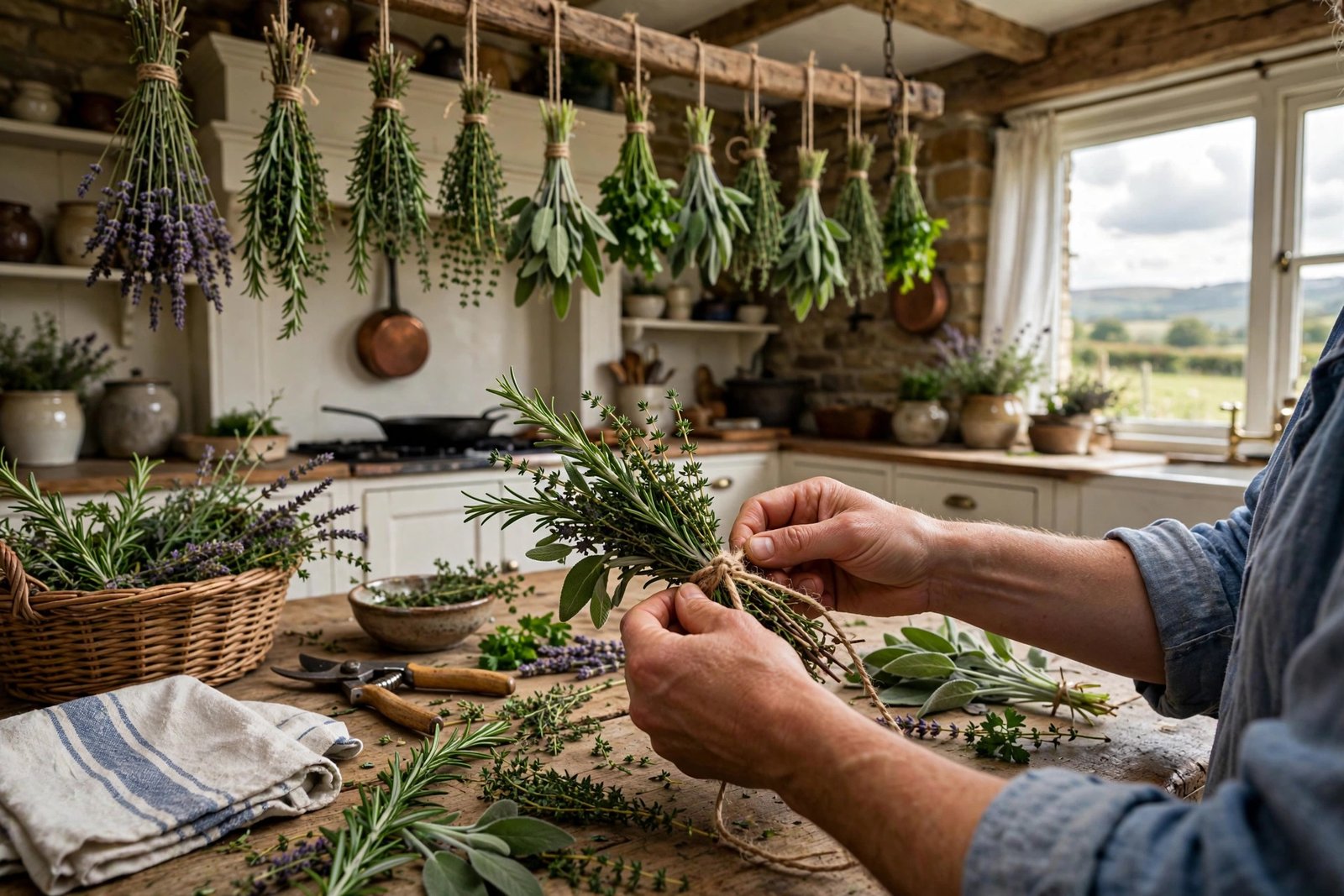
It is August, the garden is producing more basil, parsley and thyme than any household can eat fresh, and you know that by October it will all be gone — while the supermarket charges £1 for a plastic pack of wilted coriander. Preserving herbs is one of the highest-value kitchen skills: minutes of work now, months of flavour later, and preserved homegrown herbs beat shop-bought dried ones by an embarrassing margin. If you are asking what is the easiest way to preserve fresh herbs in Britain, the answer depends on the herb — but the overall winner for ease is freezing, and here is the complete method for every approach.
The golden rule: match the method to the herb
Herbs divide into two families with different preservation needs. Woody Mediterranean herbs — thyme, oregano, rosemary, sage, bay — have low moisture and concentrated oils; they dry brilliantly, retaining flavour for a year. Soft leafy herbs — basil, parsley, coriander, chives, mint, dill — have high water content; they dry poorly (turning to flavourless dust) but freeze superbly. This single distinction prevents 90% of preservation disappointment: drying basil and freezing thyme are both technically possible and both wasteful. Dry the woodies, freeze the softies.
Harvest at the peak: mid-morning after dew has dried but before the day’s heat — this is when essential oil concentration is highest. Never wash herbs before drying (it invites mould); shake off dirt and inspect. For freezing, a quick rinse and thorough pat-dry is fine. Harvest before flowering where possible — flowering shifts the plant’s energy and changes flavour (basil especially). For growing the raw material in the first place, see our best plants for a small UK garden; this guide is what to do with the glut.
Freezing: the easiest method overall
Freezing wins on simplicity: no special equipment, minimal effort, best flavour retention for soft herbs. The ice-cube method: chop herbs, pack into ice-cube trays, cover with water or olive oil, freeze, then bag the cubes labelled. Oil-packed cubes (basil, especially) go straight into hot pans — instant flavour base. Water-packed cubes suit soups and stews. Whole-leaf freezing: spread dry leaves on a tray, freeze, then bag — parsley, coriander and dill freeze well whole and can be crumbled frozen directly into dishes. Herb butters: blend soft herbs into softened butter, roll into logs in cling film, freeze and slice — the dinner-party secret weapon.
Frozen herbs keep 6–12 months and are best used from frozen — do not defrost first (they go limp and sad). They suit cooked dishes, not garnishes: frozen basil in pasta sauce is superb; frozen basil on a caprese is a mistake. Label everything with herb and date — frozen green cubes are indistinguishable by February. And blanching is unnecessary for herbs (unlike vegetables); the enzymes that blanching controls are not the issue here. For keeping the rest of the harvest fresh, our vegetable storage guide covers the crisper drawer and beyond.
Pesto and herb sauces: preservation by transformation
The most delicious preservation method is not storing the herb but converting it: basil into pesto, coriander into chimichurri, parsley into gremolata, mint into mint sauce. These keep weeks refrigerated (under oil) or months frozen, and they are more useful than the raw herb — a jar of pesto is a meal waiting to happen. BBC Good Food has definitive recipes for all the classics.
Drying: for the woody herbs
Air-drying is the traditional method and still the best for thyme, oregano, rosemary and sage. Tie small bunches (not fat ones — air must circulate), hang upside down in a warm, dark, airy spot — darkness preserves colour and flavour; light bleaches both. An airing cupboard is ideal; a sunny windowsill is the worst option. They are ready when leaves crumble easily (1–2 weeks), then strip from stems and store in airtight jars away from light. Properly dried herbs keep a year, though potency fades after six months.
Oven/microwave drying is faster: lowest oven setting (below 50°C) with the door ajar for 2–4 hours, or microwaving between kitchen paper in 30-second bursts. Faster but easier to overdo — scorched herbs taste of nothing. Do not dry soft herbs this way unless you enjoy disappointment: dried basil and parsley lose almost all flavour. The exception that proves the rule: mint dries acceptably for tea, and dill dries adequately for pickling spice. The RHS herb-drying guidance confirms the woody/soft divide.
Salt, vinegar and oil: the flavour-capture methods
Herb salts: blend fresh herbs with coarse sea salt (roughly 1:3 herbs to salt), dry the mixture, and jar it — the salt draws out and preserves the flavour compounds. Herb salt keeps a year and is the easiest gift in preserving: rosemary salt, thyme salt, wild garlic salt in spring. Herb vinegars: pack a sterilised bottle with herbs (tarragon, dill, chives, rosemary), cover with warmed (not boiled) white wine or cider vinegar, steep 2–4 weeks, strain — beautiful, useful, and essentially immortal. Herb oils: the caution flag — oil-packed fresh herbs can harbour botulism risk at room temperature. Freeze herb-oil mixtures instead of storing them in the cupboard, or acidify properly following tested recipes. Never store fresh herbs in oil at room temperature.
These methods shine for the in-between herbs and for gluts too big to freeze: a sack of rosemary becomes rosemary salt for the year; the dill explosion becomes pickling vinegar. They also solve the presentation problem — a row of labelled herb salts and vinegars is a Christmas gift that costs pennies and impresses everyone.
The bottom line
The easiest way to preserve herbs: freeze soft herbs (basil, parsley, coriander) in oil or water ice-cube trays; air-dry woody herbs (thyme, oregano, rosemary) in dark airy bunches; convert gluts into pesto and sauces; and make herb salts and vinegars for gifts and flavour. Harvest mid-morning, match the method to the herb family, label everything, and never store fresh herbs in oil at room temperature. The August glut becomes the February flavour — and the sad supermarket herb packet becomes a distant, slightly embarrassing memory of winters past.
Frequently Asked Questions
What is the easiest way to preserve fresh herbs?
Freezing — chop soft herbs into ice-cube trays with water or oil, freeze, and bag. No special equipment, best flavour retention, keeps 6–12 months. Dry woody herbs (thyme, rosemary) by hanging instead.
Can you dry basil?
Technically yes, but it loses almost all flavour — freezing (in oil cubes or as pesto) is vastly better for basil and all soft herbs. Reserve drying for woody Mediterranean herbs.
How long do dried herbs last?
About a year in airtight jars away from light, though potency fades after six months. If it smells of little when crushed, it is spent — compost it and open the new jar.
Is it safe to store herbs in oil?
Not at room temperature — fresh herbs in oil can harbour botulism. Freeze herb-oil mixtures instead, or follow tested acidified recipes. Refrigerated pesto under oil is fine for weeks.
When should I harvest herbs for preserving?
Mid-morning after dew dries but before heat — peak essential-oil concentration. Harvest before flowering where possible, and never wash herbs before drying.