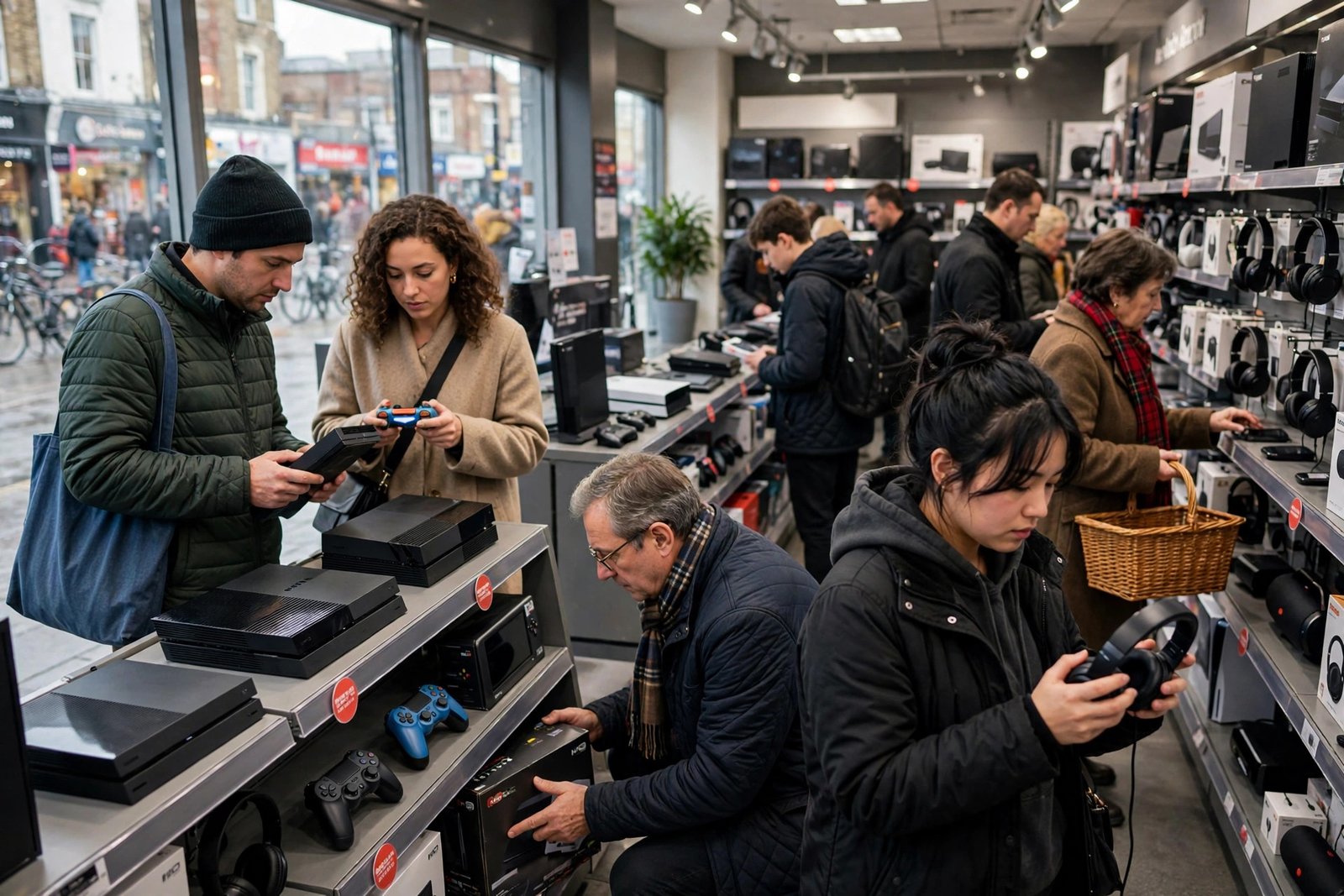
Black Friday has become the biggest gaming sale of the year in Britain — bigger than the January sales, bigger than Christmas discounting. Consoles drop by £50–£80, AAA games halve in price, and accessories from headsets to SSDs hit their annual lows. But the event is also a minefield of inflated “was” prices, mediocre bundles and impulse buys you will regret by December.
This guide is your strategic playbook: when to buy, where the genuine deals hide, how to spot the fakes, and the specific gaming bargains worth waiting for — so this November you spend less and game more.
When Black Friday actually happens (and why you should start early)
Black Friday 2026 falls on 27 November, with Cyber Monday on 30 November — but the “event” now sprawls across most of November. UK retailers launch early waves in the first two weeks of the month, and the best gaming deals often appear before the day itself: last year’s standout console bundles sold out in early-bird sales, and popular items rarely get cheaper on the actual Friday. The pattern is consistent: start watching from early November, buy when your target hits its historic low, and ignore the manufactured urgency of the day itself.
Set up your infrastructure now, not on the day: create accounts at the major retailers (with payment details saved), install price-tracking browser extensions, and make a wishlist with your maximum price for each item. The shoppers who save most are the ones who decided in October what they want and what it is worth. For entertainment bargains beyond gaming, see how to get cheap cinema tickets.
The retailers that matter
For gaming in the UK, the battlefield is: Amazon UK (broadest range, aggressive lightning deals), Currys (strong on consoles, TVs and laptops, with price-promise policies), Argos (fast collection, good bundle deals), GAME (specialist bundles and trade-in offers), the PlayStation/Xbox/Nintendo digital stores (deep software discounts), and CEX for second-hand. Supermarkets (Tesco, Asda) occasionally undercut everyone on a handful of big titles. Check all of them — no single retailer wins every category.
What to expect: the deal categories
Based on recent years’ patterns, here is where the genuine savings land:
Consoles
Expect £40–£80 off PS5 Slim bundles (often with a game included at effectively no extra cost), similar cuts on Xbox Series X, and Nintendo Switch bundles with games at near-console-only prices. The PS5 Pro rarely discounts significantly — its premium positioning is deliberate. Console deals are the scarcest and sell fastest; if you want one, buy early in the sale period.
Games
Physical games from the last 12–18 months typically drop 40–60%: £69.99 launches at £29–£35, and older titles hit £15–£20. Digital stores match or beat this in their Black Friday sales — the PlayStation Store, Xbox Store and Steam all run deep November discounts. This is the time to clear your backlog wishlist, not to buy day-one releases (which barely discount).
Accessories and hardware
Gaming headsets, controllers, SSDs (the PS5-compatible NVMe drives that regularly halve in price), keyboards, mice and monitors all hit annual lows. TVs — the natural companion purchase — see the year’s best prices on mid-range 4K sets. PC components (GPUs, CPUs) discount modestly; the real PC bargains are in peripherals and pre-builts. Tech deals reward the same bargain-hunting instincts as other electronics; see the best budget smartphones under £200 for how we evaluate value hardware.
Subscriptions
PlayStation Plus, Xbox Game Pass and Nintendo Switch Online typically offer 25–50% off annual plans — often the single best-value gaming purchase available. Stack these with console and game deals and a Black Friday shop can set up a year of gaming for remarkably little.
Spotting fake deals: the dark arts of sale pricing
Not every “deal” is a deal. UK retailers have repeatedly been caught inflating “was” prices — raising an item’s price in October to cut it theatrically in November. Protect yourself: use price-history tools (CamelCamelCamel for Amazon, PriceRunner and idealo for general tracking) to check what an item actually sold for over the past six months. A “50% off” claim against an inflated RRP that nobody ever paid is marketing, not saving.
Watch for bundle padding: consoles bundled with unwanted games, low-quality headsets or overpriced accessories at “bundle value” prices. Price each component separately — the bundle is only a deal if you wanted everything in it. Be wary of unknown-brand accessories at implausible discounts, grey-market key sellers with no buyer protection, and “refurbished” consoles without proper warranty. And remember the golden rule: a bargain on something you would not otherwise buy is not a bargain. Which? magazine’s deal investigations regularly expose the worst offenders.
The strategic shopper’s timeline
October: finalise your wishlist and target prices; set price alerts. Early November: buy consoles and high-demand items when early-bird sales hit your target — do not wait for the Friday. Black Friday week: sweep up games, accessories and subscriptions in the main sales. Cyber Monday: last chance for digital deals; physical stock starts thinning. December: prices rise again — anything unbought now waits for the January sales.
One final discipline: set a total budget before November begins, and keep a running total as you buy. Deal experts at MoneySavingExpert publish updated predictions each autumn. Sale psychology is engineered to make each purchase feel isolated; the budget makes the pattern visible. The goal is a year of great gaming for less — not a cupboard of shrink-wrapped regrets.
After Black Friday: the rest of the deal calendar
Black Friday is the peak, but it is not the only opportunity. The January sales clear remaining stock — often the best time for accessories and last year’s console bundles. Amazon’s Prime events (usually July and October) now rival Black Friday for gaming hardware, particularly SSDs and peripherals. The PlayStation Store, Xbox Store and Steam run major seasonal sales at Easter, summer and Halloween, with discounts matching November’s. And the quietest bargain window of all is late spring, when retailers clear stock before new financial-year ranges arrive. The strategic shopper thinks in terms of a yearly calendar, not a single day: buy each category when its cycle bottoms, and Black Friday becomes one good month among several rather than a make-or-break event.
Conclusion
UK Black Friday gaming deals are genuinely the year’s best — if you prepare. Decide what you want in October, track real prices, buy consoles early in the sale, sweep up discounted games and subscriptions in the main event, and treat every “was” price with scepticism. Done right, November can stock a year’s gaming for half the sticker price. Done impulsively, it stocks a cupboard. The difference is entirely in the preparation.
Frequently Asked Questions
When is Black Friday 2026 in the UK?
27 November 2026, with Cyber Monday on 30 November — but major gaming sales run through most of November, and the best console deals often appear early.
Do PS5 consoles get discounted on Black Friday?
Yes — typically £40–£80 off bundles in recent years. The PS5 Pro rarely sees significant discounts. Buy early in the sale period as console deals sell out fast.
How do I know if a Black Friday deal is genuine?
Check the item’s price history over six months with tools like CamelCamelCamel or PriceRunner. Ignore inflated “was” prices based on RRPs nobody paid.
Are digital game sales better than physical on Black Friday?
Both discount deeply — digital stores cut 40–70%, while UK physical retail often goes further on recent releases. Compare both before buying.