The quick answer
The safest way to remove lash extensions is to have them professionally dissolved at the salon where they were applied, using a cream or gel remover designed to break down lash adhesive. This takes about fifteen to twenty minutes and leaves your natural lashes unharmed. If you cannot get to a salon, you can safely speed up the natural shedding process at home with steam and oil — but you should never pull, pick or cut the extensions off. The guide below explains both routes in full, the mistakes that cause lash damage, and how to nurse your natural lashes back to health afterwards.
Why you should never pull or pick lash extensions off
Lash extensions are attached to your natural lashes with a strong cyanoacrylate-based adhesive, and each extension is bonded to a single natural lash. When you pull an extension off, you are not just removing the fake lash — you are ripping out your own natural lash from the follicle along with it. Do this repeatedly and you can cause traction damage, sparse patches, and in severe cases follicle scarring that slows regrowth. It is the single most common cause of the thin, stubby lashes people complain about after extensions.
Cutting them is not a good shortcut either. Trimmed extensions leave blunt, jagged ends that irritate the eyelid and look uneven as they grow out, and you still have adhesive residue clinging to the natural lash. The golden rule is simple: dissolve the glue, never force the lash.
The professional removal method (the safest option)
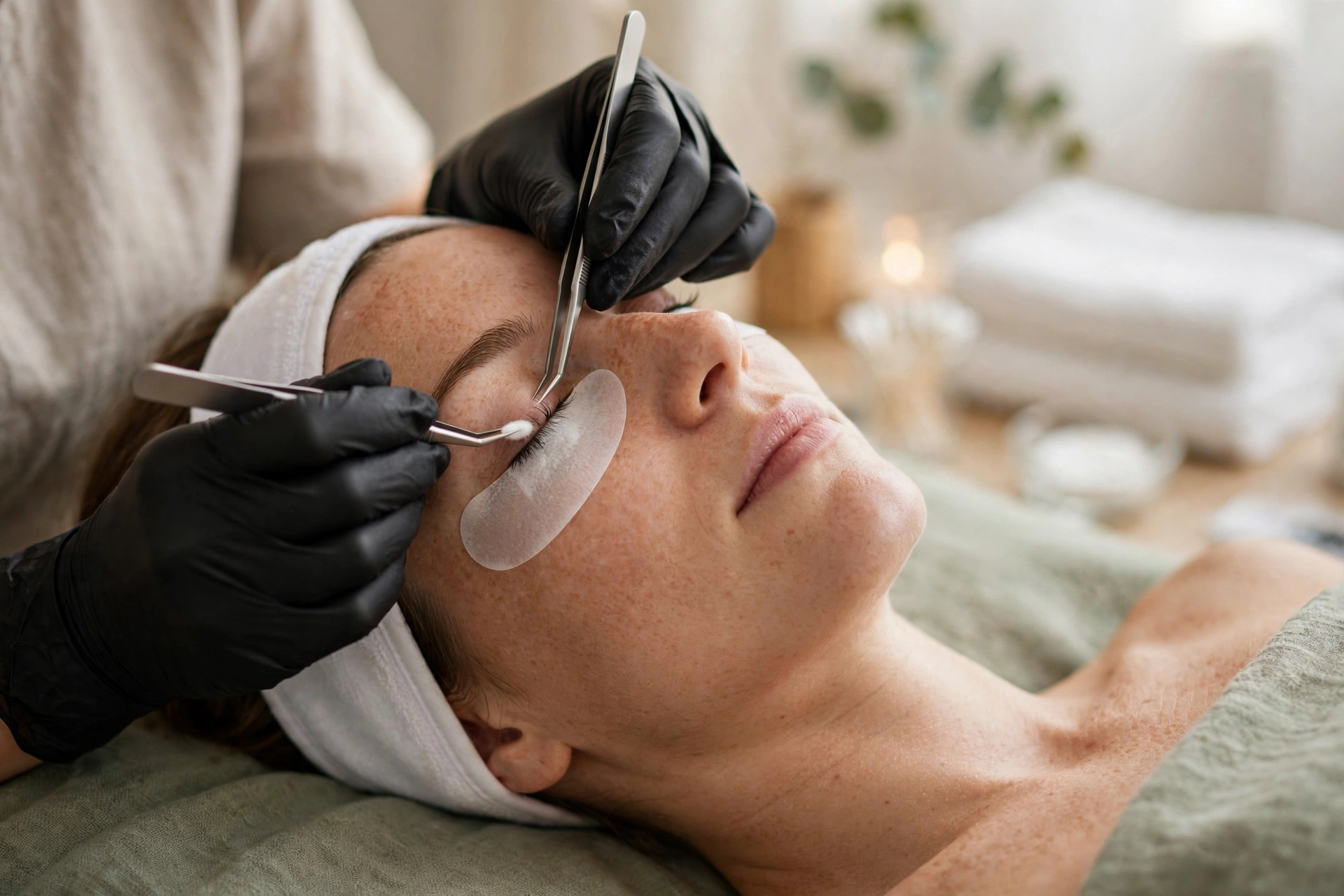
In a salon, a lash technician applies a cream or gel remover to the base of the extensions with a micro brush, keeping it away from your eyes. The remover is left to work for five to ten minutes, gently breaking down the adhesive bond. The technician then slides the extensions off with tweezers — they should come away with almost no resistance — and cleanses the lashes to remove any residue.
The whole appointment usually takes fifteen to twenty minutes and costs very little, with many salons removing extensions for free if you had them applied there or are booking a fresh set. Because the technician controls exactly where the remover goes and how long it sits, the risk of getting product in your eyes or damaging natural lashes is minimal. If you are pregnant, have an eye condition, or have had a reaction to lash adhesive before, mention it at the start of the appointment.
How to remove lash extensions safely at home
If a salon visit is not possible, you can encourage the extensions to shed naturally using steam and oil. This will not dissolve the glue instantly like a professional remover, but it weakens the bond so extensions drop off on their own over one to three days without harming your natural lashes.
- Steam your face: Fill a bowl with hot (not boiling) water, lean over it with a towel draped over your head, and steam for ten to fifteen minutes. The warm moisture softens the adhesive. A long, hot shower works just as well.
- Apply oil: After steaming, massage a small amount of coconut oil, olive oil or castor oil along your lash line with clean fingertips or a cotton bud. Oil breaks down lash adhesive gradually. Avoid getting large amounts directly in your eyes.
- Repeat daily: Do the steam-and-oil routine once or twice a day. You will notice extensions beginning to slide off on their own, often while cleansing or sleeping.
- Let them fall: Only remove an extension if it slides off with zero resistance. If it is still firmly attached, leave it and repeat the routine the next day.
- Cleanse gently: Finish each session with a gentle, oil-free cleanser or micellar water to remove oil residue from the eye area.
This method requires patience, but it protects your natural lashes — which is the entire point. Rushing the process is what causes damage.
What never to do when removing lash extensions
- Do not use DIY chemical removers: Acetone, nail polish remover and rubbing alcohol near the eyes can cause serious irritation and chemical burns. Professional removers are formulated for the eye area; household solvents are not.
- Do not pick with your fingers: Even one pulled extension takes a natural lash with it. The damage adds up fast.
- Do not cut them shorter: Blunt ends poke and irritate, and the glue remains bonded to the lash.
- Do not rub your eyes aggressively: Friction can snap natural lashes and push adhesive residue into the eye.
- Do not sleep with heavy oil on uncleaned lashes: Oil residue left overnight can cause styes or clogged oil glands along the lash line.
For broader context on keeping the delicate eye area healthy, review the skin and eye safety resources from the American Academy of Dermatology and eye care information on WebMD before trying any at-home treatment.
Letting extensions grow out naturally
If you have time on your side, simply waiting is a perfectly valid option. Your natural lashes shed and regrow on a cycle of roughly six to eight weeks, and extensions fall away with the natural lash they are attached to. During this phase, avoid oil-based eye make-up removers and heavy mascara on the extensions, keep cleansing gentle, and resist the urge to fill sparse gaps by pulling at the remaining extensions. Most people find the grow-out period lasts two to four weeks before the last extensions drop.
Aftercare: bringing your natural lashes back
It is normal for natural lashes to look shorter and sparser right after extensions come off — you have simply got used to the dramatic length. Give them four to six weeks of rest before applying a new set. During the break:
- Apply a lash serum or plain castor oil to the lash line nightly to condition the lashes.
- Skip waterproof mascara, which requires harsh rubbing to remove.
- Eat a balanced diet with enough protein, biotin and iron — lashes are made of keratin and need the same nutrients as hair.
- Avoid eyelash curlers for the first couple of weeks, as they can snap weakened lashes.
- Be gentle when removing eye make-up: hold a soaked cotton pad over the eye for twenty seconds, then wipe softly downwards.
Most lashes recover fully within one full growth cycle. If you notice persistent bald patches or lashes that refuse to regrow after two months, see a dermatologist to rule out follicle damage.
FAQs
Can I remove lash extensions with coconut oil alone?
Coconut oil helps weaken the adhesive over time, but it does not dissolve professional lash glue on contact. It works best combined with steam and repeated applications over several days, not as a one-step remover.
How long does professional lash extension removal take?
Usually fifteen to twenty minutes. The remover itself needs five to ten minutes to break down the adhesive, and the technician removes each extension individually.
Will my natural lashes be damaged after removal?
Not if the extensions are dissolved properly. Damage almost always comes from pulling, picking or overlong wear — not from correct removal.
Can I get a new set of extensions immediately after removal?
Technicians usually recommend a short break of one to two weeks, especially if your natural lashes look sparse. A rest period lets weakened lashes recover before carrying weight again.
Is it safe to remove lash extensions while pregnant?
Professional removal is generally considered safe, but mention your pregnancy to the technician, as skin and eyes can be more sensitive. Check with your midwife or GP if you have any concerns about specific products.
When to see a professional
Book a salon appointment for removal if you have a large or very fresh set of extensions, if any are twisted and pulling uncomfortably, or if you have already tried picking at them and the lash line feels sore. See a GP or optician promptly if you develop redness, swelling, pain, discharge or blurred vision — these can signal an eye infection or an allergic reaction to the adhesive, which needs medical treatment, not just removal.