The sky darkens, the first rumble rolls across the rooftops, and your dog transforms — panting, pacing, drooling, trying to climb inside the bathtub. Thunderstorm phobia is one of the most common canine anxieties in Britain, and it is miserable to watch: your dog is genuinely terrified, and reassurance alone does not fix it. The good news is that noise phobia is one of the most treatable behaviour problems in dogs, with methods ranging from simple home adjustments to veterinary medicine. Here is what actually works.
Understanding the fear: it is not disobedience
First, reframe what is happening. Your dog is not misbehaving, being dramatic or seeking attention — they are experiencing a genuine panic response. Dogs hear frequencies we cannot and feel barometric pressure changes before the storm arrives, which is why the anxiety often starts before you hear anything. Signs include panting, pacing, drooling, trembling, hiding, clinginess, destructive behaviour, escape attempts and toileting indoors. Punishing any of this — shouting at a panicking dog — is like shouting at a person having a panic attack: it adds fear to fear.
Noise phobias often worsen with age and can generalise: a dog frightened by thunder may become frightened by fireworks, gunshots and even slamming doors. This is why early intervention matters — the longer the phobia rehearses, the deeper it embeds. It is worth understanding anxiety as a mechanism, not a character flaw; the principles overlap with human anxiety more than you might think — see our guide to managing anxiety without medication for the parallels. The RSPCA classifies severe noise phobia as a welfare issue, not a training failure.
During the storm: immediate comfort measures
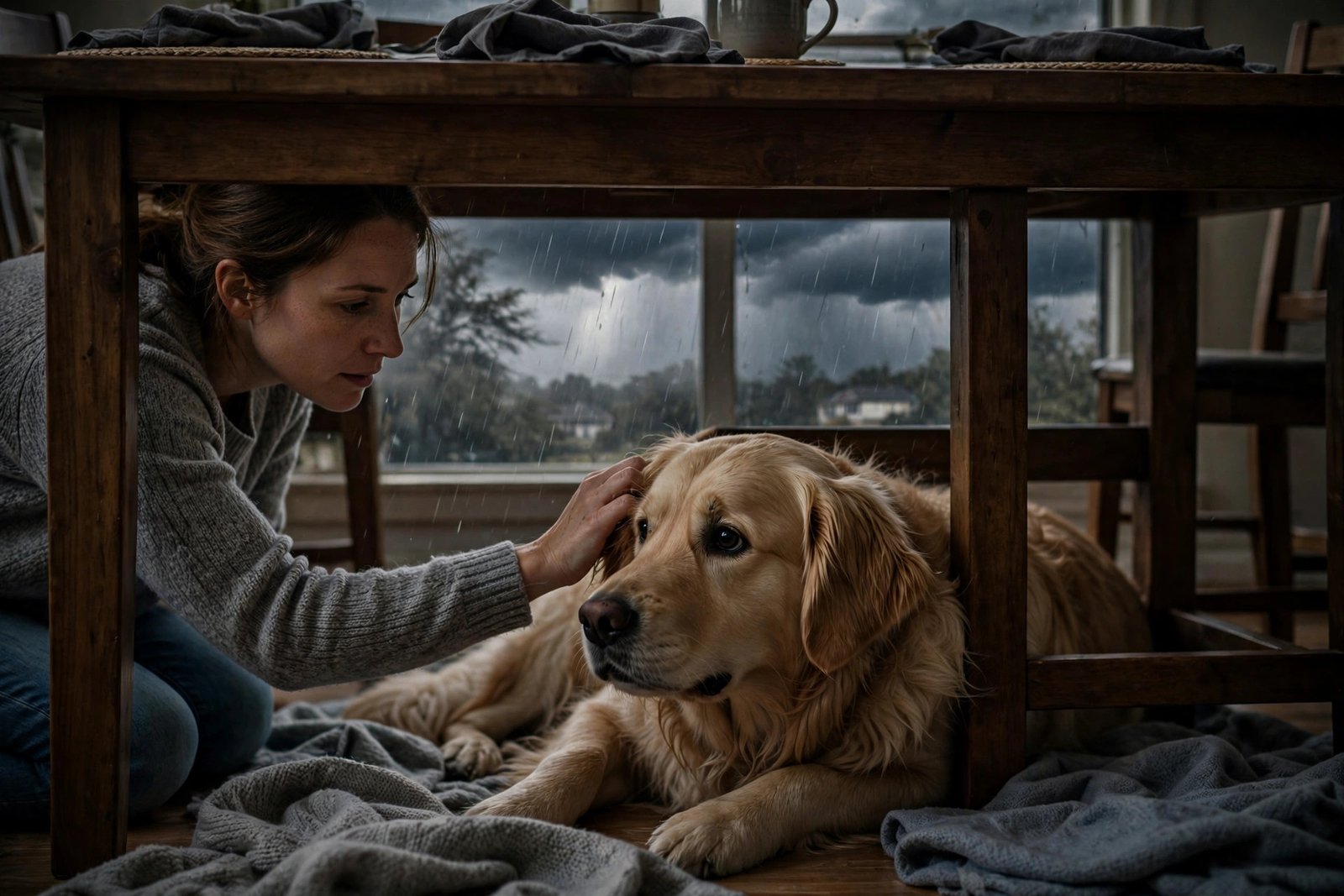
When the storm is overhead, your job is harm reduction. Create a safe den in advance: a crate covered with blankets, an interior room, or under a sturdy table — somewhere the dog chooses, ideally established during calm weather with treats and meals so it already feels safe. Close curtains (flashes frighten as much as noise), play calming background sound (classical music or white noise at moderate volume masks the rumble’s edges), and stay calm yourself — dogs read your tension instantly.
Comfort your dog if they seek it. The old advice (“don’t comfort them, you’ll reinforce the fear”) has been debunked by behaviour science: you cannot reinforce an emotion, only a behaviour, and gentle calm contact reduces panic. What you should not do is fuss anxiously, chase a hiding dog, or force them out of their den. Consider a snug-fitting anxiety wrap (Thundershirt-style, £30–£45) — the gentle pressure calms many dogs, though not all — and Adaptil diffusers or collars (synthetic calming pheromone), which have modest evidence behind them. Reducing the noise itself helps too: double glazing, closed windows and soft furnishings all dampen the assault — the same principles as soundproofing a room, applied for your dog’s sake.
Long-term: desensitisation and professional help
The lasting fix is behaviour modification, done between storms. Desensitisation means playing recorded thunder sounds at very low volume while the dog does something pleasant (eating, playing), gradually increasing the volume over weeks — never pushing past the point of calm. Counter-conditioning pairs the scary sound with wonderful things (thunder rumble = chicken appears). Done correctly over 2–3 months, this genuinely rewires the response; done impatiently (too loud, too fast), it sensitises further. Professional guidance from a qualified behaviourist (APBC or CCAB accredited) is worth every penny for severe cases.
For dogs whose panic is extreme — self-harm, escape attempts, destruction — veterinary medicine is appropriate and humane. Fast-acting anti-anxiety medications (such as trazodone or sileo, prescribed for noise events) take the edge off without sedation, and daily medications help dogs with generalised anxiety. There is no virtue in a dog suffering when medication exists; discuss it openly with your vet rather than struggling through another storm season. The Dogs Trust offers free behaviour advice lines for owners at their wits’ end.
Preparing for storm season
British thunderstorm season peaks in summer, often arriving with little warning — so prepare in spring. Refresh the safe den, check your desensitisation recordings still work, ensure any prescribed medication is in date, and know the forecast apps that give lightning warnings. Microchip details must be current: panicked dogs bolt, and storm nights are peak lost-dog nights for rescues.
Exercise the dog well before forecast storms — a tired dog copes better — and feed slightly earlier so the evening routine is done before the sky turns. If you will be out, leave the den accessible, background sound on, and consider whether a calm dog-sitter should stay over for severe-phobia dogs. And keep perspective: most dogs improve significantly with the measures above. The pacing, panting wreck of this summer can become the dog who merely sighs and relocates to the hallway by next year — which, for a noise-phobic dog, is a triumph.
What not to do: common mistakes
Well-meaning owners often make thunderstorm fear worse. The biggest mistake is punishment: shouting at a panicking dog, or using a “correction” for trembling and hiding, layers fear of you on top of fear of the storm. The second is forced exposure — dragging a terrified dog outside “to show them it is fine” is flooding, a technique that traumatises rather than desensitises outside strict professional protocols. The third is the opposite extreme: wrapping the dog in frantic, high-pitched fussing (“oh no, poor baby, it’s okay!”) which signals that there really is something to panic about.
Other pitfalls: starting desensitisation training during storm season at full volume (too much, too fast), relying solely on over-the-counter “calming” treats with no evidence behind them, and — the most common — doing nothing because “all dogs hate thunder”. Noise phobia is progressive; the dog that merely panted last year may be destroying doorframes this year. Treat early signs seriously, keep a log of each storm’s severity and your dog’s reaction, and escalate to professional help before the behaviour becomes entrenched. Calm consistency beats dramatic intervention every time.
Frequently Asked Questions
Should I comfort my dog during a thunderstorm?
Yes, calmly, if they seek it. Modern behaviour science is clear: you cannot reinforce fear with comfort. Gentle presence reduces panic; anxious fussing or punishment makes it worse.
Do Thundershirts actually work?
For many dogs, yes — studies and owner reports show meaningful calming effects from gentle pressure wraps, though not for every dog. They are a reasonable £30–£45 experiment with no downside.
Can medication help with thunderstorm phobia?
Yes — vets can prescribe fast-acting anti-anxiety medication for storm events, and daily medication for generalised anxiety. It is humane and effective for severe cases; discuss it rather than suffering through.
Will my dog grow out of thunderstorm fear?
Unlikely without intervention — noise phobias typically worsen with age and can generalise to other loud noises. Active desensitisation is the way to improve things, not waiting.
Conclusion
Thunderstorm phobia is treatable: a safe den and calm presence for tonight, desensitisation for the season, professional help and medication for the severe cases. Your dog’s terror is real, but it is not permanent — with patience and the right methods, the next storm can be merely an inconvenience rather than an ordeal. Start preparing before the clouds gather, and give your dog the calm they cannot find alone.