
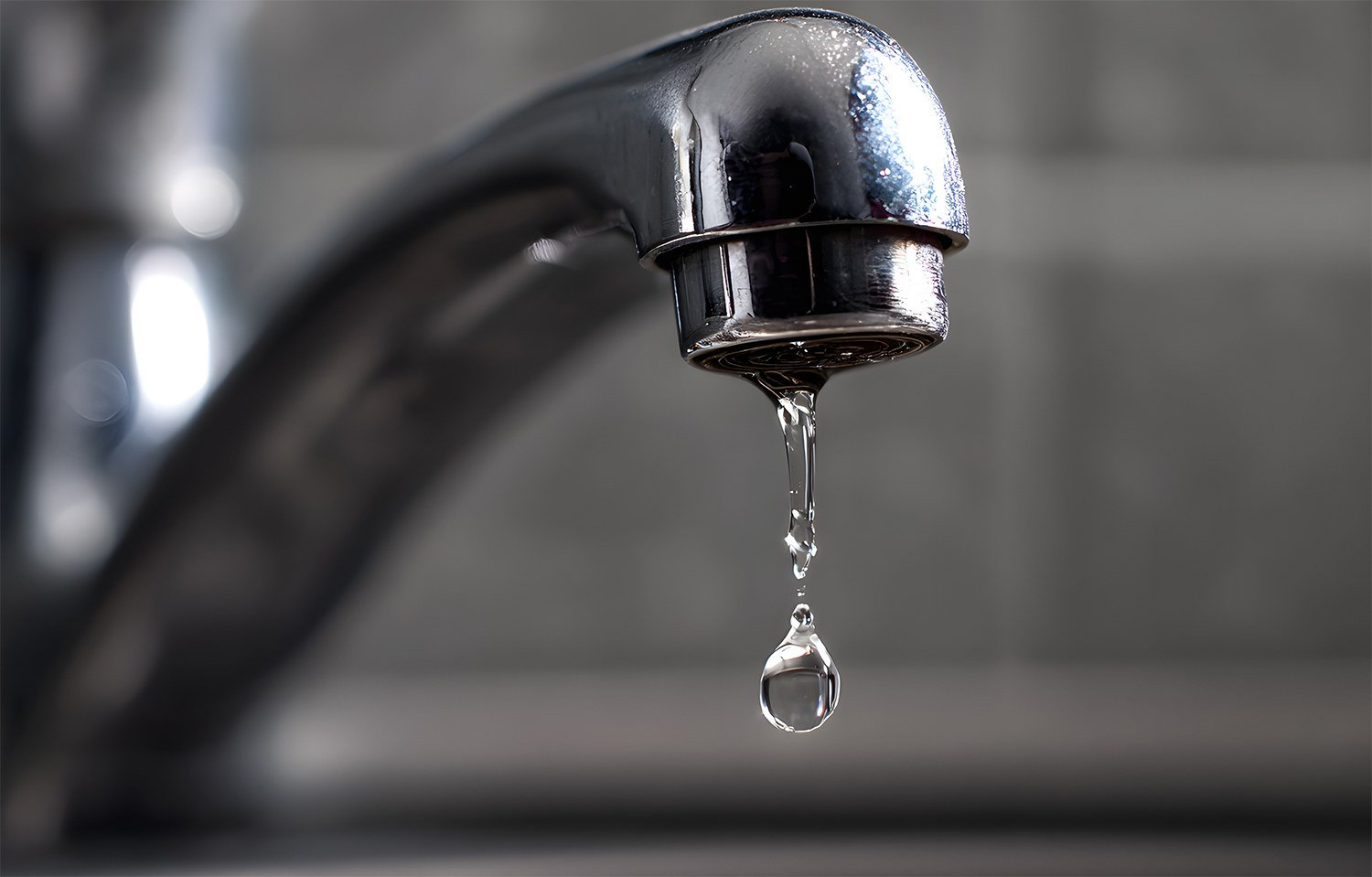
Drip. Drip. Drip. A dripping tap is the most annoying sound in domestic life — and it’s money literally going down the drain. A tap dripping once per second wastes over 5,000 litres a year, and on a metered supply that’s real money. The good news: learning how to fix a dripping tap UK plumbing-style is one of the easiest DIY jobs there is, usually taking under half an hour and costing less than a fiver in parts.
Almost all dripping taps are fixed the same way: turn off the water, take the tap apart, replace the worn washer or cartridge, reassemble. The only tricky part is knowing which type of tap you have, because the internal part differs.
How to Fix a Dripping Tap UK: Identify Your Tap Type First
Traditional taps (separate hot and cold, full turn)
The classic UK setup: crosshead or lever taps that turn multiple rotations. These use a rubber washer pressed against a valve seat — the washer wears out, water gets past, drip-drip-drip. Washers cost pennies and this is the easiest fix of all.
Quarter-turn / ceramic disc taps (modern mixer taps)
The tap turns only 90 degrees from off to full. Inside is a ceramic disc cartridge rather than a washer. These last far longer than washers but eventually wear or get scored by grit. Replacement cartridges cost £5–£20 and are tap-specific, so identify your tap’s make and model before buying.
Mixer taps with a single lever
Usually ceramic disc cartridges too, sometimes with a more complex multi-port cartridge. Same principle: replace the cartridge.
Step-by-Step: Fixing a Traditional Washer Tap
- Turn off the water. Find the isolation valve on the pipe under the sink or basin and turn it clockwise. No isolation valve? Turn off the mains at the stopcock (usually under the kitchen sink or by the front door) and open the tap to drain remaining water.
- Plug the plughole. Tiny screws love to escape down drains. A flannel or plug saves the day.
- Remove the tap head. Prise off the decorative cap (the red/blue dot or logo), undo the screw beneath, and lift off the head. You may need to wiggle firmly — limescale seizes things.
- Undo the valve. Use an adjustable spanner on the hexagonal nut to unscrew the tap’s inner valve body anticlockwise. Hold the tap body steady so you don’t twist the pipework.
- Replace the washer. At the base of the valve you’ll see the old washer, often held by a small nut or just wedged in. Remove it, note its size, and fit the new one — smear a little silicone grease on it. Washer kits with multiple sizes cost a couple of pounds from any DIY shop.
- Check the valve seat. Run your finger inside the tap body where the washer sits. If it’s rough or pitted, the new washer won’t seal — a £10 seat-resurfacing tool regrinds it smooth in seconds.
- Reassemble in reverse. Refit the valve (don’t overtighten), replace the head and cap, turn the water back on slowly, and test.
Fixing a Ceramic Disc (Quarter-Turn) Tap
The process is similar through step 4, but instead of a washer you’ll lift out a cylindrical cartridge. Take it — and ideally a photo of the tap’s branding — to a plumbers’ merchant or DIY store to match the replacement. Cartridges come in standard sizes (usually identified by spline count and dimensions), but getting the exact match matters. Fit the new cartridge, reassemble, and you’re done. If the tap body is heavily limescaled inside, a soak with white vinegar or a dedicated descaler before reassembly helps the new cartridge seat properly.
When It’s Not the Washer
- Drip from the spout base or handle: usually a worn O-ring on the spout or valve body — O-ring kits are cheap and the fix is similar.
- Tap drips only when recently used: can be residual water in a high-arc spout draining down — normal, not a fault.
- Water leaking from under the sink: that’s a supply-pipe or waste connection issue, not the tap mechanism — check and tighten compression fittings.
- Everything’s corroded solid: if the tap is ancient and seized, replacing the whole tap (£30–£80 for a decent basin tap) is often smarter than fighting it.
The B&Q advice guides have useful videos if you want to watch the process first, and most plumbers’ merchants will happily identify a cartridge from a photo if you bring one in.
Preventing the Next Drip
Don’t overtighten taps — cranking a washer tap shut with full force is what destroys washers fastest. Turn until the flow stops, no further. In hard-water areas, limescale accelerates wear on ceramic discs; wiping taps dry and descaling occasionally extends their life significantly. And when you do replace a tap entirely, spending £60 instead of £25 gets you better cartridges, better chrome and fewer 2am drips.
Dripping taps often travel with other small plumbing niggles — if your toilet’s playing up too, our guide to fixing a leaking toilet covers the other classic, and unblocking a sink without chemicals sorts the next most common callout.
Tools You’ll Need (and What You Can Skip)
The beauty of this job is the minimal toolkit: an adjustable spanner, a flathead screwdriver, a cloth (to protect chrome from the spanner’s teeth), and the replacement washer or cartridge. That’s genuinely it for most taps. Nice-to-haves: silicone grease for the new washer, PTFE tape for threaded joints, and a head torch for the dark recesses under the sink. What you don’t need: a full plumbing toolkit, a blowtorch, or — for a simple washer swap — a plumber. Total parts cost under £5; total time under 30 minutes once you’ve done it once. The first one takes an hour because you’re being careful, which is exactly right.
A word on isolation valves: if your sink doesn’t have them on the hot and cold feeds, consider fitting lever-type isolation valves while you’re at it — they’re a few pounds each and turn future tap maintenance from a whole-house water shutdown into a two-second job. It’s the single highest-value upgrade in domestic plumbing, and any competent DIYer can fit them with push-fit connectors and no soldering.
The Takeaway
Turn off the water, swap the washer or cartridge, reassemble — that’s the whole job. A £3 washer kit and 30 minutes of your time beats a £80 plumber callout for the most common household drip there is. Just remember the plughole plug. Everyone forgets the plughole plug once.





One thought on “How to Fix a Dripping Tap UK”