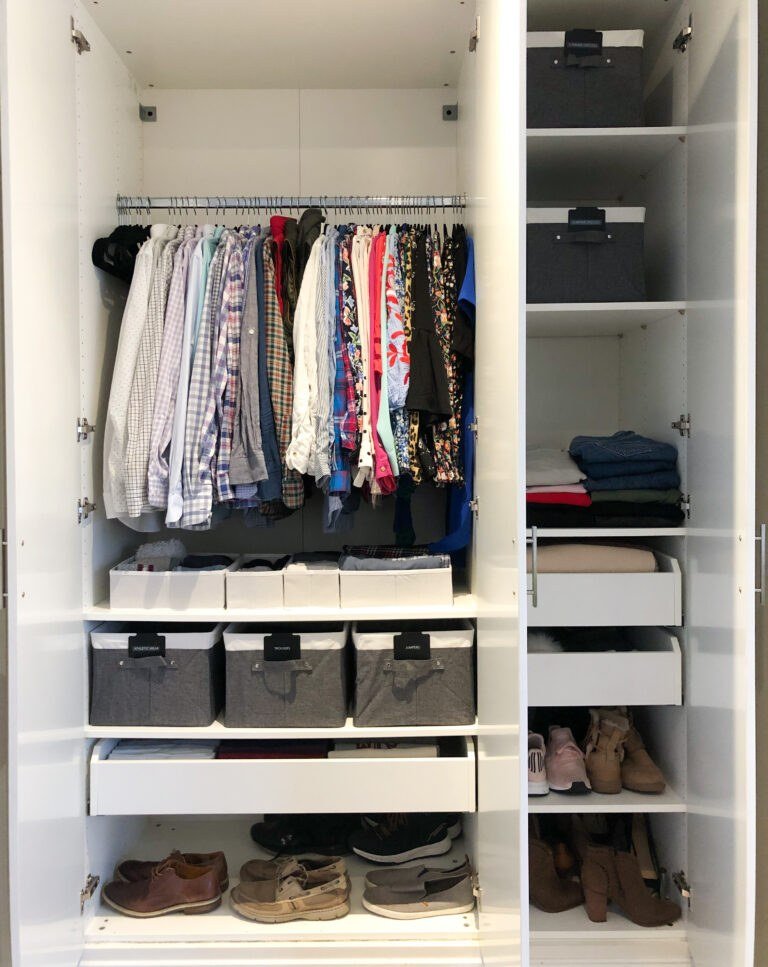
British flats were not designed by people with wardrobes. The “double wardrobe” in a new-build bedroom barely holds a week’s worth of clothes, the hallway has no storage, and somehow you own 47 tops. Organising a small wardrobe in a UK flat isn’t about buying clever gadgets — it’s about ruthless editing, smart storage, and systems that survive real life. Here’s how to make a tiny wardrobe work hard.
How to Organise a Small Wardrobe in a UK Flat: Step 1 — Edit Ruthlessly
No organisation system overcomes too much stuff. Before buying a single storage box:
- Empty it completely. Every item out, wardrobe bare. You need to see the scale of the problem.
- Sort into four piles: love and wear regularly / seasonal (store elsewhere) / maybe / never.
- The nevers go immediately — charity bag, Vinted listing, textile recycling. Don’t let them creep back.
- The maybes go in a box for a month. Date it. Unopened after a month? They were nevers.
- Be honest about “someday” clothes — the too-small jeans, the occasion dress from 2019. If it doesn’t fit your life now, it’s storage, not wardrobe.
Most people remove 30–40% at this stage. That’s not loss — it’s the space your actual wardrobe needed. Our capsule wardrobe guide is the natural next step once you’ve edited.
Step 2 — Zone the Space
A small wardrobe needs assigned zones, not random hanging:
- Prime rail space (eye level, easy reach): current-season daily wear — work clothes, go-to outfits.
- Upper shelves: less-used items, occasion wear in garment bags, bags and accessories.
- Lower areas: shoes (on a rack, not piled), storage boxes for off-season.
- The door: over-door hooks for tomorrow’s outfit, belts, scarves — dead space made useful.
- Drawers: underwear, tees, knitwear (folded, not hung — hanging stretches knits). File-folding (vertical, like a filing cabinet) doubles drawer capacity and lets you see everything.
Step 3 — Storage That Earns Its Place
Small-space storage ranked by usefulness:
- Vacuum bags for off-season clothes. The single biggest space win — a winter coat collection compresses to inches. Store under the bed or on top of the wardrobe. See our storing winter clothes guide.
- Slim velvet hangers. Replace bulky plastic/wooden hangers — you gain 30–50% more rail space instantly, and clothes don’t slip off.
- Drawer dividers or boxes. Stops the drawer from becoming a textile lucky-dip.
- Over-door organisers for shoes, accessories, or folded items.
- Under-bed storage boxes for the off-season overflow and rarely-worn occasion pieces.
What not to buy: single-purpose gadgets, anything that doesn’t fit your actual wardrobe dimensions (measure first), and “clever” hangers that promise 5x capacity but tangle everything.
Step 4 — Systems That Stick
Organisation fails when the system needs more effort than chaos. Keep it simple:
- One in, one out. New item in? Something leaves. Non-negotiable in a small space.
- Seasonal rotation, twice a year. Pack away the off-season properly (clean first — moths love dirty wool). The wardrobe should only hold what you’re actually wearing.
- The “reset” habit. Two minutes each evening: rehang what was worn, put laundry in the basket. Systems survive on tiny maintenance, not weekend overhauls.
- Visible inventory. If you can’t see it, you won’t wear it. File-fold drawers, single-layer hanging (no doubling up on one hanger), no “floordrobe.”
Small Flat, Big Principles
- Use vertical space. Wardrobe tops, over-door, high shelves — small flats waste vertical inches.
- Multi-use furniture: ottoman beds, storage benches, bedside tables with drawers. Every furniture piece should store something.
- Hallway and bedroom doors are storage real estate — hooks for coats, bags, tomorrow’s outfit.
- Keep workwear separate-ish if space allows — a work wardrobe zone makes weekday mornings faster.
MoneySavingExpert covers budget storage buys, and Which? home reviews test storage solutions. For the decluttering mindset, our weekend declutter guide tackles the whole flat.
The Bottom Line
Organising a small wardrobe in a UK flat means: edit ruthlessly first (30–40% goes), zone the space by frequency of use, invest in slim hangers and vacuum bags, rotate seasonally, and maintain with a two-minute evening reset. The goal isn’t a showroom — it’s opening the wardrobe and seeing only things you wear, all accessible. Small space, zero stress.
Frequently Asked Questions
Where do I even start decluttering?
Empty the wardrobe completely — every item out. Sort into love-and-wear, seasonal, maybe and never. The nevers leave immediately; the maybes go in a dated box for a month. Most people remove 30–40%.
How do I store out-of-season clothes?
Vacuum bags — the single biggest space win. Clean everything first (moths love dirty wool), compress, and store under the bed or on top of the wardrobe.
What hangers should I use?
Slim velvet hangers — replacing bulky plastic or wooden ones gains 30–50% more rail space instantly, and clothes don’t slip off.
Should I fold or hang knitwear?
Fold, always. Hanging stretches knitwear out of shape over time. File-fold (vertical, like a filing cabinet) in drawers to double capacity and see everything.
How do I keep it organised long-term?
Two-minute evening reset (rehang, laundry in basket), one-in-one-out for new purchases, and seasonal rotation twice a year. Systems survive on tiny maintenance, not weekend overhauls.
Where do shoes go in a tiny flat?
On a rack, not piled — piling damages them and wastes space. Off-season pairs in under-bed boxes; daily pairs by the door or in the wardrobe base.
The 15-Minute Wardrobe Reset
When the wardrobe has slid back into chaos, don’t schedule a weekend overhaul — do this instead:
- Minutes 0–5: pull out everything that’s obviously wrong — the chair pile, the floor pile, the ‘I’ll deal with it’ heap. Sort into rehang, laundry, donate.
- Minutes 5–10: rehang properly on slim hangers, grouped by type. File-fold one messy drawer.
- Minutes 10–15: bag the donations and put them by the door. Take the laundry to the machine.
Fifteen minutes, once a week, prevents the slow entropy that turns organised wardrobes into textile lucky-dips. Maintenance beats overhauls every time.
The Payoff
Here’s what an organised small wardrobe actually buys you: five quiet minutes every morning instead of a frantic hunt. Clothes you forgot you owned, back in rotation. The end of duplicate purchases. And — the part nobody mentions — a wardrobe that fits your space stops making your whole flat feel chaotic. Fifteen minutes of weekly maintenance is the price. Most people would pay far more for what it delivers.