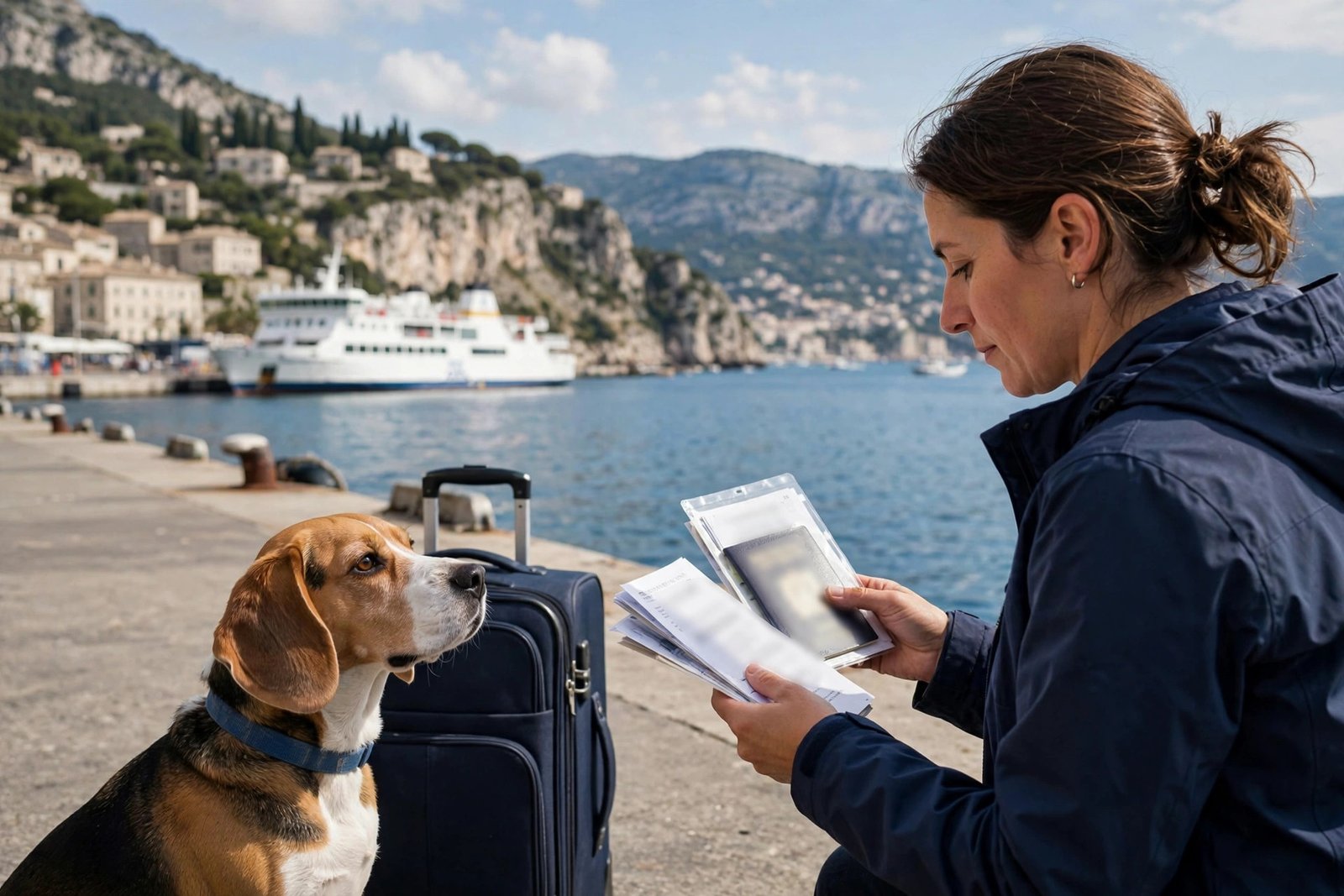
Dreaming of taking the dog to a French gîte or the cat to a Spanish villa? Since Brexit, travelling from Great Britain to Europe with pets got significantly more complicated — the old EU pet passport is no longer valid for GB-issued documents, and the replacement involves vet visits, certificates and careful timing. Get it wrong and your pet could be turned away at the border. Here are the current UK rules for travelling with pets to Europe, explained step by step.
The headline change: pet passports vs health certificates
Before Brexit, an EU pet passport was all you needed. Now, pets travelling from Great Britain to the EU (or Northern Ireland) need an Animal Health Certificate (AHC) instead. The AHC is issued by an official veterinarian (not every vet qualifies — check yours does), costs typically £100–£250, and is valid for a single trip: it allows entry into the EU within 10 days of issue and onward travel within the EU for up to 4 months. Every trip needs a new certificate, so frequent travellers feel the cost and hassle most.
The exception: pets with an EU-issued pet passport (obtained from a vet in the EU) can still use it for travel, which is why some owners get one issued during their first post-Brexit trip. Northern Ireland has its own arrangements under the Windsor Framework — check the current rules before assuming. The definitive requirements are on gov.uk’s pet travel pages, which you should recheck before every trip, as rules evolve.
The four requirements: chip, vaccine, certificate, worming
Every dog, cat and ferret needs four things. One: a microchip, implanted before the rabies vaccination (a vaccine given before the chip does not count — the order matters). Two: a rabies vaccination, given at least 21 days before travel — the three-year vaccines are fine, but the 21-day wait applies to first vaccinations, not boosters. Three: the Animal Health Certificate, issued within 10 days of travel. Four (dogs only, for certain countries): tapeworm treatment, administered by a vet 1–5 days before arrival in countries including the UK (on return), Ireland, Finland and Malta.
Timing is everything. Book the AHC appointment early — official vets get booked up in summer — and ensure the rabies vaccination’s 21-day clock has run. Keep copies of everything: the certificate, vaccination records and chip number, in both paper and phone-photo form. Border checks are real, and missing paperwork means refusal. If you are planning UK-based trips instead, our guide to pet-friendly holidays in the UK avoids the paperwork entirely — and do not forget travel insurance for Europe for the humans.
Returning to Great Britain: the rules coming home
Coming back has its own requirements. Dogs must have had tapeworm treatment 1–5 days before arrival in GB (administered and recorded by a vet) — this is the rule that catches most people, because it requires finding a vet abroad shortly before you travel home. Cats and ferrets do not need the tapeworm treatment for GB entry. Your pet must enter GB via an approved route and carrier — not every ferry or tunnel crossing accepts pets, so book pet-friendly crossings explicitly (Eurotunnel’s pet service and certain ferry operators).
There is a maximum of five pets per person for non-commercial travel; more than that and you fall under commercial rules with far stricter requirements. Assistance dogs have separate provisions. And remember the AHC covers your EU travel, but re-entry to GB is governed by UK rules — keep the tapeworm certificate with the AHC. The RSPCA advises building a full extra day into your return plans for the vet visit, rather than scrambling the morning of travel.
Practical tips for smooth pet travel
Beyond paperwork, think welfare. Long journeys stress animals: plan stops every 2–3 hours, carry water and familiar food, and never leave pets in a hot car — not even briefly. For ferry crossings, book pet-friendly cabins where available; for the tunnel, pets stay in the car (30 minutes, climate-controlled). Sedatives are generally discouraged by vets for travel — a calm, well-exercised pet travels better than a drugged one.
Prepare a pet travel kit: food for the whole trip plus two days’ contingency, any medications with prescriptions, a familiar blanket, waste bags, and your vet’s number saved in your phone. Check your pet insurance covers travel abroad — many policies include it, some exclude it, and a foreign vet emergency without cover is brutally expensive. And research your destination: beach restrictions, leash laws and restaurant norms for dogs vary enormously across Europe. A little preparation turns a bureaucratic obstacle course into the holiday you imagined.
Assistance dogs and other animals
Assistance dogs travel under the same core requirements (microchip, rabies vaccination, AHC), but transport operators have specific obligations to carry them, and some paperwork flexibilities apply — check with your assistance dog organisation, which will have navigated this many times. The rules above cover dogs, cats and ferrets only. Travelling with other species — rabbits, birds, reptiles — falls under entirely different regulations, often the commercial animal movement rules, which are stricter, slower and more expensive. Do not assume the pet-travel scheme covers your parrot; it does not.
One more Brexit subtlety: pets moving from Northern Ireland to the EU generally follow EU rules (NI remained aligned for this purpose), while GB-to-NI movements have their own Windsor Framework arrangements, including the pet travel document scheme for dogs. If your journey touches Northern Ireland, research that leg separately — it is the most commonly confused part of the whole system. And whatever your route, start early: the single biggest cause of ruined pet-travel plans is discovering the 21-day rabies clock or the official-vet shortage a week before departure. Six weeks’ lead time turns the whole process from stressful to routine.
Frequently Asked Questions
How much does an Animal Health Certificate cost?
Typically £100–£250 depending on the vet and the number of pets. It is per trip, not per year, so frequent travellers should budget accordingly or consider obtaining an EU pet passport during a trip.
Can I still use my old EU pet passport?
Only if it was issued in the EU (not Great Britain). GB-issued EU pet passports are no longer valid for EU entry — you need an AHC instead.
Do I need a rabies vaccine if my dog was vaccinated years ago?
Booster vaccinations maintain validity without a new 21-day wait, provided they were given before the previous one expired. A lapsed vaccination restarts the 21-day clock.
Can I take more than five pets?
Not under pet travel rules — six or more animals falls under commercial movement regulations, which require different certification, approved transporters and veterinary checks.
Conclusion
Post-Brexit pet travel to Europe is bureaucratic but entirely manageable: microchip, rabies vaccine (21 days), Animal Health Certificate (within 10 days of travel), and tapeworm treatment for the return. Start the process six weeks before departure, use an official vet, and keep every document to hand. Do the paperwork once and the continent opens up — for you and your four-legged co-pilot alike. The bureaucracy is real, but so is the reward: breakfast in Brittany with your best friend asleep under the table. Bon voyage.