Stand in the compost aisle of any British garden centre and you face a wall of bags all promising miracles: multipurpose, John Innes, organic, peat-free, “enriched”, “professional”. They cannot all be right for your vegetable beds, and the wrong choice is not just wasted money — the wrong compost can stunt seedlings, introduce weeds, or slowly acidify your soil. If you are asking what is the best compost to buy in the UK for vegetable beds, here is the straight answer: which types suit which jobs, which brands consistently perform, and the peat-free reality that now governs every purchase.
Peat-free first: the non-negotiable
Peatlands are among the planet’s most important carbon stores and wildlife habitats; extracting peat for compost destroys them. The UK has been phasing out peat in retail horticulture, and peat-free is now the default expectation — not a niche choice. Modern peat-free composts (based on coir, wood fibre, bark and green waste) perform well when you buy quality: the early reputation for poor results came from cheap, inconsistent products, not from the concept. Always check the bag says peat-free; if it does not say, assume it contains peat.
Peat-free composts behave slightly differently: they can dry out faster on the surface while staying wet below, and their nutrient content varies more between batches. The fix is simple — water by weight (lift the pot; light means thirsty) rather than by surface appearance, and feed regularly, because most multipurpose composts contain only 4–6 weeks of nutrients. The RHS publishes peat-free growing guidance and endorses specific products — look for the RHS endorsement as a quality signal. Our guide to building a raised garden bed covers how much compost you will actually need to fill one.
The types: matching compost to the job
Multipurpose compost is the all-rounder: fine for filling raised beds, planting out, and general use. Quality varies enormously with price — the cheapest bags are often mostly minimally-composted wood fibre that robs nitrogen from your plants as it continues decomposing. Spend mid-range (£7–£10 for 50L) from reputable brands and you will notice the difference. John Innes composts are loam-based (soil, peat-substitute, grit, fertiliser) in three formulations: No.1 for sowing and rooting, No.2 for potting on, No.3 for final planting and containers. Their weight and nutrient stability make them excellent for long-term container vegetables.
Soil improver / farmyard manure: for digging into beds rather than filling them — well-rotted manure or composted bark conditions soil structure and feeds soil life. Never use fresh manure on vegetable beds (it burns roots and can contaminate crops). Mushroom compost is cheap, alkaline and good for most vegetables, but avoid it for acid-lovers and go easy — it is high in salts. Seed compost: finer-textured and lower-nutrient for germination; seeds contain their own food and strong fertiliser burns delicate roots. Ericaceous compost: only for acid-loving plants (blueberries) — irrelevant for most vegetable beds, which prefer neutral to slightly alkaline.
For raised beds specifically
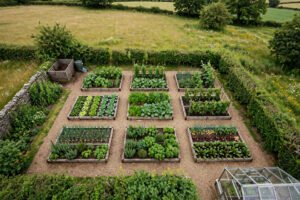
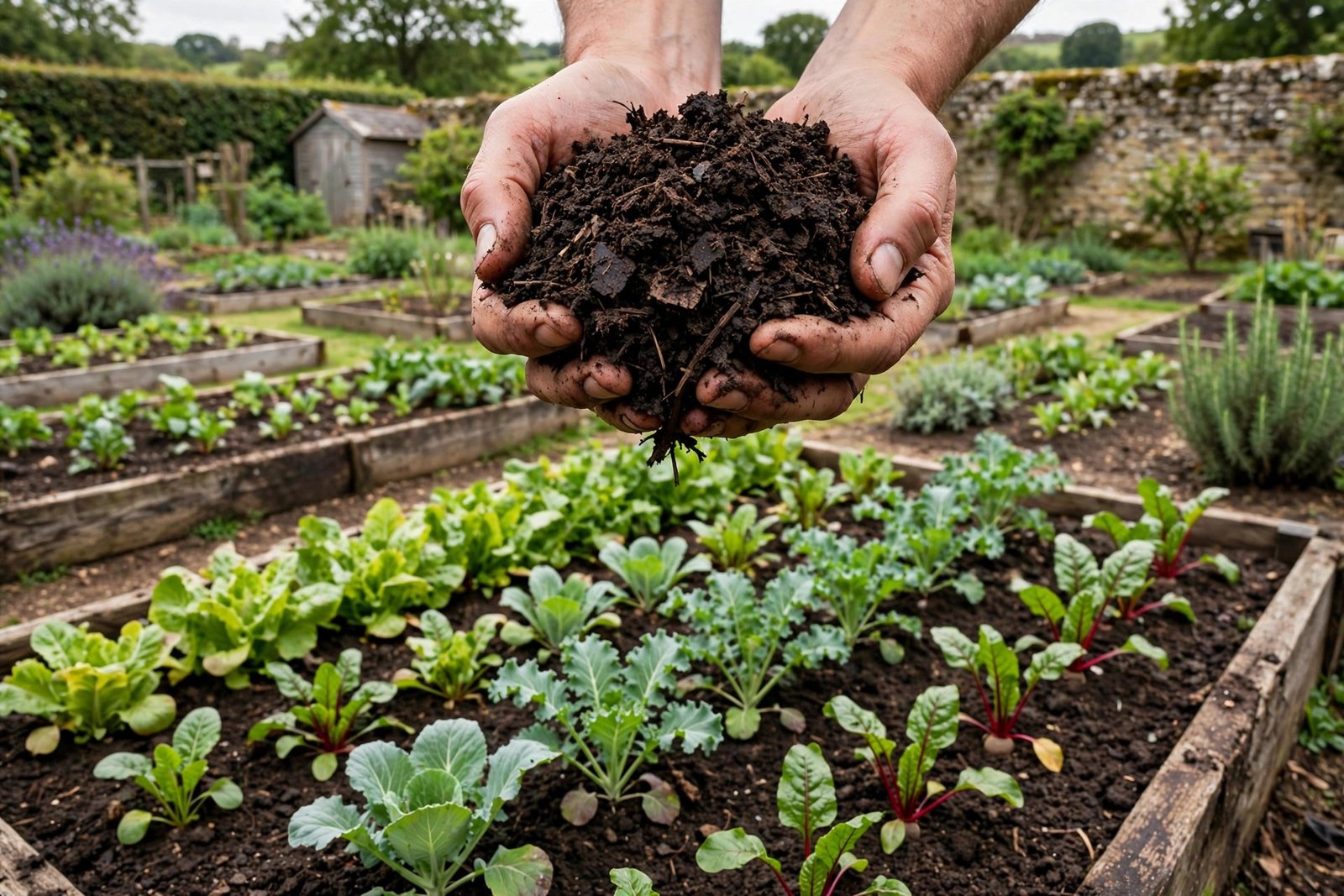
Filling raised beds is the biggest compost purchase most gardeners make — a standard 1.2×2.4m bed 30cm deep needs around 800 litres. The economical approach: fill the bottom half with cheaper bulk material (topsoil, well-rotted manure, garden compost) and the top 15–20cm with quality multipurpose or a 50/50 multipurpose-topsoil mix. Buying in bulk bags (1,000 litres delivered, typically £80–£130) beats individual retail bags for large volumes. Never fill beds entirely with pure multipurpose — it slumps, dries fast and costs a fortune.
Brands that consistently perform
Names worth knowing in the UK market: Melcourt Sylvagrow — peat-free, RHS-endorsed, widely considered the gold standard multipurpose; Dalefoot Composts — Lakeland-made, peat-free, excellent wool-based products; New Horizon — widely available peat-free organic range; Miracle-Gro peat-free — consistent and widely stocked. For John Innes, look for the John Innes Manufacturers’ Association seal — it guarantees the formulation meets the standard recipe, which matters because “John Innes style” imitations vary wildly.
Read bags sceptically. “Enriched” and “professional” are marketing, not standards. “Organic” on compost means certified inputs — nice, but not a performance guarantee. The most reliable quality signal is the manufacturer’s reputation plus independent endorsements (RHS, Which? Gardening trials). And beware the end-of-season bargain pallet: compost stored outdoors over winter gets waterlogged and compacted — fine for mulching, poor for sowing. For the organic philosophy behind all of this, Garden Organic is the UK charity that has championed chemical-free growing for decades.
Making your own: the long game
Every vegetable gardener should compost at home. A simple dalek bin (£30–£50, often subsidised by councils) turns kitchen scraps, cardboard and garden waste into superb soil improver within 6–12 months. The rules are simple: mix greens (nitrogen-rich: veg peelings, grass clippings, coffee grounds) with browns (carbon-rich: cardboard, leaves, straw) roughly 50/50, keep it moist but not soggy, and turn occasionally. Do not compost meat, dairy, diseased plants or perennial weeds. Homemade compost will not replace bought multipurpose for seed sowing (it is too variable and may contain weed seeds), but as a soil improver and mulch it is unbeatable — free, excellent, and the most satisfying recycling loop in the garden.
Leaf mould deserves special mention: collect autumn leaves in a bin bag with holes, wait a year, and you have a superb soil conditioner and seed-sowing ingredient — for free, from waste. British gardeners sit on this goldmine every October and most let it blow away. Pair homemade compost with bought multipurpose strategically: bought for precision jobs (sowing, containers), homemade for bulk soil improvement. That division of labour is how experienced growers keep costs down while results go up — and it connects directly to choosing the best plants for a small UK garden, where every litre of compost must earn its place.
The bottom line
For UK vegetable beds: buy peat-free always, use mid-range multipurpose (Sylvagrow, Dalefoot, New Horizon) for general work, John Innes No.3 for containers, soil improver or well-rotted manure for digging in, and fill raised beds with a bulk-base-plus-quality-top layering strategy. Start a home compost bin for free soil improvement. Match the product to the job, distrust marketing adjectives, and remember that compost is a tool, not a miracle — the soil life it feeds does the real work.
Frequently Asked Questions
What is the best compost for vegetable beds in the UK?
Peat-free multipurpose from a reputable brand (e.g. Melcourt Sylvagrow, Dalefoot, New Horizon) for general use; John Innes No.3 for containers; well-rotted manure or soil improver for digging into beds.
Is peat-free compost as good as peat-based?
Quality peat-free composts perform well — early problems came from cheap inconsistent products. Water by pot weight rather than surface appearance, and feed regularly, as nutrient levels vary more between batches.
What is John Innes compost?
A loam-based formulation in three strengths: No.1 for seeds, No.2 for potting on, No.3 for final planting. Look for the John Innes Manufacturers’ Association seal for the genuine recipe.
How much compost do I need for a raised bed?
A 1.2×2.4m bed at 30cm deep needs ~800 litres. Fill the bottom half with cheaper bulk material and the top with quality multipurpose — bulk bags (1,000L) are far cheaper than retail bags.
Can I make my own compost for vegetables?
Yes — a dalek bin with mixed greens and browns produces excellent soil improver in 6–12 months. Use homemade compost for soil improvement and mulching; buy precise products for seed sowing.