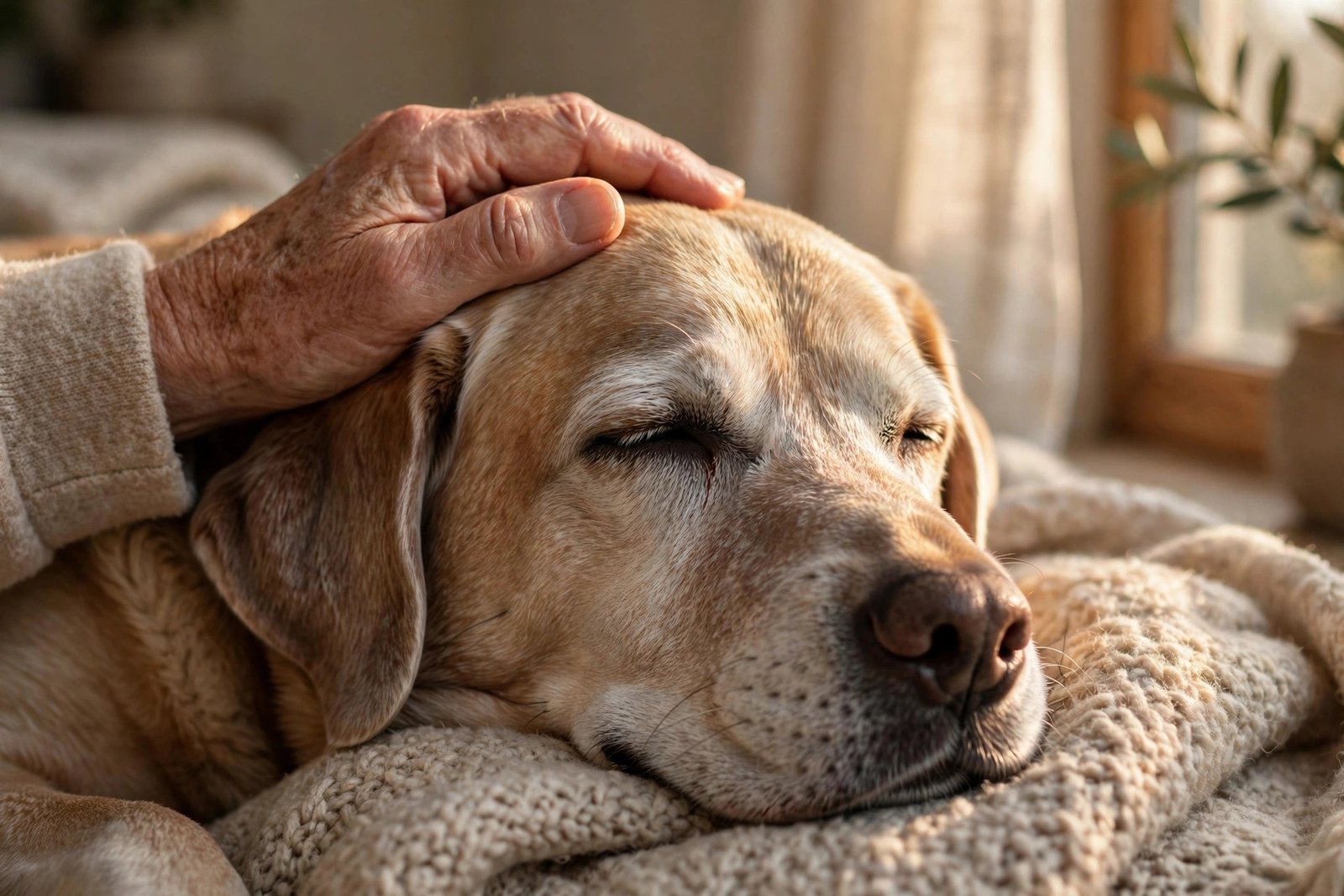
It is the hardest question in pet ownership, and the one every owner dreads: how do you know when it is time to say goodbye? Our pets cannot tell us, the line between a bad day and the end is rarely clear, and the fear of acting too soon wars with the fear of waiting too long. There is no single answer — but there are frameworks, signs and conversations that can guide you to a decision made from love rather than guilt. This is the guide nobody wants to need and everyone should read.
Quality of life: the framework vets use
Veterinary professionals often use the HHHHHMM scale (Hurt, Hunger, Hydration, Hygiene, Happiness, Mobility, More good days than bad), scoring each factor to assess overall quality of life. You do not need the formal scale to use its logic: ask whether your pet still experiences more pleasure than suffering across an ordinary week. The key insight is trajectory — a pet declining steadily week on week is telling you something, even if today was “not too bad”.
Watch for the specific markers. Eating: a pet that stops eating, or eats only with coaxing, is signalling significantly. Mobility: struggling to stand, falling, inability to reach the garden or litter tray. Pain: panting at rest, restlessness, crying out, reluctance to be touched. Engagement: the dog who no longer greets you, the cat who abandons their favourite sunny spot — withdrawal from joy is one of the clearest signals. Incontinence alone is manageable; incontinence plus distress is different. Keep a simple diary for two weeks — good days versus bad days, appetite, mobility — because grief and hope both distort memory, and the diary does not lie. Coping with this period takes support; many owners find coping strategies for difficult alone time helpful in the quieter moments.
The conversation with your vet
Your vet is your most important ally, and the conversation should happen earlier than most owners manage it — ideally while your pet is declining, not in crisis. Ask directly: “What would you do if this were your pet?” Vets answer this honestly, and their perspective — informed by thousands of such decisions — is invaluable. Ask about prognosis, about what the coming weeks likely hold, and about palliative options: pain management can buy comfortable time, and sometimes that time is the right choice.
Be honest about your own capacity too: nursing a very ill pet is emotionally and practically demanding, and there is no shame in acknowledging limits. Discuss logistics in advance, not in the emergency: does your vet offer home euthanasia, what are the costs (£100–£300 depending on area and pet size; home visits more), what aftercare options exist. Planning ahead does not hasten anything — it ensures that when the time comes, the experience is as calm as possible rather than a panicked emergency. And get a second opinion if you need one; good vets welcome it. Writing down your thoughts and questions beforehand helps — many owners find journaling clarifies the decision when emotions run high.
What euthanasia actually involves
Knowing the process removes much of the fear. Euthanasia is typically a two-stage procedure: first a sedative (so your pet drifts into peaceful sleep in your arms), then the final injection, usually into a vein. It is painless — the pet feels nothing beyond the tiny scratch of the needle, and most simply fall asleep. It takes minutes. You can be present throughout (most owners find comfort in it, though it is entirely your choice), hold them, talk to them, and take as much time as you need afterwards.
Home euthanasia, where available, lets the pet pass in their favourite spot without the stress of a final car journey — many owners consider it worth the extra cost. Aftercare in the UK: individual cremation with ashes returned (£150–£400), communal cremation, or home burial (legal in the UK provided it is your own land, the grave is deep enough, and it is away from water sources — check local rules). Take a paw print or fur clipping if you wish; vets and crematoria offer these routinely. There is no “right” choice — only the one that brings you peace.
Grief: it is real, and you are not alone
Pet grief is disenfranchised grief — profound, but often unsupported by a world that says “it was just a dog”. It was not just a dog. Studies show pet bereavement can match human bereavement in intensity, and it deserves the same respect. Allow yourself to grieve fully: the sadness, the guilt (“did I act too soon? too late?”), the strange quiet of the house, the phantom sounds of paws on the floor. These are normal, not pathological. The first night the house is silent can be the hardest; plan something gentle for it — a walk with a friend, an early night, anything that honours rather than avoids the feeling.
Support exists. The Blue Cross runs a free Pet Bereavement Support Service (phone and email, staffed by trained volunteers) — use it; that is what it is for. The Blue Cross and RSPCA both publish grief resources. Talk to people who understand — fellow pet owners, online communities — rather than those who minimise. Memorialise in whatever way helps: photos, donations to a rescue in their name, planting something. And be cautious about “replacing” too quickly: a new pet deserves to be chosen for themselves, not as grief anaesthetic — though when the time is right, rescues are full of animals waiting for exactly the love you have to give.
Frequently Asked Questions
How do I know if I’m acting too soon?
Vets report that owners far more often wait too long than act too soon. If you are asking the question seriously, keeping a quality-of-life diary, and your vet is gently raising it — trust that convergence. A peaceful goodbye a week early is kinder than a crisis a week late.
Should I be present for euthanasia?
If you can bear it, yes — most owners find comfort in being there, and your presence calms the pet. But it is a personal choice, not an obligation; a trusted friend or the veterinary team can be present instead. Do what you can live with.
How much does pet euthanasia cost in the UK?
Typically £100–£300 depending on pet size, area and whether at home or in clinic. Individual cremation with ashes returned adds £150–£400. Ask for the full costs in advance so there are no surprises.
Is it legal to bury my pet in the garden?
Yes, on your own land, provided the grave is sufficiently deep (around 3 feet for larger animals), away from water sources, and the pet did not die of an infectious disease. Check with your local authority for specific rules.
Conclusion
You will know it is time not from a single sign, but from the accumulation: the diary trending down, the joy fading from their eyes, your vet’s gentle honesty aligning with your own heart. The final gift we give our pets — the one that costs us the most — is a peaceful end without prolonged suffering. It will hurt. It should hurt; it means the love was real. And in time, the grief softens into gratitude for every year they gave you. That is not consolation. That is the truth.