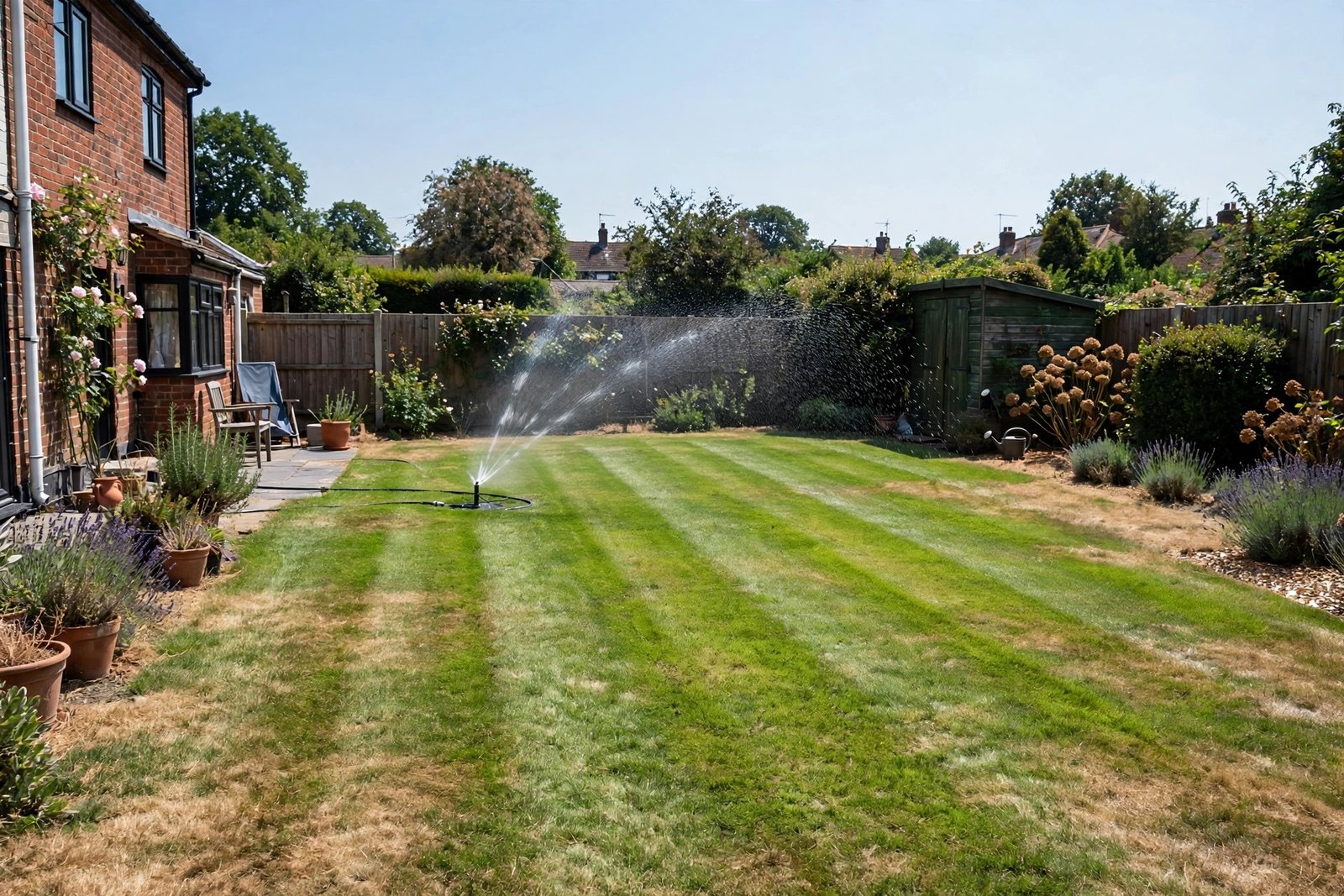
June arrives, the rain stops, and within three weeks your lawn looks like a patchwork of straw. British gardeners are used to rain doing the work — our grasses evolved for damp summers — so when a dry spell hits, lawns suffer fast and visibly. But a brown lawn is not necessarily a dying lawn, and the difference between lawns that survive drought and lawns that need re-turfing comes down to a handful of summer habits. If you are asking how do I keep a lawn green through a dry UK summer, here is what actually works: the watering science, the mowing adjustments, and when to stop fighting and let the grass do what grass does.
First, understand what brown grass means
Most UK lawn grasses (perennial ryegrass, fescues, bent) respond to drought by going dormant: growth stops, blades turn brown, and the plant retreats to its crown and roots to wait for rain. This is a survival strategy, not death — a dormant lawn typically greens up within two weeks of rain returning. True death (patchy areas that stay brown and pull up easily, roots gone) usually comes from combined stress: drought plus scalping, drought plus disease, or drought on shallow, compacted soil with nowhere for roots to go.
This distinction changes the strategy. The goal is not to keep every blade emerald through August — that requires irrigation most British gardeners do not have — but to keep the crowns alive so recovery is fast. Everything below serves that goal. And check your water company’s status: hosepipe bans (Temporary Use Bans) are increasingly common in dry summers across England, and breaching one risks a fine — the rules vary by company, so check before you water. The Met Office long-range forecasts help you decide whether to water now or wait for the rain it promises.
Watering: deep, infrequent, morning
The golden rule: water deeply and infrequently, not little and often. A daily sprinkle wets the top centimetre, encouraging shallow roots that suffer first in drought; a thorough soaking once or twice a week (25mm — check with a rain gauge or a tuna tin) drives roots deep where moisture persists. Water in the early morning: less evaporation than midday, and foliage dries quickly, reducing disease risk. Evening watering is the second choice; midday watering wastes most of it to evaporation.
New lawns are the exception: turf laid this year and newly sown grass have shallow roots and need consistent moisture — daily watering until established, whatever the ban situation allows (check exemptions; new turf sometimes qualifies). Established lawns can take the deep-and-infrequent regime. And grey water counts: bath and washing-up water (eco-friendly products only) on the lawn is legal in the UK and stretches your allowance. If you are laying new grass rather than rescuing old, our guide to laying turf in a UK garden covers getting establishment right from day one.
How to tell if it needs water
The footprint test: walk on the grass — if blades spring back, it is fine; if your footprints stay visible, it needs water. Screwdriver test: push a screwdriver into the soil — if it goes in easily to 15cm, moisture is adequate; if it stops at 5cm, the soil is baked. Brown but springy means dormant (alive); brown and crunchy with no spring means stressed — water it.
Mowing: higher, less often, clippings left
Drought changes the mowing rules. Raise the cutting height to 7–10cm — longer grass shades the soil (reducing evaporation), grows deeper roots, and photosynthesises more with less stress. The close-cropped bowling-green look is a drought death sentence; summer is the season for shaggy. Mow less often — dormant grass is not growing, so leave the mower in the shed; cutting brown dormant grass just stresses it further. Leave the clippings (mulch mowing): they return moisture and nutrients to the soil and shade the surface.
Never fertilise a drought-stressed lawn. Feeding pushes soft new growth that the roots cannot support — it is like making a dehydrated person run. Fertilise in spring and autumn only; summer feeding during drought actively harms. And keep traffic off dormant lawns where possible: foot traffic on brown grass compacts the soil and damages crowns, slowing autumn recovery. This is the season to admire the lawn from the patio, not to play football on it.
The long game: building a drought-proof lawn
The lawns that sail through dry summers were built for it. Aerate annually (autumn): spiking or hollow-tining relieves compaction so rain penetrates instead of running off — the single most effective drought-proofing job. Top-dress with sandy loam after aerating to improve soil structure. Overseed with drought-tolerant grasses: modern fescue-rich mixes (look for “drought tolerant” or “low maintenance” on the packet) outperform old ryegrass-dominant lawns dramatically; autumn overseeding is the moment. Improve the soil beneath: lawns on 15cm of topsoil over rubble (the classic new-build lawn) will always struggle — top-dressing annually builds depth over time.
The RHS lawn care guides cover seasonal treatments — scarifying, aerating and feeding — month by month for UK conditions. Consider reducing the lawn: the most drought-proof grass is no grass. Replace struggling areas with gravel, mulch beds, or — best of all — a wildflower meadow strip, which thrives on exactly the poor dry conditions that defeat lawns. Our small garden plant guide includes tough drought-tolerant options. And accept the aesthetic: a summer-dormant lawn that greens up in September is a healthy lawn behaving naturally, not a failure. The emerald August lawn is the anomaly, and it usually belongs to someone with a sprinkler system and no hosepipe ban.
The bottom line
Keeping a UK lawn green through dry summers means: water deeply once or twice weekly in the morning (not daily sprinkles), mow high and infrequently leaving clippings, never fertilise drought-stressed grass, keep traffic off dormant areas, and build long-term resilience with autumn aeration and drought-tolerant overseeding. Brown and dormant is alive; brown and crunchy needs water. And when the rain returns — as it always does in Britain — watch the green sweep back across the garden like nothing happened.
Frequently Asked Questions
Why is my lawn going brown in summer?
Drought dormancy — grasses shut down growth and retreat to their crowns to survive dry spells. It is a survival strategy, not death: dormant lawns typically green up within two weeks of rain.
How often should I water my lawn in a heatwave?
Deeply once or twice a week (about 25mm), early morning — not daily sprinkles, which encourage shallow roots. Check for hosepipe bans with your water company first.
Should I mow brown grass?
No — dormant grass is not growing, and cutting stresses it further. Raise the mower to 7–10cm for green grass, mow less often, and leave clippings as mulch.
Can I fertilise my lawn in summer?
Not during drought — feeding pushes growth the roots cannot support. Fertilise in spring and autumn only; summer feeding of drought-stressed grass does active harm.
How do I make my lawn more drought-resistant?
Aerate every autumn, top-dress to improve soil, overseed with drought-tolerant fescue mixes, and build soil depth over time. Lawns on thin new-build topsoil will always struggle most.