There is no more exciting moment in the vegetable garden than the first potato harvest — the fork going in, the soil turning over, and there they are: perfect, golden, still warm from the earth. But dig too early and you get marbles; dig too late and blight or slugs take their toll. Potatoes do not come with a ripeness indicator, and the different types are ready at different times for different reasons. If you are asking how do I know when potatoes are ready to harvest in Britain, here is how to read the plants: the signs for earlies versus maincrop, the test-dig technique, and what to do with them once they are out of the ground.
First earlies: flowers mean feast
First early potatoes are typically ready 10–12 weeks after planting — but the plant tells you better than the calendar. The classic sign: the flowers open. When the first blooms appear (usually June for March plantings), the tubers underground are reaching usable size. Have a gentle test dig: carefully scrape soil away from the side of one plant with your hand and feel for tubers. Egg-sized or larger means harvest; marble-sized means wait a week or two and test again.
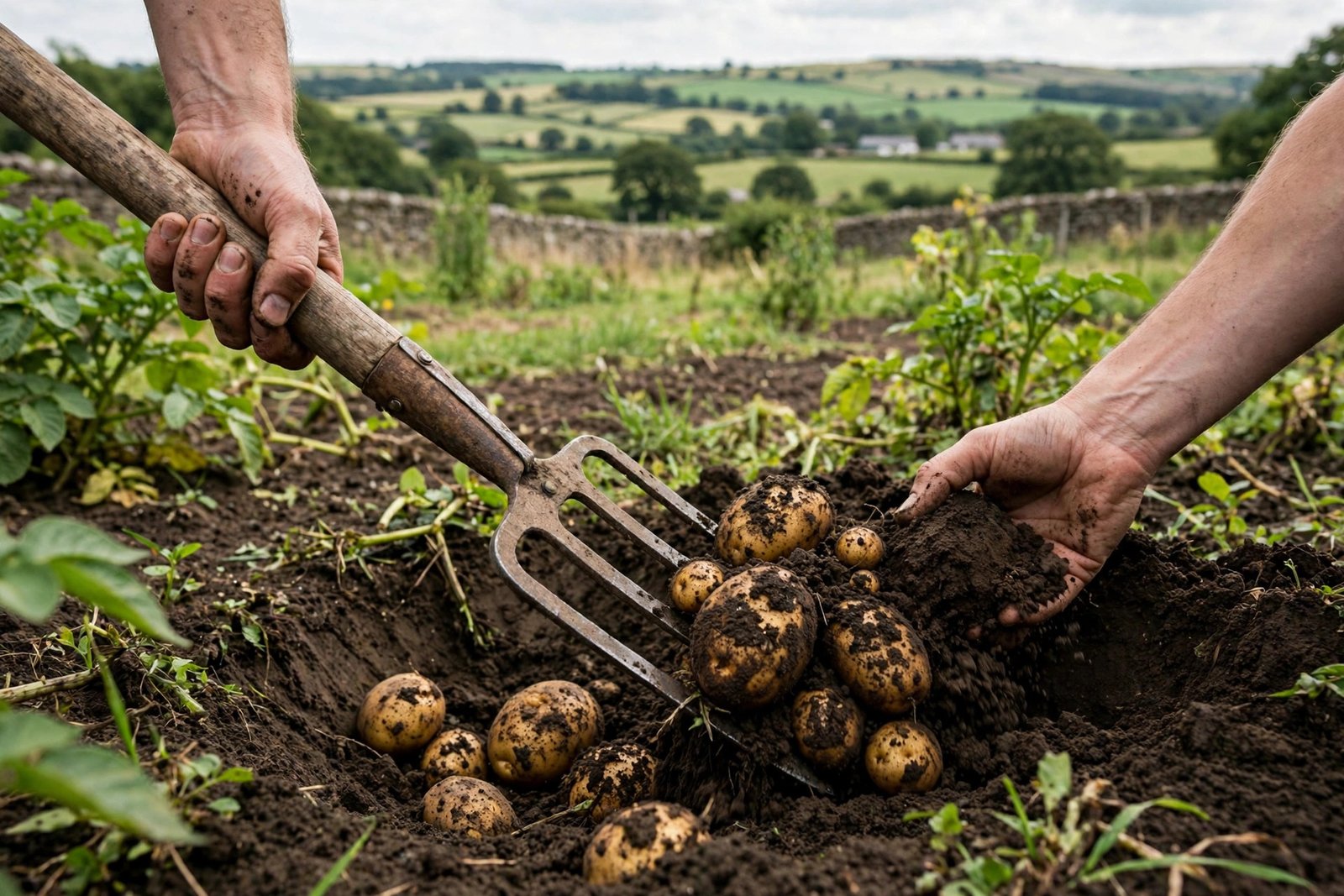
Harvest earlies as needed — there is no advantage in lifting the whole row at once. New potatoes do not store; their glory is freshness, so dig what you need for dinner and leave the rest growing. They will continue swelling for several more weeks, giving you a rolling harvest through June and July. Use a fork inserted well away from the plant and lever gently — speared potatoes are the beginner’s rite of passage, and every forkful teaches distance. The RHS potato pages give authoritative variety-by-variety detail on planting-to-harvest timing.
Second earlies and maincrop: reading the foliage
Second earlies follow the same flower-and-test method, typically ready July–August, a few weeks after the first earlies. Maincrop is different: these are grown for size and storage, and readiness is signalled by the foliage yellowing and dying back naturally — usually September–October. The dying top growth means the plant has finished bulking its tubers and the skins are setting (mature skins store; immature skins do not).
When the foliage has fully died back, wait two weeks before lifting — this lets skins harden (“set”) for storage, and crucially, if blight is present, the delay stops spores washing from foliage down to the tubers. Cut the dead foliage away and remove it (do not compost blighted foliage), then lift on a dry day if possible. Work along the row with a fork, going deep and wide — maincrop tubers spread further than you expect, and the ones you miss become next year’s volunteer potatoes (and potential blight hosts — another reason for thorough lifting). Growing in raised beds makes this far easier: the deep, loose soil releases tubers with gentle hand-forking, fewer speared potatoes, and a much more enjoyable harvest.
The storage test
Rub a tuber with your thumb: if the skin slips or peels easily, it is not set — leave the crop another week. If the skin is firm and resists rubbing, it is ready for storage. This single test prevents the commonest maincrop mistake: lifting too early and watching the harvest shrivel in store.
Lifting, curing and storing
Lift carefully: fork damage invites rot in store, so go gently and accept some losses to the learning curve. Dry the tubers on the soil surface for a few hours (not in direct hot sun — green potatoes develop toxic solanine in light) to dry the skins. Sort ruthlessly: damaged, cut or diseased tubers get eaten first or composted — one rotten potato genuinely spoils the sack. Store in hessian sacks, paper bags or breathable boxes in a cool (3–5°C ideal), dark, frost-free place — a garage, shed or unheated spare room. Darkness is critical: light greens them. Check the sacks monthly and remove any sprouting or softening tubers before they affect neighbours.
Well-stored maincrop keeps until March or April — six months of potatoes from an autumn afternoon’s work. Varieties differ: ‘Maris Piper’ and ‘Desiree’ store excellently; some earlies barely store at all (which is why earlies are eaten fresh). Do not wash before storing — wash before cooking. And do not store near onions or fruit: onions’ moisture and fruit ethylene both shorten potato storage life. For keeping the rest of the harvest at its best, our vegetable storage guide covers the whole crop. The Allotment Garden site has excellent variety-specific storage advice.
Troubleshooting the harvest
Tiny tubers: usually drought during bulking (June–July) — potatoes need consistent water as tubers form; or planted too late; or harvested too early. Green potatoes: light exposure — earth up better next year, and cut away all green parts (solanine is toxic; small green tinges can be cut off generously, fully green potatoes discarded). Slug damage: holes in tubers — harvest promptly once ready rather than leaving in wet soil, and avoid fresh manure (it attracts slugs). Scab: rough corky patches — cosmetic, peel them; caused by alkaline soil — choose scab-resistant varieties and avoid liming potato beds. Blight in the tubers: brown-purple patches that rot in store — the result of lifting too soon after foliar blight; the two-week wait after cutting foliage prevents most of it.
Volunteers next year: missed tubers sprout as “volunteer” potatoes — pull them up. They harbour blight and viruses that infect your new crop, and they are never the variety you want. Thorough lifting is plant hygiene, not perfectionism.
The bottom line
Potatoes are ready when: first and second earlies flower and test-dig at egg size (harvest as needed, they do not store); maincrop foliage yellows and dies back, plus two weeks for skins to set (lift on a dry day, cure, sort and store cool, dark and frost-free). The fork, the thumb-rub skin test and the calendar together never lie. And the first new potato of June — boiled, buttered, salted, eaten within the hour — is the moment the whole potato enterprise justifies itself. Every single year, without fail, guaranteed.
Frequently Asked Questions
How do I know when potatoes are ready to harvest?
First/second earlies: when flowers open (10–12 weeks after planting) and a test dig finds egg-sized tubers. Maincrop: when foliage yellows and dies back naturally, plus two weeks for skins to set.
Can you harvest potatoes too early?
Yes — undersized tubers with unset skins that do not store. Test-dig one plant first; if tubers are marble-sized, wait. The thumb-rub test (skin should resist rubbing) confirms storage readiness.
How do you store potatoes long-term?
Cool (3–5°C), dark, frost-free, in breathable hessian sacks or paper bags. Do not wash before storing; check monthly; keep away from onions and fruit. Good varieties keep until spring.
Why are my potatoes green?
Light exposure produces solanine, which is toxic. Earth up well during growth, store in darkness, cut generously away any green parts, and discard fully green potatoes.
What are volunteer potatoes?
Tubers missed at harvest that sprout next year. Pull them up — they harbour blight and viruses and are never the variety you want. Thorough lifting prevents them.