Style and money have a complicated relationship. Plenty of wealthy people dress badly, and plenty of broke people look incredible — because style was never really about budget. It’s about fit, intention, grooming, and knowing what suits you. Looking stylish without spending much isn’t about deprivation or dupes; it’s about spending strategically and leveraging everything that costs nothing. Here’s the full playbook.
How to Look Stylish Without Spending Much: The Free Upgrades
Start with what costs nothing, because these make the biggest difference:
- Fit is everything. Clothes that fit properly look expensive; clothes that don’t look cheap regardless of price. Learn your measurements (our measuring guide shows how), and get key pieces altered — a £12 trouser hem transforms £25 trousers.
- Iron (or steam) everything. Creased clothes read as careless; pressed clothes read as polished. A handheld steamer costs £20 and takes 90 seconds per garment.
- Grooming. Clean shoes, neat hair, trimmed nails, moisturised skin. This sounds basic because it is — and it’s the difference between “stylish” and “trying.”
- Posture and confidence. The same outfit looks different on someone who owns it. Stand up straight, stop fidgeting, act like you meant it.
- Declutter. A wardrobe of 30 pieces you love beats 100 you feel meh about. Fewer, better-chosen items always look more stylish.
Shop Smarter: Where the Value Is
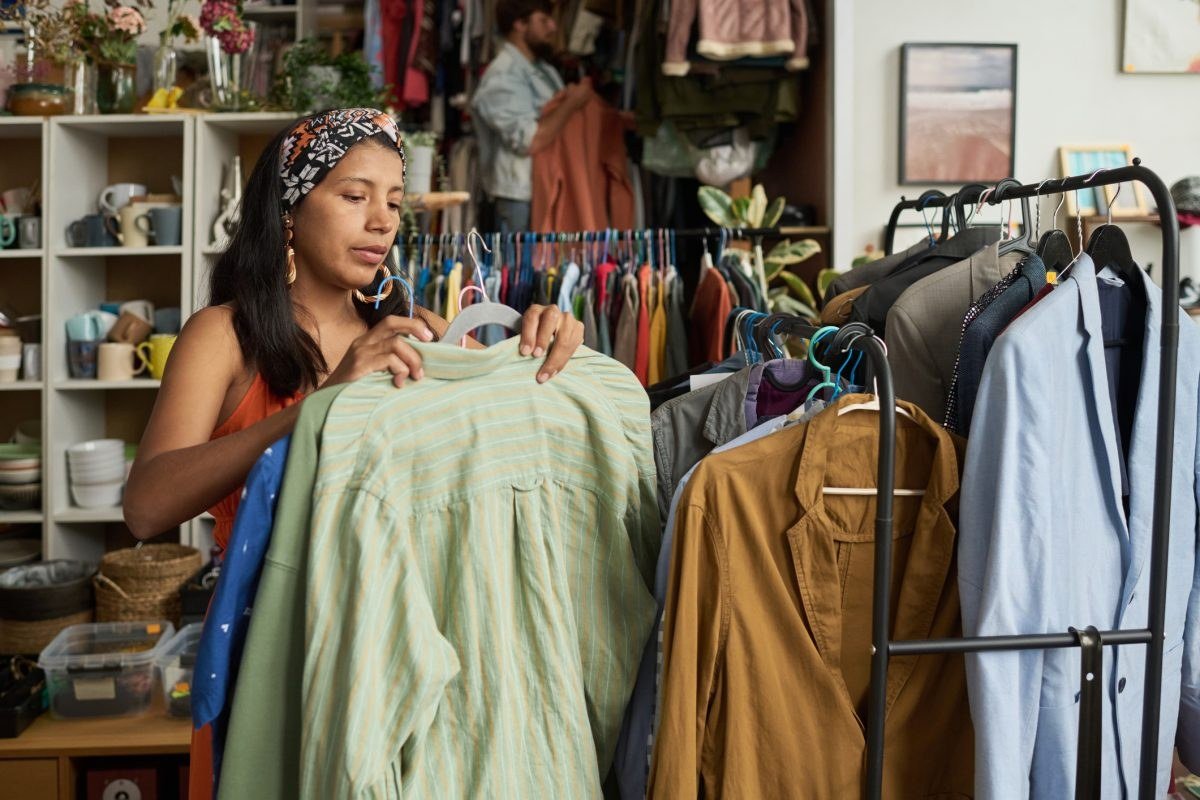
- Second-hand first. Vinted, eBay, Depop, charity shops — designer and quality high street pieces at 70–90% off. Coats, blazers, knitwear and bags are the best second-hand buys. Our second-hand clothes guide covers the tactics.
- Know the value high street brands. Uniqlo, M&S, H&M’s better lines — our high street brand rundown separates the genuinely good from the genuinely cheap.
- Buy out of season. Winter coats in March, sandals in October. Same items, half the price.
- Cost per wear. A £80 coat worn 80 times costs £1/wear; a £25 top worn twice costs £12.50/wear. The “expensive” item is often the cheaper one.
- Sales with a list. Never browse sales aimlessly — shop with a specific gap list, or you’ll buy bargains you don’t need.
The Styling Tricks That Read Expensive
- Monochrome and tonal dressing. One colour head-to-toe (or shades of it) instantly looks intentional and polished — and it works with the cheapest basics.
- Tuck and define. A front tuck, a belted waist, sleeves pushed up — small styling moves that make outfits look considered rather than thrown on.
- One statement piece. Interesting earrings, a great bag, distinctive shoes — one focal point elevates a simple outfit. Speaking of bags, our affordable handbags that look expensive guide is pure gold for this.
- Minimal, cohesive jewellery. A few simple pieces worn consistently look more stylish than a jewellery box of trends.
- Know your colours. Wearing shades that flatter you (see our colours for pale skin guide) makes everything look better — free knowledge, permanent upgrade.
Maintain What You Own
Stylish on a budget requires maintenance — neglected clothes look cheap fast:
- De-pill knits with a fabric comb (£5, endlessly satisfying).
- Re-heel shoes instead of replacing them — £15 at a cobbler.
- Wash properly: cold washes, inside out, air dry. Most clothes die from washing abuse, not wear.
- Learn basic repairs: sewing on a button, fixing a hem. YouTube teaches it in 10 minutes.
- Remove stains promptly — our stain removal guide saves countless garments.
The Mindset
Two mental shifts matter more than any purchase:
- Stop chasing trends. Trends are designed to make you feel outdated every three months — that’s the business model. A personal style built on what suits you (see our finding your style guide) is immune to trend churn and cheaper by definition.
- Buy less, choose better. Every “bargain” you don’t need is money that could’ve gone toward something you love. The most stylish low-spenders aren’t deprived — they’re deliberate.
MoneySavingExpert’s shopping section finds the deals when you do buy, and Which? fashion reviews tell you whether “quality” pieces justify their prices.
The Bottom Line
Looking stylish without spending much comes down to: fit and grooming (free), shopping second-hand and out of season (cheap), styling tricks like tonal dressing (free), maintaining what you own (cheap), and ignoring trends (freeing). Style is a skill, not a budget — and like any skill, it improves with attention, not money.
Frequently Asked Questions
How can I look expensive on a tiny budget?
Fit, grooming and intention. Clothes that fit properly, are pressed and clean, worn with neat hair and clean shoes, read as expensive at any price. Monochrome dressing and one statement piece do the rest.
Is buying designer second-hand worth it?
Often yes — a used quality bag or coat at high street prices beats a new high street equivalent on every measure: materials, construction, longevity. Coats, blazers and leather goods are the sweet spot.
How do I stop impulse buying?
Shop with a written gap list, apply the 24-hour rule to non-essentials, and run the cost-per-wear calculation before buying. Most impulse buys fail at least two of these.
What are the best charity shop finds?
Coats, blazers, knitwear, leather bags and occasion wear — the categories where quality matters most and depreciation is steepest. Affluent-area shops get the best donations.
Should I follow trends on a budget?
Selectively. Trends are the budget-killer by design — they make last season feel unwearable. Adopt the ones you genuinely love; ignore the rest without guilt.
How often should I actually buy clothes?
When there’s a gap, not when there’s a season. The ‘new season, new wardrobe’ reflex is marketing. A planned purchase for a real need beats five sale bargains you didn’t.
The £100 Style Upgrade
If you had exactly £100 to look noticeably better-dressed, spend it here:
- £30: tailoring — hem trousers, take in a blazer waist. The highest-ROI fashion spend there is.
- £20: a handheld clothes steamer. Pressed clothes read as expensive; creased clothes read as careless.
- £15: cedar shoe trees. They transform how your shoes look and last.
- £15: a fabric comb for de-pilling knits. Instant wardrobe refresh.
- £20: one great second-hand anchor piece — a wool blazer or leather bag.
£100 total, zero new ‘outfits’ bought — and you’ll look better-dressed than most people who spent ten times that on clothes.