
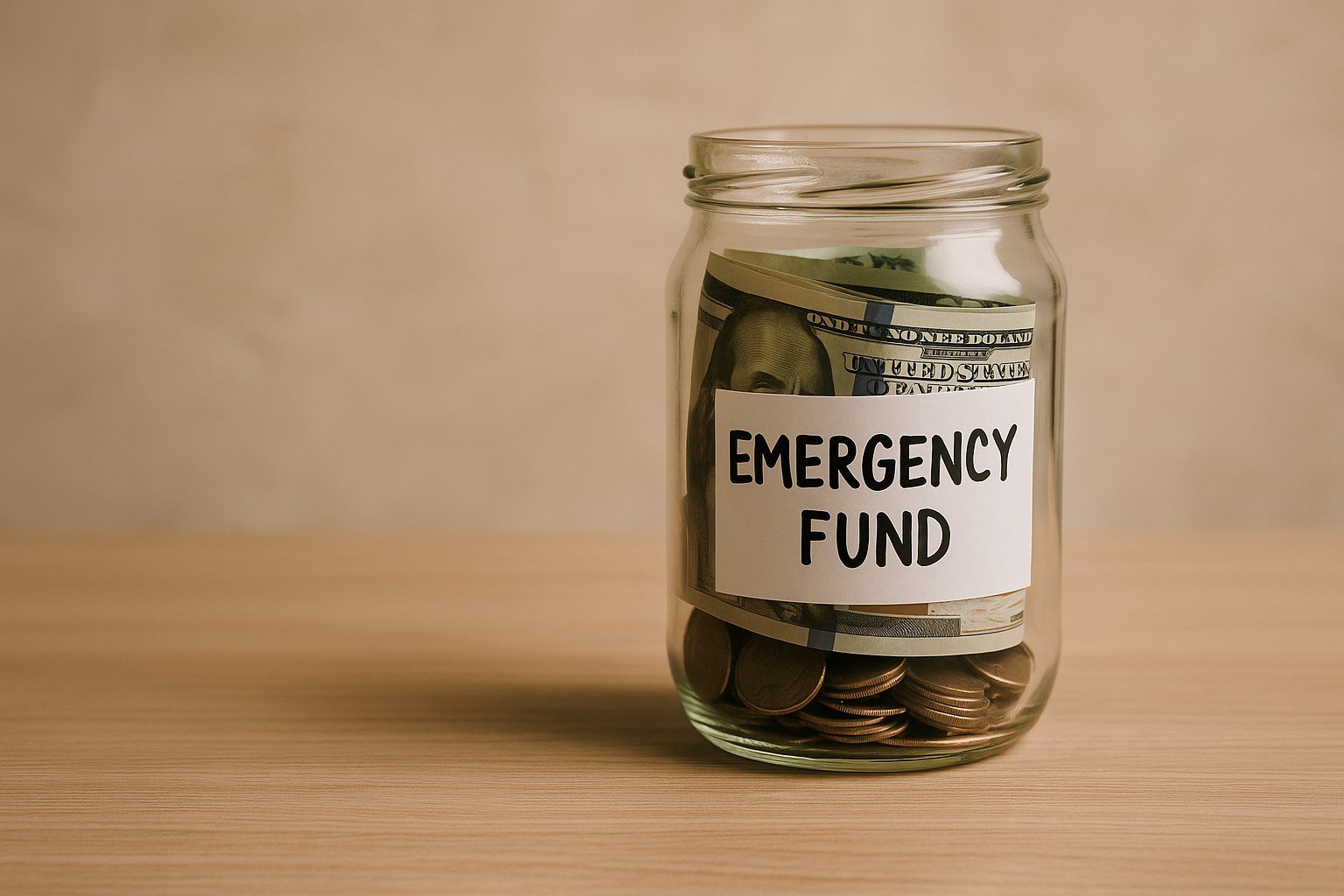
Financial advisers love to tell you to keep six months of expenses in an emergency fund — advice that’s about as useful as telling a drowning person to swim better. If you’re starting from zero, what you need isn’t a lecture about the ideal amount; it’s how to build an emergency fund in the UK, step by step, starting from wherever you actually are. Even £500 in reserve transforms how financial surprises feel. Here’s the realistic path from nothing to covered.
First, what counts as an “emergency”: the boiler dying, the car failing its MOT catastrophically, a broken washing machine, emergency travel, a gap between jobs. Not: holidays, sales, or “emergencies” that happen every year (Christmas, car insurance — those get their own savings pots).
How to Build an Emergency Fund in the UK: Step 1 — Set Your Target
Forget the “six months” rule for now. Work in stages:
- Stage 1: £500-1,000. This covers most common emergencies (appliance repairs, car fixes, vet bills) and is achievable in a few months. This is your first goal — everything else waits.
- Stage 2: One month’s essential expenses. Add up rent, bills, food, transport — the non-negotiables. This buys you breathing room.
- Stage 3: Three to six months. The full textbook fund. Build this slowly once stages 1-2 are done.
Calculate your stage 1 number now and write it down. A specific target (“£750 by March”) beats a vague aspiration every time.
Step 2 — Open the Right Account
Your emergency fund needs three qualities: separate from everyday money, instantly accessible, and earning something. Good UK options:
- A separate instant-access savings account — ideally with a different bank from your current account, so transfers take a moment (friction prevents raiding) but the money is available within hours when truly needed.
- Cash ISAs work well for larger funds — tax-free interest, instant access versions available.
- Premium Bonds are an option for the full fund later (safe, with prize potential), but don’t put your stage-1 fund there — access takes a few days.
What not to do: keep it in your current account (it’ll get spent), invest it in stocks (emergencies don’t wait for market recoveries), or lock it in a fixed-term account (inaccessible when you need it).
Check MoneySavingExpert’s savings best-buys for current top-paying instant-access accounts — rates change regularly and loyalty never pays.
Step 3 — Automate Small, Regular Contributions
The system that works on any income:
- Set a standing order for payday. Even £25/month builds £300/year. £50/month hits stage 1 (£500+) in under a year. Pay the fund first, spend what’s left.
- Round-ups on top. Most banking apps round purchases to the nearest pound and sweep the difference to savings. Painless, and it adds £10-30/month without noticing.
- The 50% windfall rule. Tax rebates, bonuses, cashback, sold clutter — half goes straight to the emergency fund, no debate. Decide this in advance so there’s nothing to decide in the moment.
- Increase gradually. When you get a pay rise, direct half of it to the fund before lifestyle inflation eats it.
If money is genuinely tight, our guide to budgeting on a low income will help you find the first £25/month — and cutting grocery costs is often the quickest win.
Step 4 — Find Your First £100 Fast
Jump-start the fund with a one-off boost. Quick wins:
- Sell the obvious stuff: the bike you don’t ride, the console gathering dust, clothes with tags still on. One Vinted/Facebook Marketplace weekend can raise £100-300.
- Bank switching bonuses: UK banks regularly offer £100-200 for switching current accounts. It’s free money for an hour’s admin.
- Cashback and rewards: check for unclaimed cashback, unused gift cards, or rewards points convertible to cash.
- The no-spend week: one week of buying only essentials, with everything saved going to the fund. It also reveals where money leaks.
Step 5 — Protect the Fund (Rules of Engagement)
An emergency fund you raid for non-emergencies isn’t an emergency fund. The rules:
- Define “emergency” in writing when you open the account. Future-you, tempted by a holiday deal, needs past-you’s clarity.
- 24-hour rule: any non-obvious withdrawal waits 24 hours. Genuine emergencies survive the wait; impulses don’t.
- Rebuild immediately after use. Dipped into it for a car repair? The standing order stays on, and top up extra until it’s restored. A depleted fund you don’t rebuild is just a memory.
- Don’t lend it out. “I’ll pay you back Friday” is how emergency funds die. Be kind in other ways.
Emergency Fund vs. Other Goals
Common question: should I build the emergency fund before saving for a house deposit or overpaying debt? The order:
- £500-1,000 mini emergency fund first — even before extra debt payments. Without it, every surprise goes on a credit card.
- Expensive debt next (credit cards, overdrafts) — the interest usually exceeds savings returns.
- Then build the full fund alongside other goals — split spare cash between the emergency fund, deposit savings, and remaining debt.
A quick note on where not to keep it: not in stocks, not in crypto, not in anything that can drop 20% the week your boiler dies. The emergency fund’s job isn’t growth — it’s availability. The interest rate barely matters at this stage (though a good instant-access rate is free money); what matters is that the full amount is there, instantly, when life happens. Growth is for investments. Safety is for emergency funds. Don’t mix the two.
Track your progress somewhere visible — a chart on the fridge, a progress bar in your banking app, a simple spreadsheet. Watching the number climb is genuinely motivating, especially in the slow middle months. Every £100 milestone deserves a small acknowledgment. You’re building something most people never manage; notice it.
The Practical Takeaway
Building an emergency fund in the UK step by step means: set a staged target (£500 first, not six months’ expenses), open a separate instant-access account, automate payday contributions, jump-start with a selling weekend, and protect it with clear rules. Start with £25/month this payday. In a year, you’ll have £300+ plus round-ups — and the next boiler breakdown will be an annoyance, not a crisis. That’s what financial security actually feels like at the start: not wealth, just the absence of panic.





14 thoughts on “How to Build an Emergency Fund in the UK, Step by Step”