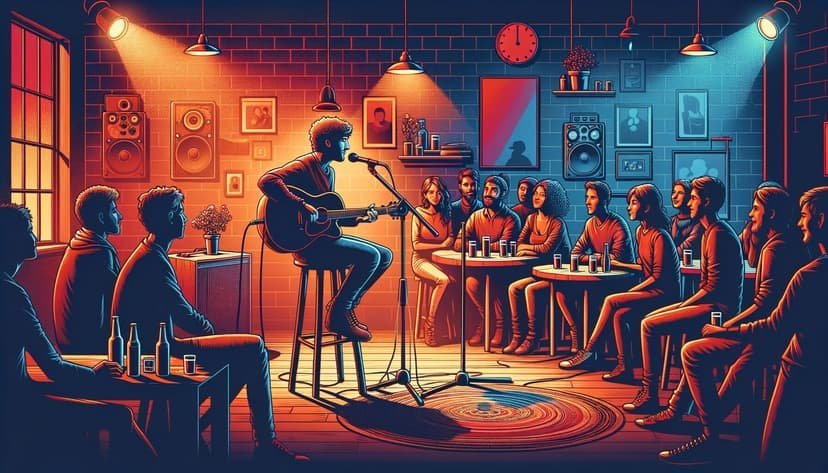
Open mic nights are where it starts — Ed Sheeran, Adele, countless comedians and poets all came through the open mic circuit. They’re free (or nearly), intimate, unpredictable, and occasionally transcendent. Here’s how to find open mic nights near you in the UK, whether you want to watch or perform.
How to Find Open Mic Nights Near You UK
- OpenMicFinder.com / similar directories — searchable by postcode, the most direct route. Listings include the night’s format (music, comedy, poetry, mixed).
- Facebook groups — “[your town] open mic” or “[your town] musicians” — the grassroots scene organises here. Join, lurk, go.
- Pub and venue social media — the weekly open mic is a staple of the pub circuit; venues promote on Instagram/Facebook. Follow your locals.
- Ask musicians — know anyone who plays? They know every open mic within 20 miles. The scene is small and welcoming.
- Music shops — the noticeboard in your local guitar shop is still a thing, and staff know the scene.
- Comedy open mics: our comedy nights guide covers the stand-up circuit specifically — Chortle.co.uk lists them.
- Poetry/spoken word: Apples and Snakes, local poetry societies, and the “spoken word” nights at arts centres — the UK spoken-word scene is thriving and welcoming.
What to Expect as an Audience Member
- It’s free (usually). Some pass a hat; buy a drink, tip if there’s a bucket. The economics run on goodwill.
- Quality varies wildly. That’s the deal — and the charm. A transcendent 15-year-old followed by a tuneless 50-year-old is a normal evening. Embrace it.
- Be kind. Performers are often terrified. Applause generously, listen properly, don’t talk over sets. Your attention is the payment.
- Arrive early for the sign-up list if you might perform — slots fill fast at popular nights.
- The regulars are the soul. Every open mic has its characters — the host who’s been running it for a decade, the virtuoso who never “made it”, the beginner improving weekly. They’re why you come back.
Performing: Your First Open Mic
- Prepare 2–3 songs/pieces (usually 10–15 minute slots). Know them cold — nerves erase 30% of your ability.
- Arrive early, sign up, introduce yourself to the host. Mention it’s your first time — hosts look after debutants.
- Bring your own gear basics: guitar, capo, tuner, picks. Most nights provide the PA and mics; check in advance.
- Soundcheck quickly and politely. The host will help — don’t fiddle for ten minutes.
- Talk to the audience a little. A sentence between songs (“this one’s about…”) transforms the set. Silence between songs feels eternal.
- It’s okay to be bad. Everyone’s first open mic is rough. The scene rewards courage and improvement, not perfection. Come back next week — that’s how it works.
- Don’t play over your slot. When the host signals, wrap up gracefully. Overstaying is the cardinal sin.
The Open Mic Ecosystem: Why It Matters
Open mics are the grassroots of British music culture — the pipeline that produced everyone from Sheeran to Arlo Parks to your local hero. They survive on pubs willing to host, hosts willing to organise, and audiences willing to show up. Support yours: go regularly, bring friends, buy drinks, tip the hat. The Music Venue Trust campaigns for the venues; your attendance campaigns for the nights. In an era of algorithm-driven music, the open mic is stubbornly, beautifully human — a room, a PA, and someone brave enough to play their songs. Our gig guide covers the next step up the ladder.
Related reading: daily US reads covers this in detail.
Open Mic Formats: What to Expect
Not all open mics work the same way. The list: sign up on arrival, play in order — the standard. Get there early for a good slot (early slots get the attentive audience; late slots get the loyal regulars). The lottery: names drawn at random — democratic, exciting, occasionally brutal. The booked open mic: reserve online in advance — common in cities, guarantees your slot. The feature + open mic: a booked act headlines, open-mic-ers support — the best of both worlds. Themed nights: originals only, covers only, specific genres — check the format before preparing. The session: folk-trad style, everyone joins in — less performance, more participation. What to bring: your instrument, a tuner, and realistic expectations. What not to bring: a full band unannounced (check first), backing tracks without warning the host, or an ego. The open mic rewards humility and punishes presumption — which is exactly as it should be.
From Open Mic to Paid Gigs: The Path
For performers wondering “what’s next”: the open mic is step one of a real pipeline. Step two: the paid support slots — bookers scout open mics; a strong 15 minutes gets you noticed. Step three: the local circuit — pub gigs, support tours, festival slots (£50–£200 a gig at this level). Step four: the regional circuit and beyond. The unglamorous truth: it takes years, hundreds of gigs, and relentless songwriting. But every professional started with a terrified first open mic — and the scene remembers and supports its own. Even if you never go further, the open mic gives you something rare: a regular, real-world deadline for your creativity. Play monthly, write constantly, and let the room tell you what’s working. That’s the whole game.
Finally, a word on etiquette for the regulars-in-waiting: the open mic community is small, and reputations travel. Be the person who listens to everyone’s set (not just their own), who applauds the beginners loudest, who buys the host a drink, who comes back next week. The scene runs on generosity — of attention, of encouragement, of time. Give it freely and the scene gives back tenfold: better slots, collaborations, friendships, and eventually, if the songs are good enough, an audience of your own.
The last word belongs to the hosts — the unsung heroes who book the PA, run the list, and coax the nervous debutants on stage, week after week, usually for nothing. If your local open mic has a host who’s been doing it for years, buy them a drink and say thanks. They’re the reason the scene exists, and the reason it’ll still be there next Tuesday, waiting for the next brave soul with three songs and shaking hands.
The takeaway: check OpenMicFinder and local Facebook groups, go as an audience member first, be generous with applause — and if you play, sign up early and embrace the terror. The scene needs you.