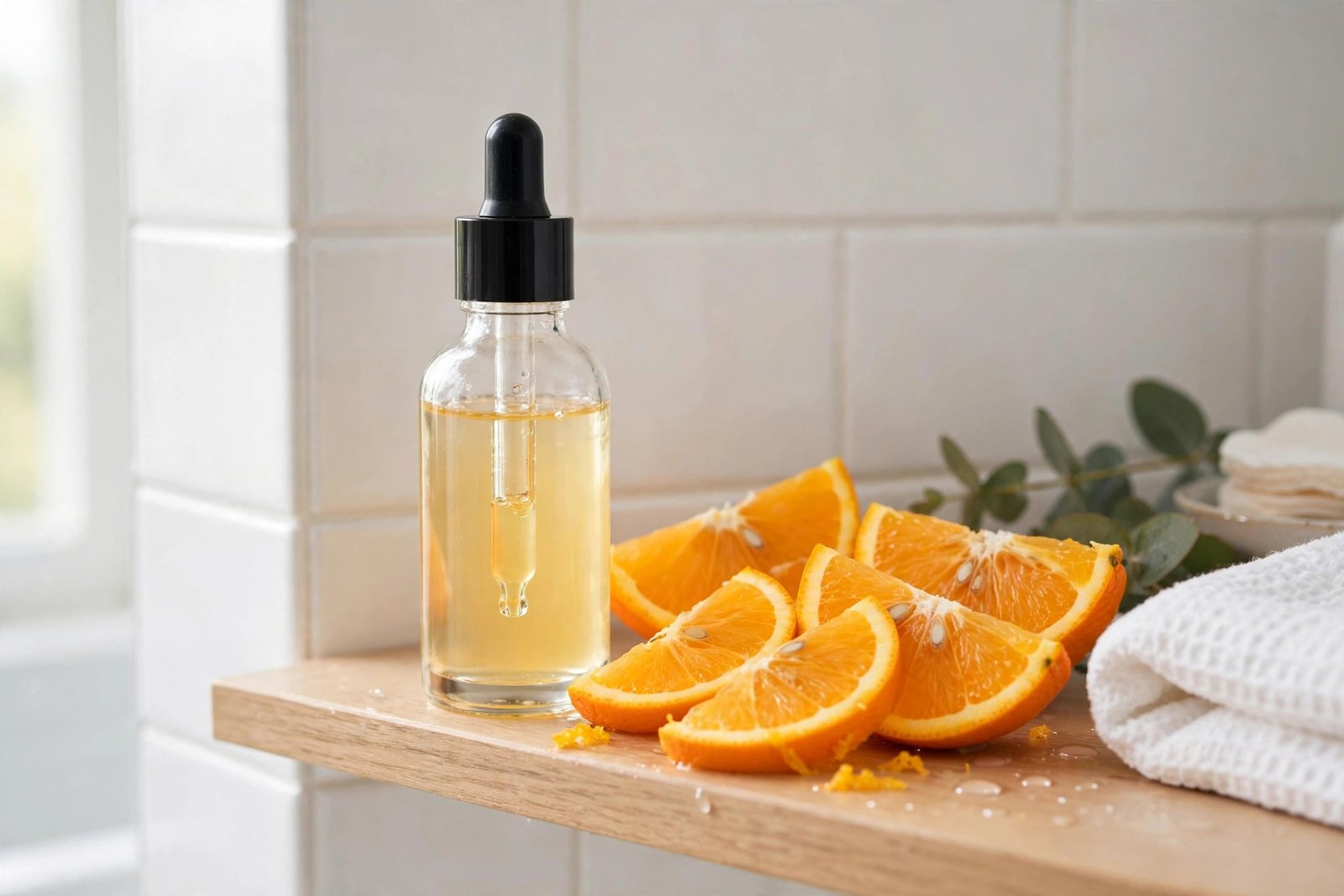
Few skincare ingredients have a reputation as glowing — pun intended — as vitamin C. Brightening, anti-ageing, “glass skin in a bottle”: the claims are everywhere, from £5 high-street serums to £150 luxury elixirs. But dermatologists are more measured than the marketing, and the difference between a vitamin C serum that transforms your skin and one that’s an expensive orange liquid comes down to chemistry most shoppers never check. So is vitamin C serum worth adding to your routine in Britain in 2026? For most people, yes — with caveats. Here’s the evidence, the pitfalls, and how to choose one that actually works.
What vitamin C actually does (and doesn’t do)
L-ascorbic acid — the pure form of vitamin C — is one of the most studied topical antioxidants in dermatology. The evidence supports three real benefits. First, antioxidant protection: it neutralises free radicals from UV and pollution, which is why dermatologists call it sunscreen’s best friend (it boosts protection, though it never replaces SPF). Second, brightening: it inhibits tyrosinase, the enzyme behind melanin production, fading dark spots, sun damage and post-acne marks over 8–12 weeks. Third, collagen support: it’s a cofactor in collagen synthesis, which translates to modest improvements in firmness and fine lines with long-term use. What it doesn’t do: erase deep wrinkles, work overnight, or substitute for retinoids on serious photoageing. Think of it as a long-game brightener and protector, not a facelift. The NHS’s vitamin C guidance covers the nutritional side; the topical evidence comes from decades of dermatology research.
The concentration question: more isn’t better
Here’s where shoppers go wrong. Effective serums contain 10–20% L-ascorbic acid; below 10% the evidence thins, and above 20% irritation climbs sharply with no proven extra benefit. Yet shelves are full of 2% “vitamin C” serums (too weak to matter much) and 25%+ formulas (a redness gamble). The sweet spot for beginners is 10–15%: meaningful results with manageable irritation risk. Also check the form: L-ascorbic acid is the most proven but the most unstable and irritating; derivatives like sodium ascorbyl phosphate, ascorbyl glucoside and 3-O-ethyl ascorbic acid are gentler and more stable, with decent (though thinner) evidence. If you have sensitive or rosacea-prone skin, start with a derivative, not pure L-ascorbic acid. Learning to decode these labels is a skill that pays off across your whole routine — our piece on reading labels critically makes the same point about looking past front-of-pack claims.
The freshness problem: why your serum turned orange
L-ascorbic acid oxidises on contact with light, heat and air — turning from clear to yellow to dark orange as it degrades. A dark orange serum isn’t just less effective; oxidised vitamin C can generate the very free radicals it’s supposed to fight. Buy serums in opaque, airless-pump packaging (never clear dropper bottles left on a sunny shelf), store them cool and dark, and use them within three months of opening. If yours arrived orange, send it back. This instability is also why price isn’t a reliable guide: a £8 serum in an airless pump that’s fresh beats a £80 serum in a clear bottle that’s been oxidising in a warehouse. Some of the best-reviewed budget options in Britain come from affordable high-street brands that nailed the packaging.
How to add it to your routine without wrecking your skin
Vitamin C goes on clean, dry skin in the morning, before moisturiser and sunscreen — morning use is when its antioxidant protection earns its keep against the day’s UV and pollution. Start every other day for two weeks to test tolerance; tingling for a minute is normal, burning or persistent redness is not. The combinations to handle carefully: vitamin C + AHAs/BHAs in the same routine can over-exfoliate — alternate days instead. Vitamin C + retinol is fine for most people if you split them (vitamin C in the morning, retinol at night), which is the routine most dermatologists actually recommend. Vitamin C + niacinamide was once considered incompatible; modern formulations show the old flushing concern was overstated, and the combination is now common. And the non-negotiable: vitamin C without daily SPF is like locking the door but leaving the windows open — the brightening gains will be undone by unprotected sun exposure.
Who should skip it?
Vitamin C isn’t for everyone. If you have very reactive, eczema-prone or rosacea-prone skin, pure L-ascorbic acid will likely sting — try a gentle derivative or skip it in favour of niacinamide, which offers similar brightening with far less irritation. If your routine is already full of actives (retinoids, exfoliating acids, benzoyl peroxide), adding vitamin C risks overloading your barrier; simplify first. And if you’re pregnant, vitamin C itself is fine, but check the serum’s other ingredients — some “brightening” formulas sneak in retinoids or high-dose salicylic acid. Which?’s independent beauty reviews test high-street serums against their claims if you want evidence before spending.
What to buy in Britain in 2026: the value picks
You don’t need to spend much. The reliable budget tier (£5–£12) includes several 10–15% formulas in proper opaque packaging from high-street and online brands — look for L-ascorbic acid or ethylated L-ascorbic acid with vitamin E and ferulic acid (the classic CE Ferulic combination, which studies show boosts efficacy eightfold). The mid-tier (£15–£30) buys you more elegant textures and stabilised derivatives suited to sensitive skin. Above £30, you’re paying for texture, fragrance and branding far more than performance. Whatever you buy, check the manufacture date where possible, buy from retailers with high turnover (so stock is fresh), and patch-test on your jawline for 48 hours before full-face use.
The bottom line
Yes — vitamin C serum is worth adding to your routine if you want brighter, more even-toned skin and an extra layer of daytime antioxidant defence, and you’re willing to buy the right concentration in the right packaging and wear sunscreen daily. Pick 10–15% L-ascorbic acid (or a gentle derivative for sensitive skin) in an opaque airless pump, use it every morning under SPF, and judge results at the twelve-week mark, not the twelve-day mark. It’s not magic, but among skincare ingredients, it’s one of the few with the research to justify the hype.
Frequently Asked Questions
Can I use vitamin C serum every day?
Yes, once your skin is accustomed — start every other day for two weeks, then move to daily morning use. If you get persistent redness or stinging, drop back to alternate days or switch to a gentler derivative formula.
Should I use vitamin C in the morning or at night?
Morning. Its antioxidant protection defends against UV and pollution damage during the day, and it layers well under sunscreen. Use retinoids at night instead — the classic AM/PM split dermatologists recommend.
Why has my vitamin C serum turned brown?
It’s oxidised — degraded by light, heat or air. Oxidised vitamin C loses effectiveness and can irritate skin. Buy opaque, airless-pump packaging, store it cool and dark, and replace any serum that’s dark orange or brown.
Can I use vitamin C with retinol?
Yes — just split them: vitamin C in the morning, retinol at night. Using both in the same routine increases irritation risk. Introduce one at a time so you know which product causes any reaction.
How long before vitamin C serum shows results?
Expect 8–12 weeks of consistent daily use for visible brightening and fading of dark spots. Antioxidant protection starts immediately but isn’t visible. If you see no change after three months, the formula may be too weak, oxidised, or simply not right for your skin.