A box of supermarket hair dye costs about eight quid. A full head of colour at a decent UK salon starts around £65 and can sail past £150 in London. That gap makes the question inevitable: is paying a professional actually worth it, or are you just funding someone’s salon rent? The honest answer is that it depends entirely on what you are trying to achieve — and there are some colour jobs where DIY is perfectly sensible, and others where a box dye is a disaster waiting to happen.
What you are really paying for at the salon
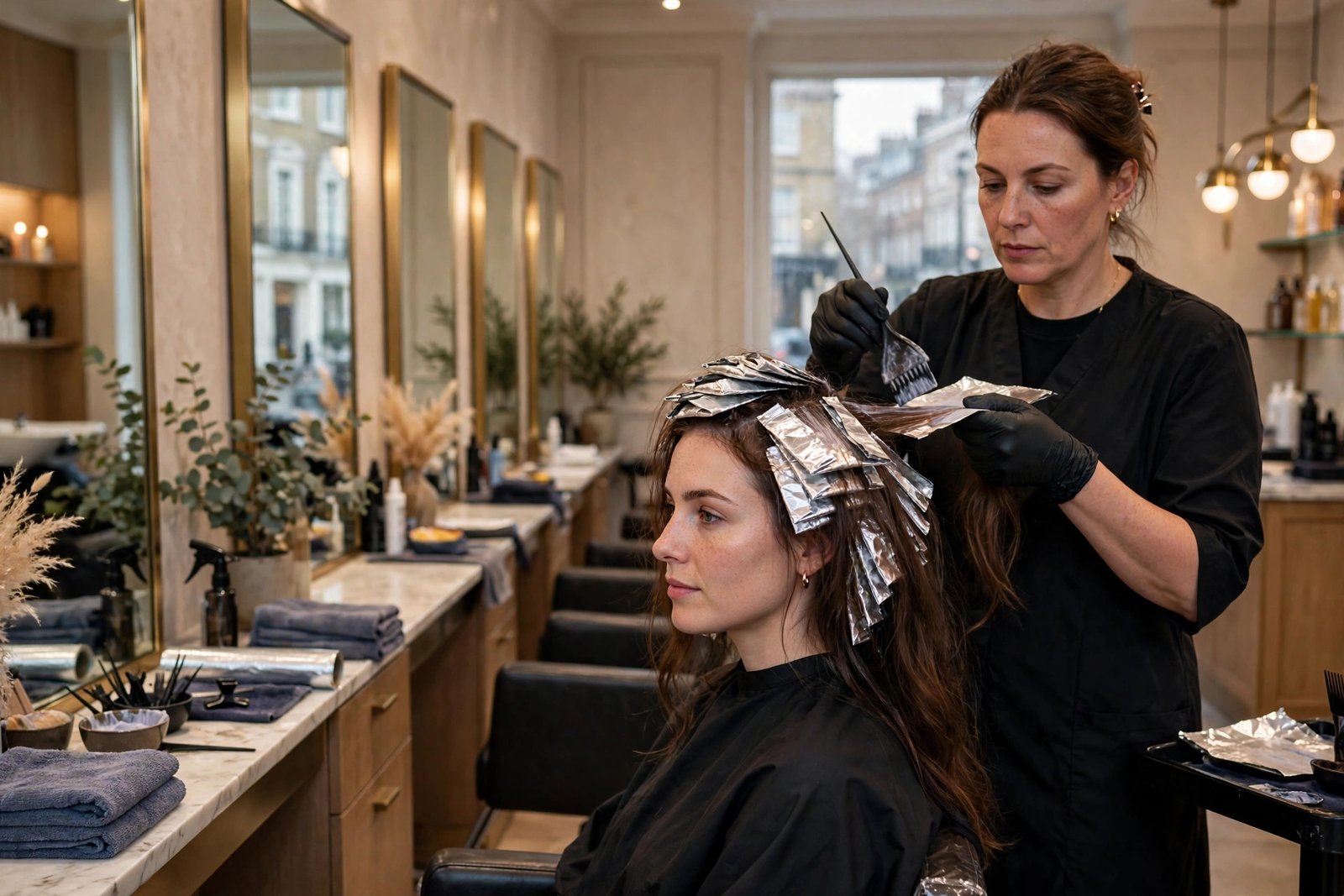
It is not just the dye. A professional colourist brings three things a box cannot: diagnosis, formulation, and technique. Diagnosis means reading your hair’s current state — previous colour, porosity, damage, natural level — and predicting how it will react. Formulation means mixing a bespoke shade from professional colour lines with far more pigment options than the dozen boxes on a Boots shelf. Technique covers everything from foil placement for dimensional highlights to the timing that prevents banding and hot roots.
Salon colour also tends to be gentler in skilled hands. A colourist can use lower-volume developers, add bond-building treatments, and process different sections for different times — nuances a one-size-fits-all box simply does not offer. When the result is evaluated honestly, NHS guidance on contact dermatitis also reminds us that patch testing matters wherever you colour — salons are required to carry one out 48 hours before your appointment.
When box dye is perfectly fine
Let us be fair to the humble box. For certain jobs, DIY dye is genuinely good value:
- Covering regrowth in a shade close to your natural colour. Root touch-up kits exist precisely for this, and matching your own base shade is the lowest-risk colour job there is.
- Going darker or adding richness. Depositing colour is far more forgiving than lifting it. A chocolate brown over a faded brown rarely goes wrong.
- Gloss and toning. Semi-permanent glosses add shine and refresh faded colour with minimal commitment — hard to mess up, easy to love.
- You have virgin, healthy hair and modest ambitions. One or two levels of change on undamaged hair is well within DIY territory.
Modern box dyes have improved enormously; many now include conditioning agents and bond-care sachets that narrow the quality gap for simple applications.
When you should absolutely go to a salon
Some transformations are genuinely high-risk at home. Going from dark to blonde — especially platinum — involves bleach, and bleach applied unevenly or left too long causes breakage that no conditioner can fix. Colour correction (fixing a DIY mishap, removing years of black box dye, or evening out banded colour) is the single most expensive salon service precisely because it is the hardest: expect £150–£300+, and even then it may take multiple sessions.
Balayage, lived-in blondes, and multi-dimensional brunettes all rely on freehand painting technique that takes professionals years to learn. And if your hair is already damaged, fine, or chemically treated, a colourist’s judgement about what your hair can safely handle is worth every penny — a box cannot tell you “not today.”
There is also the allergy question. Reactions to PPD (a common dye ingredient) can be severe, and while boxes carry warnings, salons perform mandatory patch tests and know how to respond if something looks wrong. The UK cosmetic product safety regulations govern what goes into both salon and retail colour, but professional application adds a layer of human oversight.
The real maths: cost per wear
Compare honestly. A £9 box every five weeks is roughly £95 a year — but add the cost of fixing mistakes, and the maths shifts. A botched DIY job corrected at a salon typically costs £120–£200, wiping out two years of box-dye savings in one visit. Meanwhile a £90 salon colour that lasts 10–12 weeks with proper aftercare works out at £360–£430 a year — real money, but predictable.
The savvy middle ground many British women now use: salon for the big transformative appointments (twice a year), box or gloss for maintenance in between. You get professional architecture with budget upkeep — the hair-colour equivalent of buying designer on sale.
How to get salon results from a box (if you DIY)
If you do go DIY, stack the odds in your favour. Always do the strand test and the allergy alert test 48 hours before — skipping these is how horror stories start. Do not wash your hair immediately before colouring; natural oils protect the scalp. Apply to dry, detangled hair in sections, and set a timer rather than guessing. Buy two boxes if your hair is past shoulder length — running out mid-application guarantees patchiness.
Aftercare is where DIY colour lives or dies: sulphate-free shampoo, a weekly mask, and heat protectant will extend any colour’s life dramatically. And be honest about your hair’s history — colouring over old box dye, henna, or bleach requires different expectations than virgin hair.
Finding a good colourist without overpaying
You do not need a Mayfair salon for great colour. Look for colourists with a strong portfolio of work on your hair type and desired result — Instagram is genuinely useful here. Junior stylists and senior-stylist training evenings often offer the same products at 30–40% less. Ask for a consultation first (most good salons offer them free); a colourist who talks you out of something damaging is one worth keeping. Much like choosing shades that flatter you — a skill covered in guides to colours that suit pale skin tones — the right professional reads what suits you, not just what is trendy.
Conclusion
So, is salon hair colour worth it over box dye in the UK? For simple jobs — root touch-ups, going darker, glossing — a box dye is perfectly sensible and the savings are real. But for bleaching, blonde transformations, balayage, or any kind of colour correction, the salon is worth every penny: you are paying for expertise that prevents the kind of damage money cannot easily undo. The smartest approach for most budgets is a hybrid — professional colour for the big moves, box dye for the maintenance. Either way, patch test, follow the timing, and look after the result, and your hair will thank you.
Frequently Asked Questions
How much does salon hair colour cost in the UK?
A full head of permanent colour typically costs £65–£120 outside London and £100–£200+ in the capital. Balayage and colour correction cost more, often £150–£300.
Is box dye more damaging than salon dye?
Not inherently — both use similar chemistry. The difference is application: professionals customise strength and timing to your hair, while boxes use a one-size-fits-all formula that can be harsher than necessary.
Can I go from black box dye to blonde at home?
Strongly discouraged. Removing built-up dark box dye requires professional colour removers and often multiple sessions; DIY attempts frequently cause severe breakage or orange, uneven results.
How long should I wait between colouring sessions?
For permanent colour, 4–6 weeks for regrowth; for bleach and highlights, 8–12 weeks to protect hair integrity. Semi-permanent glosses can be used every 2–3 weeks.
Do salons have to do a patch test?
Yes — reputable UK salons require an allergy alert (patch) test at least 48 hours before any colour service, even if you have been coloured before. It is a key safety step, and understanding affordable UK high-street brands can also help you find good aftercare products without overspending.