Removing wallpaper is the DIY job everyone underestimates. What looks like an afternoon’s peeling turns into a weekend of steaming, scraping and muttering — unless you know the method that suits your wall. The best way to remove wallpaper UK homes need depends on the paper type, the wall beneath and how many layers you’re dealing with. Get the diagnosis right and the job is straightforward; get it wrong and you’ll be gouging plaster for days.
Start by identifying your wallpaper. Peel back a corner: does it come away in one vinyl-coated sheet leaving a papery backing? That’s vinyl wallpaper — the easy kind. Does it tear into damp shreds? That’s standard paper — needs soaking or steaming. Is there layer upon layer, possibly including woodchip? Pour some tea; you’re in for a longer job.
Best Way to Remove Wallpaper UK: The Methods Ranked
1. Dry stripping (vinyl wallpapers)
Modern vinyl and “easy-strip” wallpapers are designed to peel dry. Lift a bottom corner and pull slowly upward at a low angle, keeping the sheet as wide as possible — it should come away in satisfying full drops, leaving a thin backing layer on the wall. That backing usually needs soaking off (see below), but the vinyl face is the hard part done. If the whole wall strips like this, you’ve won the wallpaper lottery.
2. Soaking (standard papers)
For ordinary paper wallpaper, water is your solvent. Sponge or spray warm water mixed with a squirt of washing-up liquid generously onto a section, wait 10–15 minutes for it to penetrate, then scrape with a wide stripping knife held at a shallow angle. Work in sections of a square metre — soak one while scraping the last. Two applications often beat one heavy soaking. Protect floors with dust sheets and electrics with tape; you’re using a lot of water.
3. Scoring + soaking (painted-over or vinyl-coated papers)
If water beads on the surface, it can’t penetrate — you need to break the coating first. A scoring tool (the spiked roller kind, £8–£12) perforates the surface with tiny holes without damaging plaster if used with light pressure. Score, soak, wait, scrape. This is the method for wallpaper that’s been painted over, which is effectively waterproof.
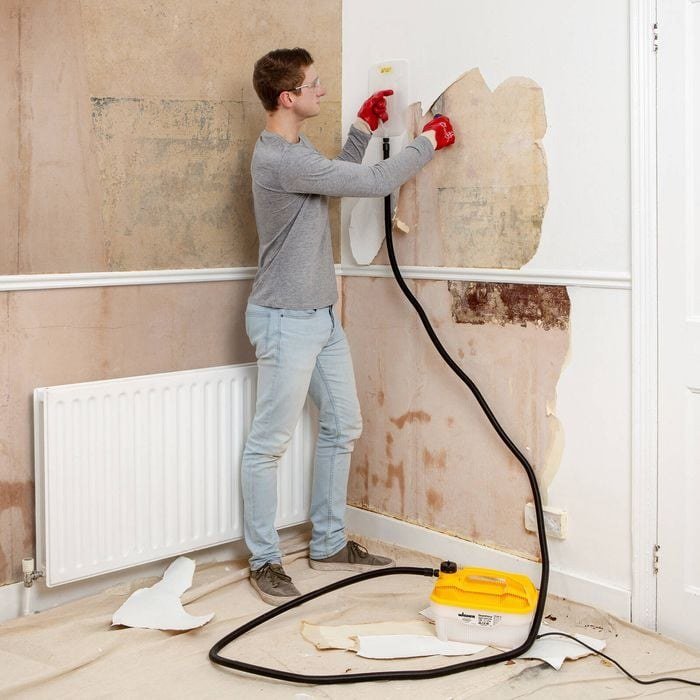
4. Steam stripping (stubborn and layered jobs)
A wallpaper steamer (£40–£60 to buy, £25/week to hire) is the heavy artillery. Hold the steam plate against the paper for 10–15 seconds per patch, then scrape while it’s hot and soft. Steam powers through multiple layers, woodchip and ancient paste that soaking won’t touch. Downsides: it’s hot, drippy work, and over-steaming can blow plaster — keep the plate moving and never hold it in one spot. For whole-house stripping projects, hiring a steamer is money well spent.
Protecting the Wall Beneath
The wall is the point of all this, so treat it gently. Always scrape with the knife nearly flat to the wall — a steep angle digs in and gouges plaster. On old lime plaster (pre-1920s houses), go extra gently; it’s softer than modern gypsum and steams off in chunks if you’re aggressive. If the plaster is already blown (hollow-sounding when tapped), no stripping method will save it — it’ll need patching or skimming afterwards, so factor that into the plan and read our guide to plastering costs.
After stripping, wash the walls with warm water and sugar soap to remove every trace of paste — dried paste under new paint causes flaking and “crazing” that ruins the finish. Let the walls dry completely (24–48 hours) before painting or re-papering. Shine a raking light across the surface to spot leftover backing paper, which shows through paint as texture.
Dealing with Nightmare Scenarios
- Woodchip: steam is really the only civilised method. Score first, steam in small patches, and accept it’ll take twice as long as you hoped.
- Five layers of paper: strip from the top down, one layer at a time. Trying to take multiple layers at once just tears.
- Wallpaper over bare plaster (no sizing): the paper has bonded to the plaster itself. Soak thoroughly and scrape with extreme patience — or accept that a skim coat afterwards may be the pragmatic answer.
- Border strips: usually the easiest part — they often peel dry. Save them for last as a morale boost.
Dulux’s preparation guides cover the wall-prep sequence that follows stripping, which matters as much as the removal itself.
What Comes Next
Once the walls are bare, clean and dry, you’ve got options. Fresh paint over properly prepared walls is the cleanest look — our professional painting guide takes it from here. If you’re re-papering, size the walls first (a diluted paste coat that stops the new paper bonding irreversibly). And if the stripped walls reveal horrors — cracked plaster, blown patches, ancient repairs — our guide to repairing cracked plaster will get them paint-ready.
Tools Worth Buying vs Hiring
For a single room, buy: a good 4-inch stripping knife, a scoring tool, a garden sprayer or large sponge, sugar soap, and plenty of dust sheets — total outlay under £40, and you’ll use the knife and sprayer again. Hire the steamer (£25–£35 a week from hire shops) rather than buying unless you’re doing the whole house; a hired commercial unit also outperforms cheap domestic steamers. What not to buy: gimmicky “wallpaper removal solutions” that are essentially scented water — warm water with washing-up liquid does the same job. And protect yourself: steam burns are the classic injury, so wear rubber gloves and long sleeves, ventilate well, and keep children and pets out of the steamy room.
When to Stop Stripping and Skim Instead
There’s a point of diminishing returns every stripper should recognise. If the plaster beneath is crumbling across large areas, if three layers of ancient paper have fused with the skim coat, or if you’ve spent two days on one wall with little to show, stop. A plasterer’s skim coat (£200–£400 per room — see our plastering cost guide) over the mess gives you a perfect surface in a day, and your time has value too. Similarly, lining paper is the decorator’s cheat code: hang heavy-duty lining paper over imperfect-but-sound stripped walls and paint it — it hides a multitude of sins and gives a flawless finish. Knowing when to switch strategy is experience, not defeat.
The Takeaway
Identify the paper, match the method (dry-strip vinyl, soak standard, score-then-soak coated, steam the nightmares), scrape flat and gentle, wash off all paste, and let walls dry fully. Wallpaper removal is 10% technique and 90% patience — put on a podcast and settle in.