
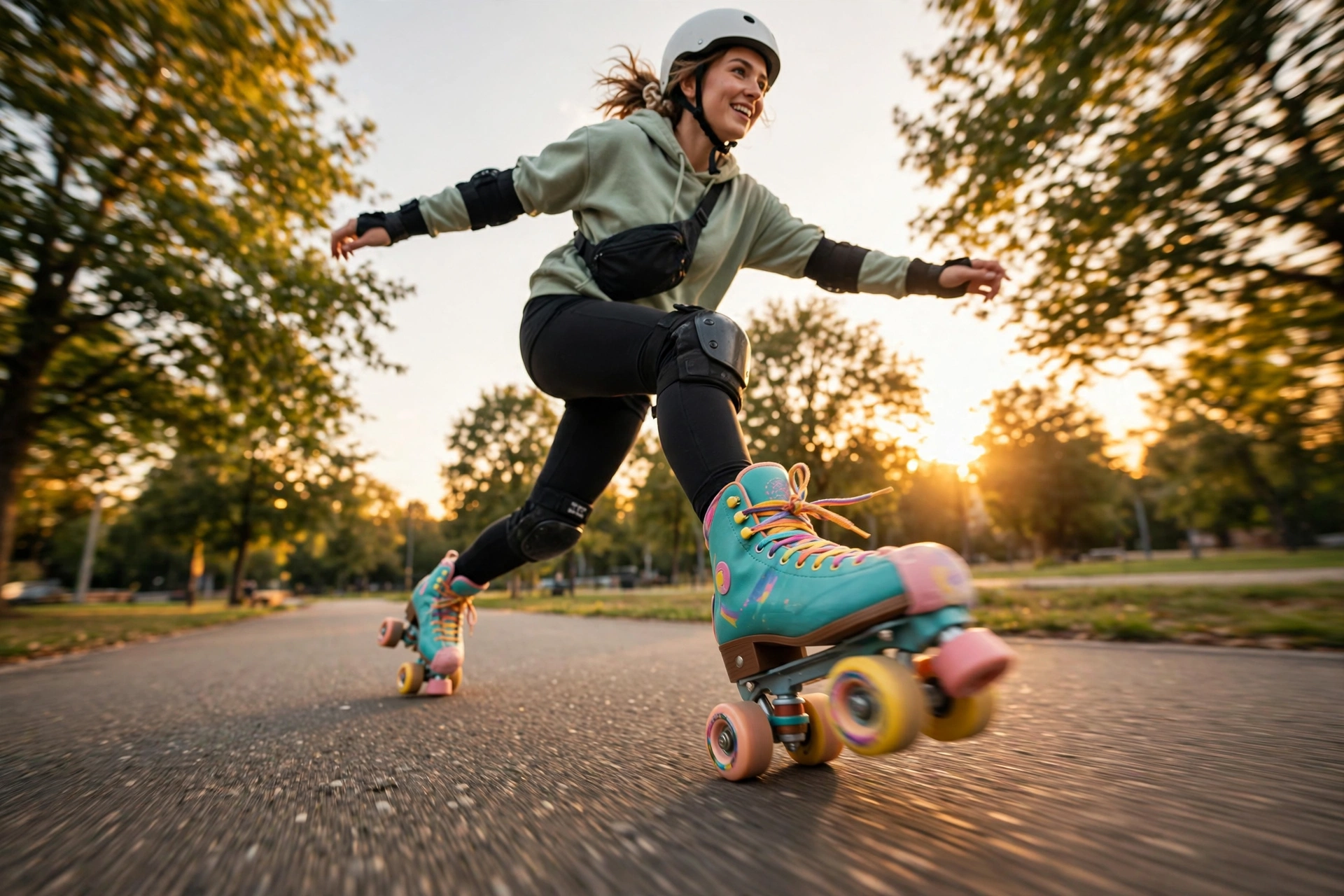
Roller skating has rolled back into fashion in a big way, and it is easy to see why. It is joyful, sociable, great exercise, and far more accessible than most people assume. If you have never skated before, the thought of those first wobbly steps can be daunting, but almost everyone gets the hang of the basics within a few sessions. This beginner’s guide explains how to roller skate from absolute zero: the gear you need, how to stand and move, how to stop safely, and how to practise without hurting yourself.
What Gear Do You Need?
Start with the skates themselves. Beginners almost always do better on quad skates, the classic four-wheel style, because the wider wheelbase feels more stable than inline skates. Make sure they fit snugly without pinching; your heel should not lift when you stand. Hire skates from a rink for your first few sessions before investing in your own pair, so you learn what feels comfortable.
Protective gear is not optional for beginners. A properly fitted helmet, wrist guards, knee pads, and elbow pads turn most falls into non-events. Wrist guards are the single most important item, since beginners instinctively put their hands out when they fall. Comfortable, supportive socks and clothes you can move in complete the kit. Skating is a workout, so dress in breathable layers.
Where to Practise
Your first sessions should be on a smooth, flat, traffic-free surface. A local roller rink is ideal: the floor is perfect, you can hire gear, and there is usually a quiet area for beginners. Failing that, look for empty tennis courts, smooth car parks on quiet days, or paved park paths. Avoid slopes, rough tarmac, and anywhere near traffic until you can stop reliably. Early morning sessions mean fewer people to dodge.
How to Stand and Balance
Put your skates on while sitting down, lace them firmly, and stand up next to something sturdy like a wall or railing. Your instinct will be to stand bolt upright with locked knees; do the opposite. Bend your knees deeply, keep your feet shoulder-width apart with toes pointing slightly outward in a V shape, and lean your weight slightly forward. This athletic stance is the foundation of everything in skating. It feels strange at first, but it is what keeps you stable.
Practise simply standing and shifting your weight from foot to foot. March gently in place, lifting your feet just off the ground. The goal is to get comfortable with the sensation of wheels under you before you try to travel anywhere. Most people need ten to twenty minutes of this before they feel ready to move.
How to Move Forward
The basic skating stride is sometimes called the “duck walk” or “bubble.” From your bent-knee stance, push one foot out to the side and slightly back, then bring it back underneath you, and repeat with the other foot. Think of drawing a lemon or bubble shape with each foot. Keep your strides short at first; long strides come later. Look ahead, not down at your feet, because where your head goes, your body follows.
Resist the urge to walk heel-to-toe as if in shoes; on skates, that just makes you wobble. Smooth, gliding pushes are what you are after. It will feel clumsy for the first hour, and that is completely normal. Everyone’s first session looks the same.
How to Stop: The Most Important Skill
Learning to stop matters more than learning to go, so practise it early. The easiest beginner stop is the toe stop: most quad skates have a rubber stopper on the front. To use it, stagger one foot slightly behind, bend your knees, and press the toe stop gently into the ground. Practise at very low speed until it feels natural.
The plough stop is the next skill to learn: glide with feet apart, then turn your toes inward so your skates form a V, pushing outward against the wheels. It feels like a snowplough in skiing. Whichever method you use, the rule is simple: never skate faster than you can stop. Practise stopping until it is automatic before you venture onto busier paths.
How to Fall Safely
You will fall, and that is fine. Falling well is a skill. Try to fall forward onto your knee pads and wrist guards rather than backward onto your tailbone or outstretched bare hands. Keep your chin tucked and your body loose; tensing up causes more injuries than the fall itself. Practise falling on grass or a mat so your body learns the motion without fear. The skaters who progress fastest are usually the ones least afraid of falling, because they are not skating tense.
Building Your Skills Week by Week
In week one, focus on stance, balance, and the toe stop. In week two, work on longer glides, gentle turns by leaning, and the plough stop. By week three or four, most beginners can skate comfortably around a rink, navigate gentle corners, and stop on demand. From there, you can explore backwards skating, crossovers for turning, and eventually ramps or dance skating if that appeals.
Short, frequent sessions beat occasional marathons. Two or three half-hour practises a week build muscle memory far better than one exhausting three-hour session. And consider a beginner lesson or two; a coach can fix in minutes the bad habits that take months to unlearn alone. Skating is also excellent exercise, and the NHS guide to getting active explains why activities you enjoy are the ones you stick with, while Healthline on the benefits of skating breaks down the fitness gains in detail.
Staying Safe Outdoors
When you graduate to outdoor skating, new rules apply. Always wear your protective gear, skate with a friend when possible, and carry a phone. Learn your route’s surface beforehand; cracks, gravel, and wet leaves are the classic outdoor hazards. Obey the same awareness you would on a bike: assume pedestrians and drivers have not seen you. And check local rules, as some promenades and parks restrict skating at busy times.
Comfort matters for longer sessions, so wear clothes you can move in freely. Our guide to how to dress for your body type has practical tips on activewear that fits well and feels good, and how to make cologne last longer is oddly relevant too, since you will definitely work up a sweat.
Beginner Drills That Build Confidence Fast
Structured practise accelerates progress enormously. Try the “red light, green light” game: skate forward, then stop on command, repeating until stopping feels automatic. Practise gliding on one foot for a few seconds at a time, which builds the balance every advanced skill needs. Set out cones or water bottles and weave through them slowly to learn weight transfer for turning.
Another excellent drill is skating the perimeter of a rink or court while focusing on one thing at a time: one lap thinking only about bent knees, one lap only about looking ahead, one lap only about quiet, smooth pushes. Isolating skills like this cements them far faster than just skating around aimlessly.
When to Consider Inline Skates
Once you are comfortable on quads, you might wonder about inline skates. Inlines are faster and more manoeuvrable, making them popular for fitness skating and urban commuting, but they are less stable for beginners and stopping techniques are harder to learn. There is no rush to switch; many skaters happily stay on quads forever, especially for rink skating and dance styles. If you do try inlines later, treat yourself as a beginner again and relearn stopping from scratch.
The Bottom Line
Learning how to roller skate comes down to the right gear, a bent-knee stance, short glides, and above all, learning to stop and fall safely. Be patient with the wobbly first sessions, protect your wrists, and practise little and often. Within a month, you will wonder why you ever thought it looked hard.


