
Music A journal entry
Where to Find Affordable Music Lessons in London
Music lessons in London don't have to cost £60/hour. Discover borough hubs, group classes, graduate teachers and free options that make learning affordable.
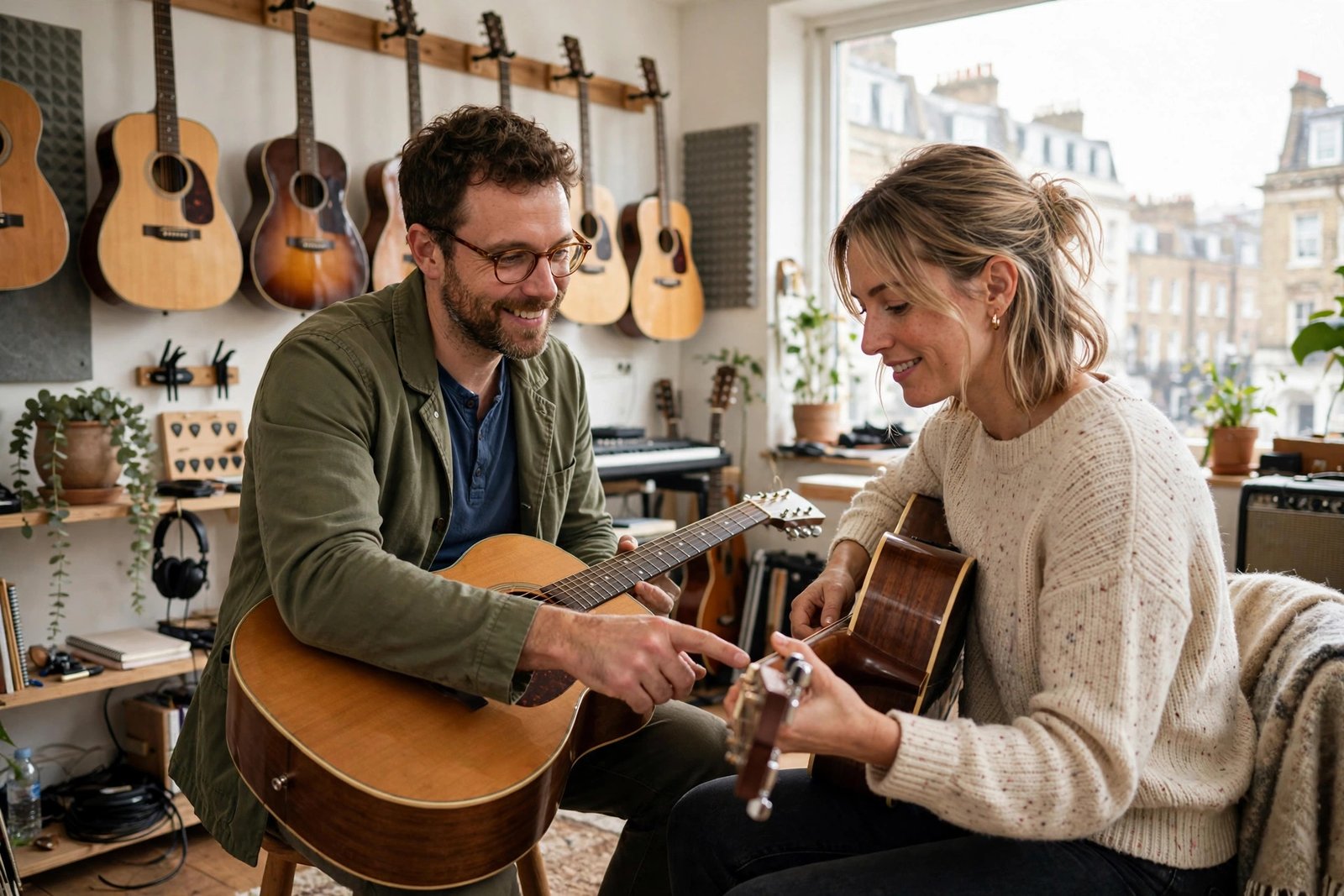
Learning an instrument in London should be a joy — but the city’s music lesson prices can make your eyes water before you have played a single note. Private tuition in the capital routinely runs £40–£70 an hour, which puts weekly lessons out of reach for many. The good news: London is also one of the best places in the world to learn music cheaply, if you know where to look. Community schemes, group classes, music hubs, and clever alternatives bring quality teaching within almost any budget. Here is the full map.
Start with London’s music hubs and community schemes
Every London borough has a music education hub — publicly funded organisations providing affordable instrumental teaching. Many offer subsidised group lessons, instrument hire, and ensembles for children and young people at a fraction of private rates, with bursaries and means-tested discounts widely available. For adults, organisations like Morley College (Waterloo), City Lit (Holborn), and the Working Men’s College run group instrumental and theory courses from around £150–£300 per term — working out at roughly £12–£25 per session.
Do not overlook community music charities: organisations across London offer sliding-scale or donation-based lessons, particularly for under-18s and low-income adults. The Independent Society of Musicians (ISM) maintains guidance on finding reputable teachers and understanding fair rates, which helps you spot both bargains and rip-offs.
Group lessons: the budget sweet spot
Group tuition typically costs 40–60% less than one-to-one lessons, and for beginners it has genuine pedagogical advantages: playing with others builds timing and ensemble skills from day one, and the social element keeps motivation high. Look for:
- Adult education colleges — evening group classes in guitar, piano, singing, and ukulele across London, usually £10–£20 per session.
- Community music schools — borough-based schools offering group strings, wind, and percussion.
- Specialist group providers — rock schools, samba bands, and community choirs (many choirs are free or donation-based and teach genuine musicianship).
- University societies and extra-mural departments — some London universities open music ensembles and beginner classes to non-students.
For absolute beginners, group lessons are often better than private tuition — you need fundamentals and encouragement more than bespoke technical correction. And learning music is one of the most rewarding ways of learning a new hobby cheaply in the UK.
Finding affordable private teachers
Sometimes you want one-to-one. To keep costs down:
- Advanced students and recent graduates — conservatoire students and recent graduates (from the Royal Academy, Guildhall, Trinity Laban, Royal College) often teach at £20–£30 an hour — superb value, since their own playing is world-class.
- Teacher directories with filters — sites like MusicTeachers.co.uk let you filter by price and area; always check reviews and ask for a trial lesson.
- Shorter lessons — a focused 30-minute lesson (£15–£25) beats an unfocused hour, especially for beginners.
- Fortnightly lessons — half the cost, with structured practice in between; works well for self-motivated adults.
- Online lessons — teachers outside London charge less, and online tuition eliminates travel for both sides.
Always take a trial lesson before committing to a term, and clarify cancellation policies upfront — London teachers’ terms vary widely.
Free and nearly-free ways to learn
Do not dismiss the zero-budget options. YouTube has genuinely excellent structured courses for guitar, piano, and music theory — the quality gap between the best free content and paid courses has narrowed dramatically. Apps like Simply Piano, Yousician, and JustinGuitar (free, and widely considered the best free guitar course online) provide structured progression with feedback. Library instruments: some London borough libraries lend instruments, removing the upfront cost entirely.
Then there is the oldest method: play with others. Jam nights, open mics, and community ensembles across London welcome beginners, and nothing accelerates learning like making music with real humans. Once you can hold a tune, start finding live music gigs near you in the UK — watching skilled players up close is education in itself, and London’s gig scene is unmatched.
Budgeting realistically: what will it actually cost?
A realistic lean budget for learning in London: instrument hire or a second-hand beginner instrument (£50–£200 one-off, or £10–£20/month hire), group classes (£40–£80/month), plus books and accessories (£30/year). That is roughly £60–£100 a month — the cost of a gym membership — for structured, social music education. Private fortnightly half-hour lessons with a graduate teacher run about £40–£60 a month on top. The ABRSM (Associated Board of the Royal Schools of Music) publishes exam syllabuses that give your learning structure and goals, with exam fees from around £50 — a useful milestone even if you never perform publicly.
Red flags: spotting bad deals and bad teachers
Cheap should never mean poor. Walk away from any teacher or school that demands large upfront term payments before a trial lesson, refuses to discuss qualifications or DBS checks (essential when children are involved), or pushes expensive instrument purchases from “partner” shops on day one. Be wary of group classes with more than 8–10 beginners per teacher — beyond that, individual attention evaporates and bad habits form unchecked. For children, check whether the teacher follows a recognised syllabus and enters pupils for graded exams at a sensible pace (exam factories that rush grades to collect fees are a known problem).
Conversely, green flags: a free or cheap trial lesson, clear written terms (fees, notice periods, missed-lesson policy), enthusiasm for your specific goals rather than a one-size syllabus, and students who visibly enjoy their lessons. Ask to observe a group class before enrolling — the atmosphere tells you everything. And trust the economics: London’s best-value teaching often comes from passionate community musicians rather than the most expensive postcodes. Price and quality correlate weakly; attentiveness and fit correlate strongly.
Conclusion
Affordable music lessons in London are hiding in plain sight: borough music hubs, adult education colleges like Morley and City Lit, group classes at £10–£20 a session, graduate teachers at £20–£30 an hour, and a wealth of free online resources. The expensive private teacher charging £60 an hour is the least imaginative option, not the default. Start with a group class or community scheme, add private lessons later if you want them, and spend the money you save on going to gigs. London rewards the curious musician — you just have to know which doors to knock on.
Frequently Asked Questions
How much do music lessons cost in London on average?
Private one-to-one lessons average £40–£70/hour; group classes £10–£25/session; adult education college courses £150–£300/term. Graduate and student teachers offer private lessons from £20–£30/hour.
What is the cheapest instrument to learn in London?
Ukulele, recorder, and harmonica have the lowest startup costs (£20–£50). Guitar and keyboard are affordable second-hand (£50–£150). Many borough schemes offer free or cheap instrument hire.
Are online music lessons as good as in-person?
For beginners and intermediates, online lessons are highly effective and typically 20–30% cheaper. Advanced technique benefits more from in-person teaching, where posture and hand position can be physically adjusted.
Can adults join London music hubs?
Most hubs focus on under-18s, but adult education colleges (Morley, City Lit) and community music charities serve adults extensively, often with concessionary rates.
How do I know if a cheap teacher is any good?
Take a trial lesson, check qualifications and reviews, and trust your instincts: a good teacher explains clearly, listens to your goals, and leaves you motivated. Price and quality correlate weakly in music teaching.
§ Further Entries
Is Joining a Choir Good for Beginners? (Manchester)
Beginner singer in Manchester? Discover why choirs are ideal for newcomers, what your first term is really like, and how to find the right choir for you.
How to Sing High Notes Without Straining Your Voice
Straining for high notes? Learn why it happens and the vocal coach method to fix it: breath support, throat release, mixed voice, and a 15-minute daily routine.

How to Tune Your Guitar by Ear (No Tuner Needed)
No tuner? No problem. Learn the fifth-fret and harmonic methods to tune your guitar by ear anywhere — plus the ear-training drills that make it stick.