
Gardening A journal entry
How to Start Seeds Without Grow Lights in the UK
No grow lights? No problem. Learn how to raise strong seedlings on a British windowsill with reflectors, timing tricks, and legginess prevention that works.
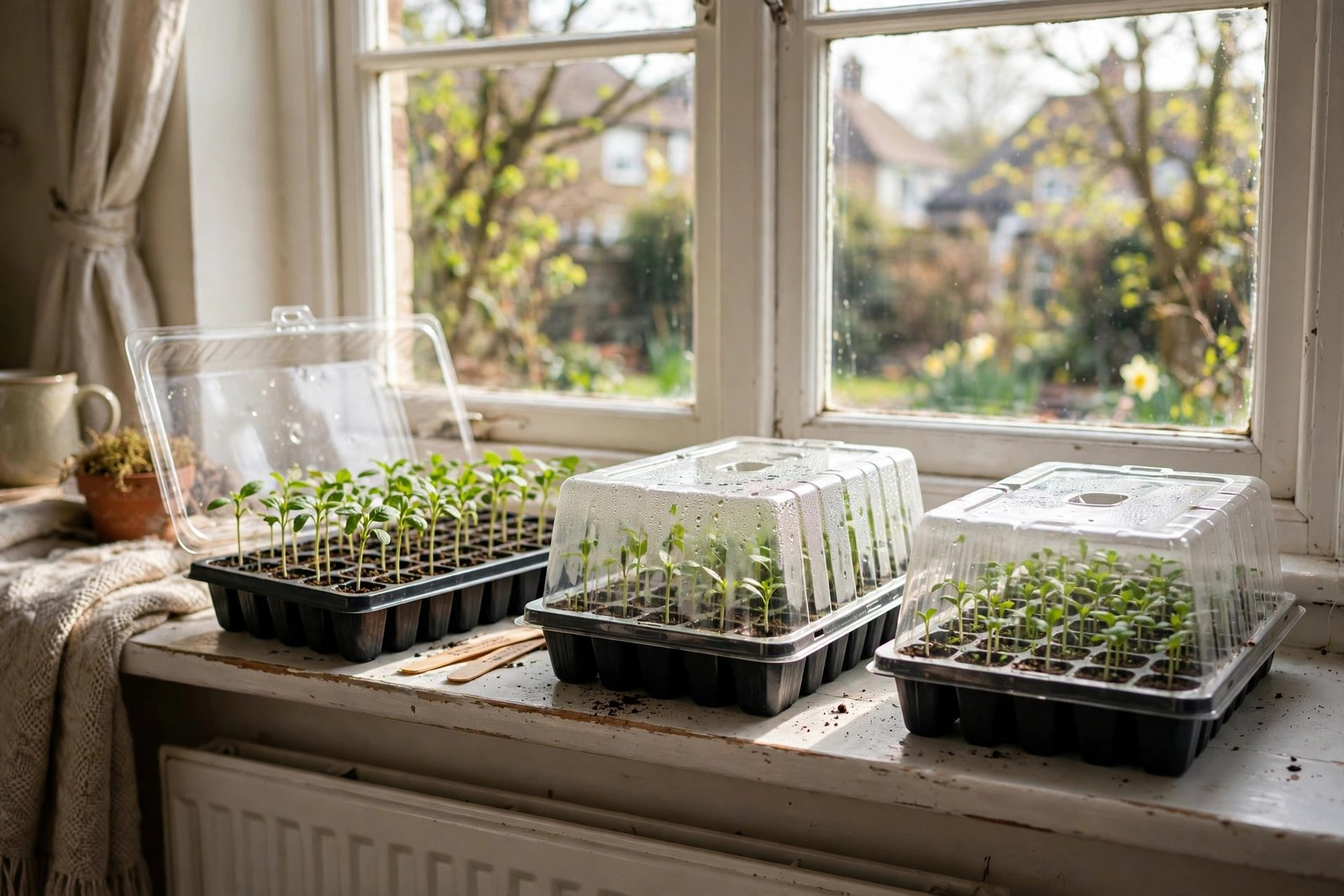
Seed catalogues make it sound so easy: sow in March, transplant in May, harvest by August. Then you remember you live in Britain, your windowsills face the wrong way, and every gardening influencer seems to own a grow-light setup that costs more than your first car. Here is the liberating truth: generations of British gardeners raised magnificent seedlings with nothing but windowsills, ingenuity, and an understanding of light. Grow lights are convenient, not compulsory. Here is how to start seeds successfully without them.
Light is the whole game: understand what seedlings need
Seeds do not need light to germinate — warmth and moisture do that job. Light becomes critical the instant the seedling emerges: without enough, stems stretch tall, pale, and weak (“leggy”), topple over, and never recover. A sunny south-facing windowsill in March provides roughly 4–6 hours of direct light — enough for most vegetables and flowers if you manage it well. North-facing sills are the real challenge, offering only dim indirect light.
The key insight: seedlings need duration more than intensity. Fourteen hours of moderate windowsill light beats six hours of brilliant light followed by darkness. This is why turning and supplementing with reflected light matters more than raw sun. The RHS guide to sowing seed indoors covers the fundamentals of temperature and timing that underpin everything below.
Maximise your windowsill: the free upgrades
- Choose the brightest sill. South-facing is best, east or west acceptable, north a last resort. Clear the sill entirely — net curtains cut light dramatically; take them down or tie them back for seedling season.
- Reflect light back. Line the back and sides of your seed tray area with kitchen foil (matt side out) or white card. This simple trick can nearly double the light reaching seedlings and prevents one-sided leaning.
- Keep glass clean. Winter grime on windows blocks surprising amounts of light. A March window-clean is genuine seedling care.
- Turn trays daily. A quarter-turn each morning keeps growth even and stems sturdy.
- Keep seedlings close to the glass. Light intensity falls off rapidly with distance — every 10cm matters. But avoid leaves touching cold glass on frosty nights; draw curtains behind the trays (between seedlings and room) rather than in front.
Work with the British calendar, not against it
The biggest mistake is sowing too early. A tomato sown in February on a dim sill becomes a leggy casualty; the same variety sown in late March on a bright sill overtakes it within weeks. General UK timing without grow lights:
- Late February–March: chillies, sweet peppers, aubergines (need long seasons — start these earliest, on the warmest brightest sill).
- March–April: tomatoes, brassicas, lettuces, sweet peas, most annual flowers.
- April–May: courgettes, pumpkins, French beans, sunflowers — fast growers that resent being held back.
- Direct sow from April: carrots, parsnips, beetroot, peas, broad beans — these dislike transplanting anyway.
A later sowing in good light beats an early sowing in poor light every time. Patience is a propagation technique. For what to grow once seedlings are ready, the best plants for a small UK garden includes varieties well suited to windowsill starting.
Warmth without gadgets
Most seeds germinate best at 18–22°C — warmer than a typical British windowsill in March. Free warmth hacks: the top of the fridge or a boiler cupboard for germination (move to light immediately on sprouting), radiators beneath sills (use a tray of water or damp towel to counteract dry air), and clear plastic lids or bags over trays to create mini-greenhouses that hold both warmth and moisture. Remove covers the moment seedlings emerge to prevent fungal damping-off.
An unheated spare room at 15°C germinates most things — just more slowly. Only chillies and peppers truly demand extra warmth; everything else tolerates British indoor spring temperatures with equanimity.
Preventing legginess: the complete toolkit
Leggy seedlings are the classic windowsill failure. Beyond maximising light:
- Brush them. Gently running your hand over seedlings daily (or a small fan on low nearby) simulates wind, triggering shorter, stockier growth — a real, research-backed effect called thigmomorphogenesis.
- Keep them cool after germination. Move sprouted trays to the coolest bright spot available (12–15°C ideal). Warmth + dim light = legginess; cool + bright = stocky.
- Do not overfeed. Seed compost has enough nutrition for the first weeks; early feeding pushes soft, weak growth.
- Sow thinly. Overcrowded seedlings compete for light and all go leggy. Thin ruthlessly — it feels wasteful and saves the tray.
- Pot on promptly. Once seedlings have two true leaves, move them to individual pots. Root-bound seedlings stall and stretch.
If seedlings do go leggy, all is not lost: tomatoes can be planted deep (they root along buried stems), and brassicas transplanted up to their seed leaves. Gardeners’ World seed-sowing guides demonstrate these rescue techniques clearly.
Hardening off: the step everyone skips
Windowsill seedlings moved straight outside suffer transplant shock — sunburn, wind damage, cold nights. Harden off over 7–10 days: place trays outside in a sheltered spot for a few hours daily, increasing exposure, and bring in at night. A cold frame is ideal but a sheltered patio corner works. In Britain’s changeable May, watch overnight forecasts obsessively — one late frost undoes months of work. Fleece covers are cheap insurance.
Once hardened off, seedlings raised on windowsills are every bit as good as grow-light specimens — often better, since they have experienced real day-night cycles and air movement from the start. Transplant into their final positions — a raised bed is ideal for vegetables — water well, and stand back.
What to sow when: a windowsill calendar
A rough month-by-month plan for the unheated British windowsill: February — chillies and sweet peppers only (they need the longest season; everything else waits). March — tomatoes, aubergines, early brassicas, sweet peas, and hardy annuals like calendula. April — the big month: courgettes, pumpkins, French and runner beans, sunflowers, cosmos, zinnias, and tender herbs like basil. May — direct sow outdoors where possible, but windowsills still serve for succession sowings of lettuce, basil, and coriander.
Succession sowing — small batches every 2–3 weeks rather than everything at once — is the windowsill grower’s superpower: it staggers harvests, spreads the workload, and means a failed batch is a blip, not a disaster. Keep a simple notebook: variety, sow date, germination date, and notes. Within two seasons you will have a personalised calendar tuned to your exact windowsill — more valuable than any generic advice, because it accounts for your light, your warmth, and your habits.
Conclusion
Starting seeds without grow lights in Britain is not a compromise — it is the traditional method, refined. Maximise your brightest windowsill with reflectors and clean glass, sow at the right time rather than the earliest time, keep seedlings cool and brushed once germinated, and harden off properly before planting out. The seedlings will be stocky, the costs zero, and the satisfaction of a windowsill full of green life in April is one of gardening’s great free pleasures. The grow-light influencers can keep their electricity bills.
Frequently Asked Questions
Can I start seeds on a north-facing windowsill?
It is difficult but not impossible — use reflectors aggressively, sow later (April), choose shade-tolerant varieties like lettuces, and accept slower growth. An east or west sill is markedly better if available.
Why are my seedlings tall and floppy?
Insufficient light is the cause 95% of the time, usually combined with too much warmth. Move to the brightest, coolest spot available, add reflectors, and brush seedlings daily to encourage stocky growth.
Do seeds need light to germinate?
Most do not — warmth and moisture trigger germination. Light becomes essential immediately after emergence. (A few, like lettuce and begonias, need light to germinate and should be surface-sown.)
When should I start tomato seeds indoors in the UK?
Late March to early April on a bright windowsill without grow lights. Earlier sowings without supplementary light produce weak, leggy plants that later sowings quickly overtake.
What is damping off and how do I prevent it?
A fungal disease that kills seedlings at soil level. Prevent with clean trays, fresh compost, good air circulation, watering from below, and removing propagator lids once seeds germinate.
§ Further Entries

How to Divide Perennials Without Damaging Roots
Dividing overgrown perennials? Learn the right season, how to lift clumps without tearing roots, and the replanting steps that get every division thriving.
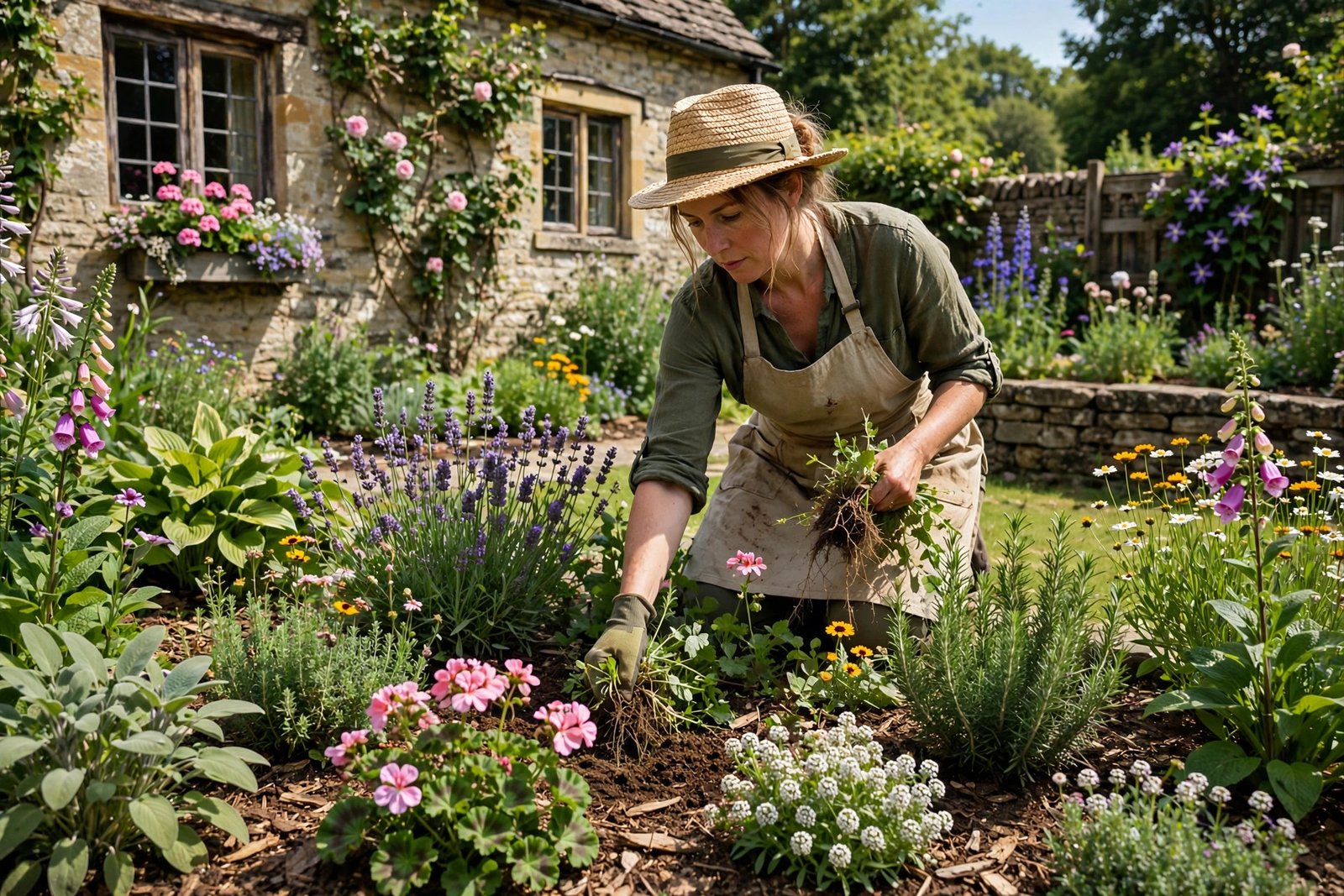
How to Stop Weeds Without Harsh Chemicals
Ditch the weedkiller. Learn how mulching, hoeing, dense planting and root removal control British garden weeds better than chemicals — plus tricky perennials.
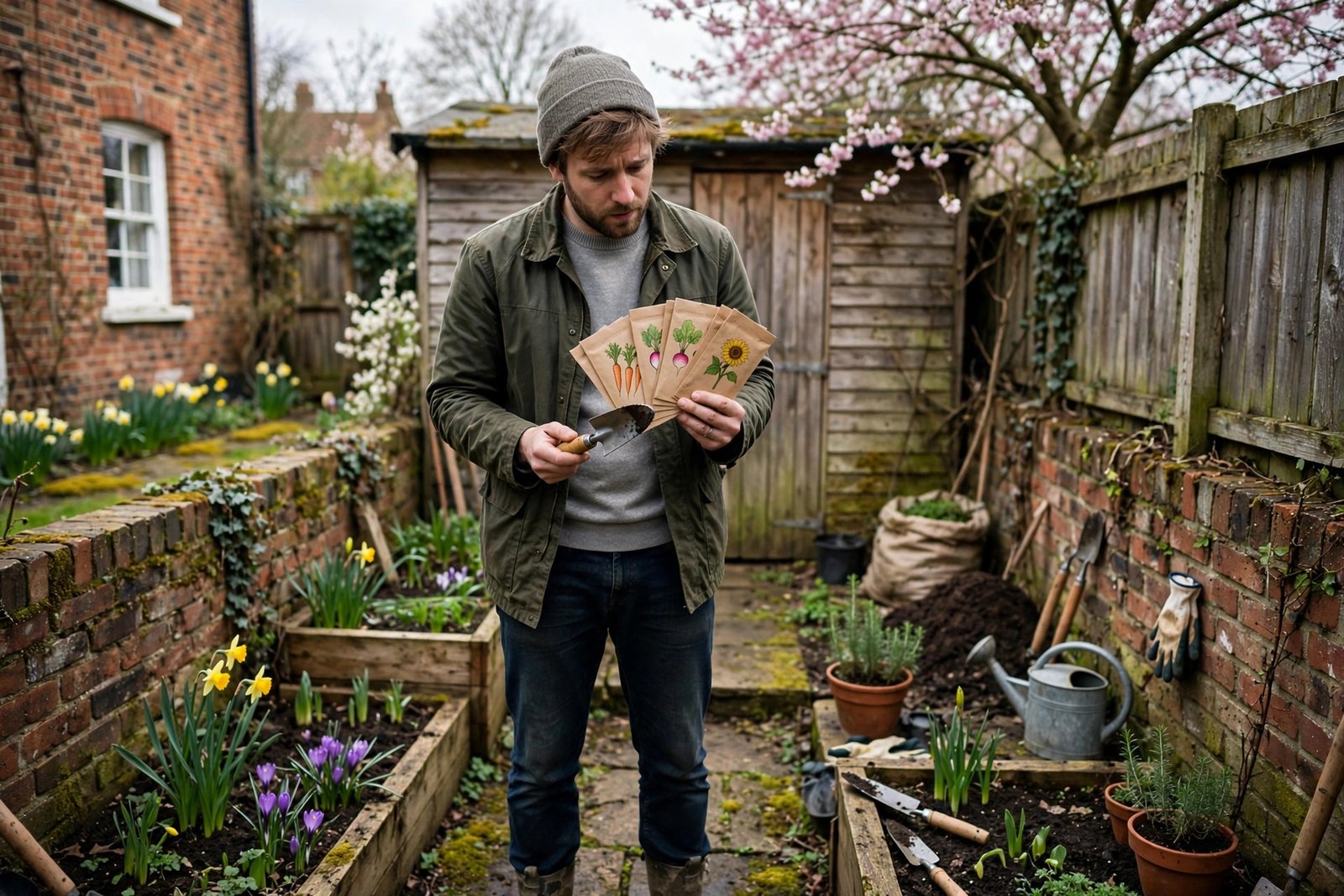
How do I start a vegetable garden as a total beginner in britain?
how do I start a vegetable garden as a total beginner in britain? Practical steps, expert tips and honest advice in our concise UK guide for British readers.