
Music A journal entry
Is Joining a Choir Good for Beginners? (Manchester)
Beginner singer in Manchester? Discover why choirs are ideal for newcomers, what your first term is really like, and how to find the right choir for you.
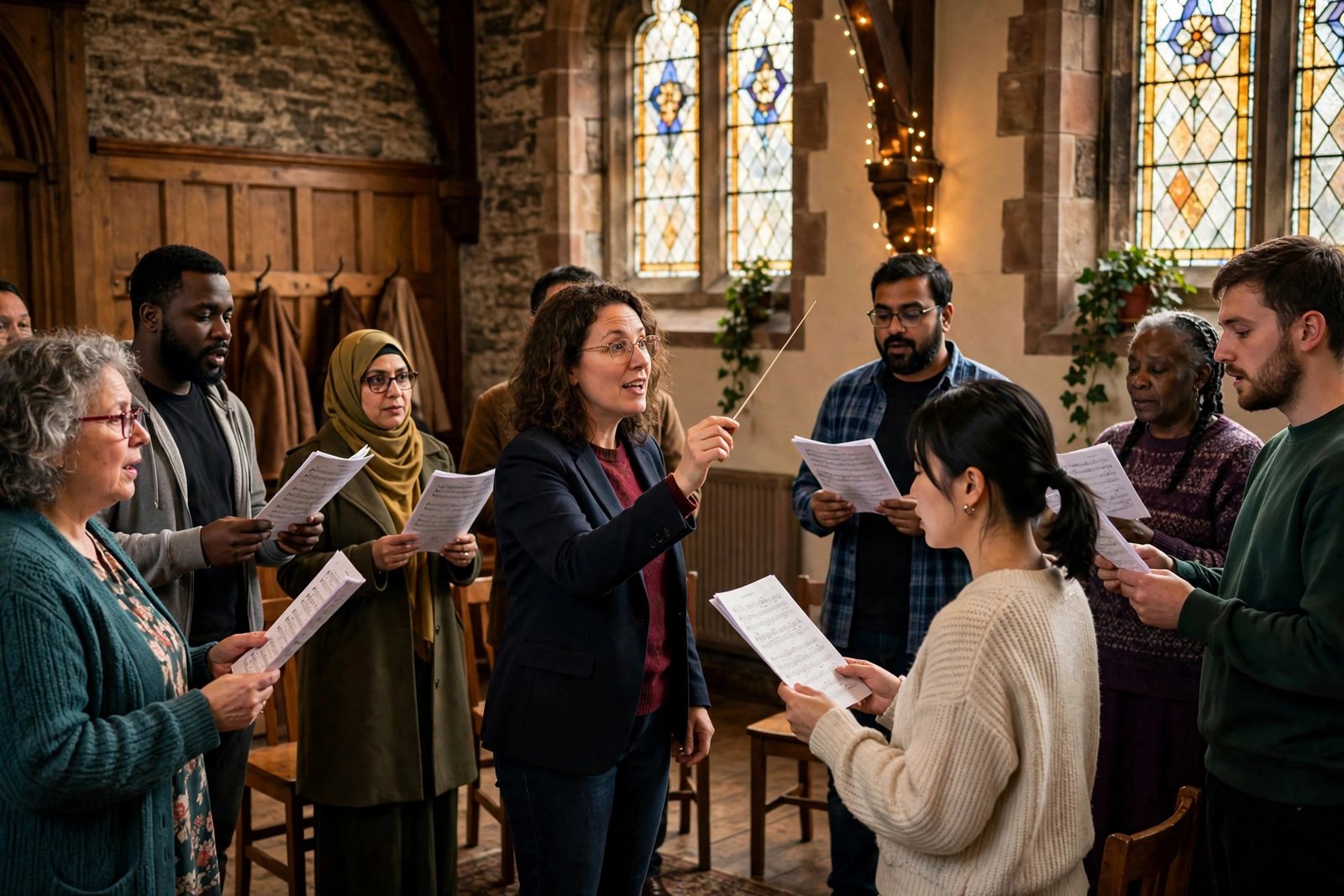
You love singing — in the car, in the shower, at every wedding — but you have never had a lesson, cannot read music, and suspect your pitch is “enthusiastic rather than accurate.” Should you join a choir in Manchester? Short answer: yes, probably — choirs are among the most beginner-friendly musical environments that exist, and Manchester’s choral scene is one of the liveliest in Britain. Here is what joining is really like, what it demands, and how to find the right choir for a complete beginner.
Why choirs are ideal for beginners
Choirs solve the beginner’s biggest problems simultaneously. You are surrounded by other voices, so individual wobbles disappear into the blend — no one hears your mistakes except you (and you will make them; everyone does). You learn by osmosis: pitch, rhythm, blend, and musicality absorb through weekly singing in a way solitary practice cannot replicate. And the social dimension is powerful — choir members consistently report it as the highlight of their week, and research on group singing links it to measurable reductions in stress and loneliness.
Crucially, most community choirs do not audition, do not require music-reading, and actively welcome beginners. The assumption that choirs are for trained singers applies to a small minority of elite ensembles; the vast majority exist precisely for people like you. Making Music, the UK charity supporting leisure-time music groups, lists thousands of choirs and confirms that most welcome newcomers without audition.
Manchester’s choir landscape: what is on offer
Manchester punches far above its weight chorally. The city’s options span every style and commitment level:
- Large community choirs — 60–150+ voices singing pop, gospel, musical theatre, and classical favourites. No audition, term-time weekly rehearsals, concerts a few times a year. These are the perfect beginner entry point.
- Workplace and neighbourhood choirs — smaller, social, often free or donation-based, meeting in pubs, community centres, and church halls across Chorlton, Didsbury, Levenshulme, and the Northern Quarter.
- Specialist choirs — gospel, barbershop, a cappella, sacred music, LGBTQ+ choirs, and choirs for specific communities. Manchester’s diversity is reflected in its choral life.
- Auditioned chamber choirs — for later, once you have found your feet. Groups like the Hallé Choir (connected to the world-famous Hallé Orchestra) hold auditions but also run open workshops.
Many Manchester choirs offer free taster sessions — try two or three before committing, because the vibe matters as much as the music. A choir whose repertoire bores you will not keep you coming back, however welcoming it is.
What beginners actually need (it is less than you think)
- No music-reading required for most community choirs — parts are taught by ear and repetition, with recordings often provided for home practice.
- No solo singing, ever (unless you volunteer). You sing your part within a section of 10–30 similar voices.
- A roughly functional ear — if you can roughly match a pitch someone sings to you, you are ready. Perfect pitch is irrelevant; relative pitch develops with practice.
- Commitment to weekly rehearsals — the one real requirement. Choirs depend on regular attendance; sporadic showing up frustrates everyone.
- Modest fees — typically £5–£10 per session or £60–£120 per term, with concessions widely available. Many choirs are free.
If you are nervous about your voice, a few singing lessons beforehand build confidence — and singing is one of the most accessible ways of learning a new hobby cheaply in the UK, since community choirs cost less per month than a single private lesson.
What your first term will actually be like
Week one: you stand in the alto/tenor/bass section (the choir leader will voice-check you briefly — painless, 30 seconds), receive music or learning tracks, and sing through pieces you do not yet know. It feels chaotic and wonderful. By week four, melodies start sticking. By week eight, you are holding your part against the other sections — the moment choir singing becomes genuinely thrilling. The first concert, usually after one term, is terrifying and euphoric in equal measure.
Expect your voice to tire initially — vocal stamina builds like any fitness. Warm up properly, stay hydrated, and do not belt; blend is the goal. Most beginners are surprised how quickly they improve: weekly group singing for three months produces audible transformation in pitch accuracy and tone.
Beyond singing: the hidden benefits
Choir members in Manchester report benefits far beyond music: new friendships across age groups and backgrounds (choirs are gloriously mixed), a fixed weekly structure that anchors mental health, improved breathing and posture, and a sense of belonging that is increasingly rare in modern city life. For newcomers to Manchester, a choir is arguably the fastest route to community — faster than work colleagues, faster than apps. The Independent Society of Musicians has published research on music’s wellbeing benefits that backs up what choir members have always known intuitively.
And the musical education compounds: choir veterans often go on to instrumental lessons, solo singing, or conducting — the choir was the gateway. Once you are hooked on live harmony, finding live music gigs across the UK becomes a natural extension of your musical life.
Finding your voice part (and other first-term mysteries)
New joiners worry about voice parts — soprano, alto, tenor, bass — but the choir leader sorts this in a 30-second voice check at your first rehearsal, placing you where your voice sits naturally. There is no wrong answer and no test to fail; many singers move sections as their voices develop. Other mysteries demystified: sheet music is provided and you will learn to follow it gradually (many choirs mark music with highlighters and annotations — gloriously unpretentious); concert dress is usually simple black, specified well in advance; rehearsal etiquette boils down to arriving on time, marking your music, and not chatting while the conductor is talking.
One more reassurance: everyone remembers being new, and choirs are designed around welcoming newcomers — their survival depends on it. The alto beside you will lend you a pencil, explain the bit you missed, and invite you to the pub afterwards. Within a month you will be doing the same for the next newcomer. That cycle of welcome is not incidental to choirs; it is the whole point.
Conclusion
Is joining a choir good for beginner singers in Manchester? It is one of the best musical decisions a beginner can make: no audition, no music-reading needed, costs measured in pounds per week, and a learning curve powered by the joy of singing with others. Manchester’s scene offers everything from massive pop choirs to intimate community groups — try a few taster sessions, find the vibe that fits, and commit to the term. Three months from now you will be holding a harmony part in a concert, wondering why you waited so long. The only real prerequisite is showing up.
Frequently Asked Questions
Do I need to read music to join a choir?
No — most community choirs teach by ear with learning tracks. Music-reading is helpful but not required, and many singers pick up the basics over time.
What if I cannot sing in tune?
If you can roughly match a pitch, a choir will develop your tuning rapidly — that is literally what choirs are for. Only profound tone-deafness (very rare) is a barrier.
How much does joining a choir in Manchester cost?
Typically £5–£10 per rehearsal or £60–£120 per term, with concessions for students, unemployed, and over-60s. Many community choirs are free or donation-based.
Will I have to sing alone?
No. Beginners sing within a section of many voices; solos are strictly voluntary. You will never be put on the spot.
How do I find choirs near me in Manchester?
Making Music’s directory, local Facebook groups, and community noticeboards list most choirs. Search by area (Chorlton, Didsbury, city centre) and style, then contact two or three for taster sessions.
§ Further Entries
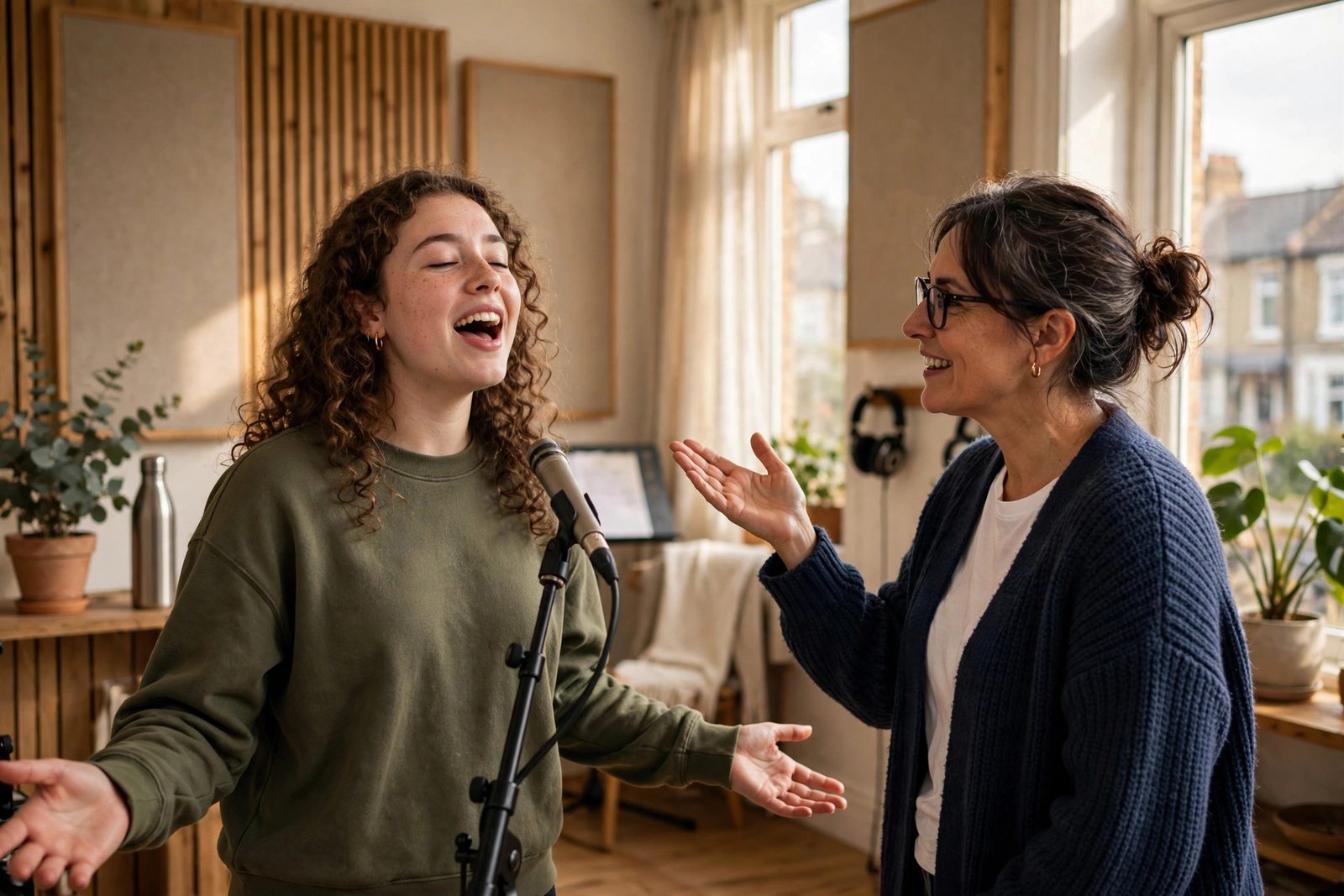
How to Sing High Notes Without Straining Your Voice
Straining for high notes? Learn why it happens and the vocal coach method to fix it: breath support, throat release, mixed voice, and a 15-minute daily routine.

How to Tune Your Guitar by Ear (No Tuner Needed)
No tuner? No problem. Learn the fifth-fret and harmonic methods to tune your guitar by ear anywhere — plus the ear-training drills that make it stick.
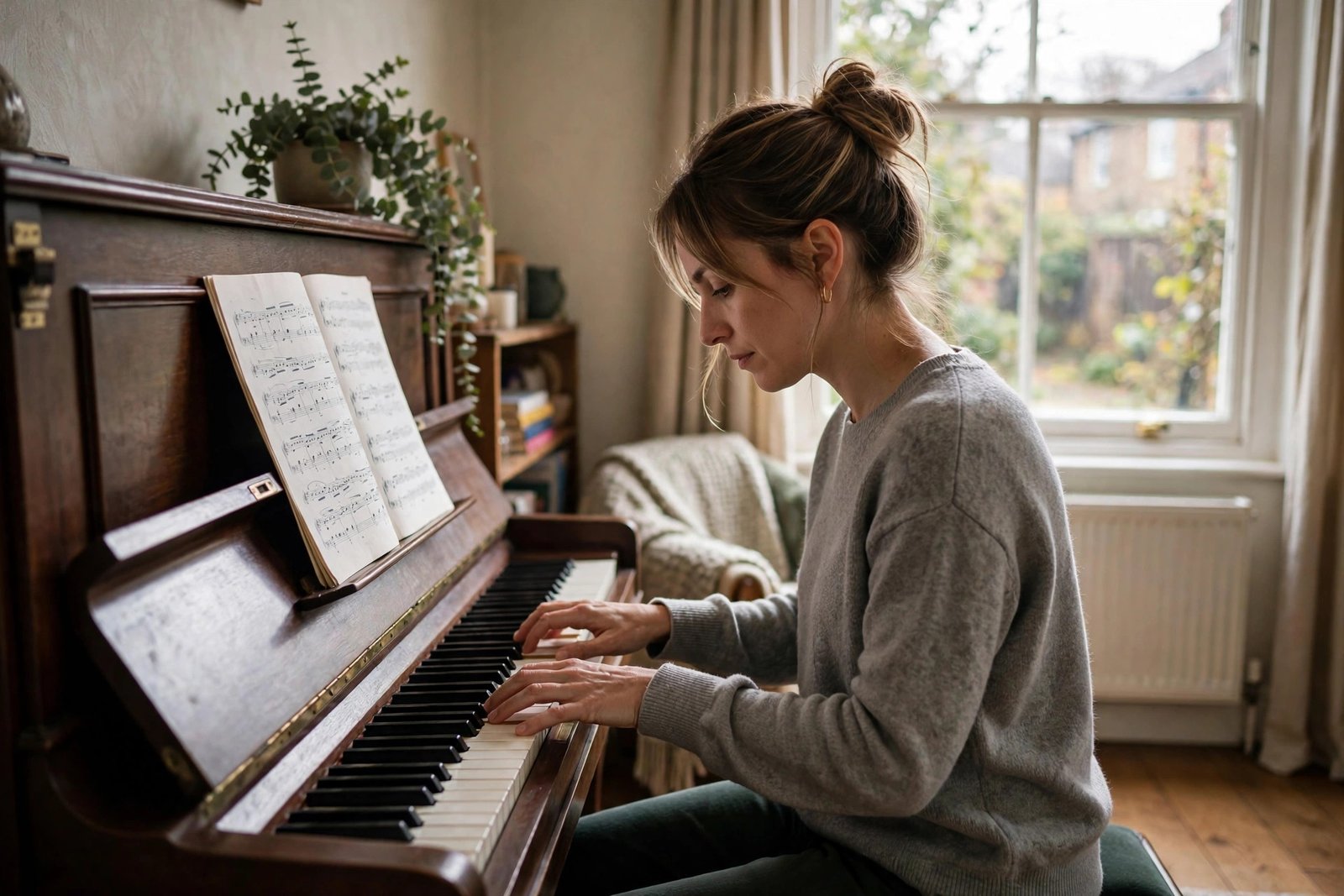
Is 30 Too Late to Learn Piano? The Honest Answer
Thinking of learning piano at 30? It's not too late. Learn realistic timelines, the best setup for UK adults, and how grown-ups should practise differently.