
Beauty A journal entry
What Is Double Cleansing and Does Your Skin Actually Need It?
What is double cleansing and do you actually need it? Who benefits from the two-step cleanse, who can skip it, and how to do it without stripping your skin.
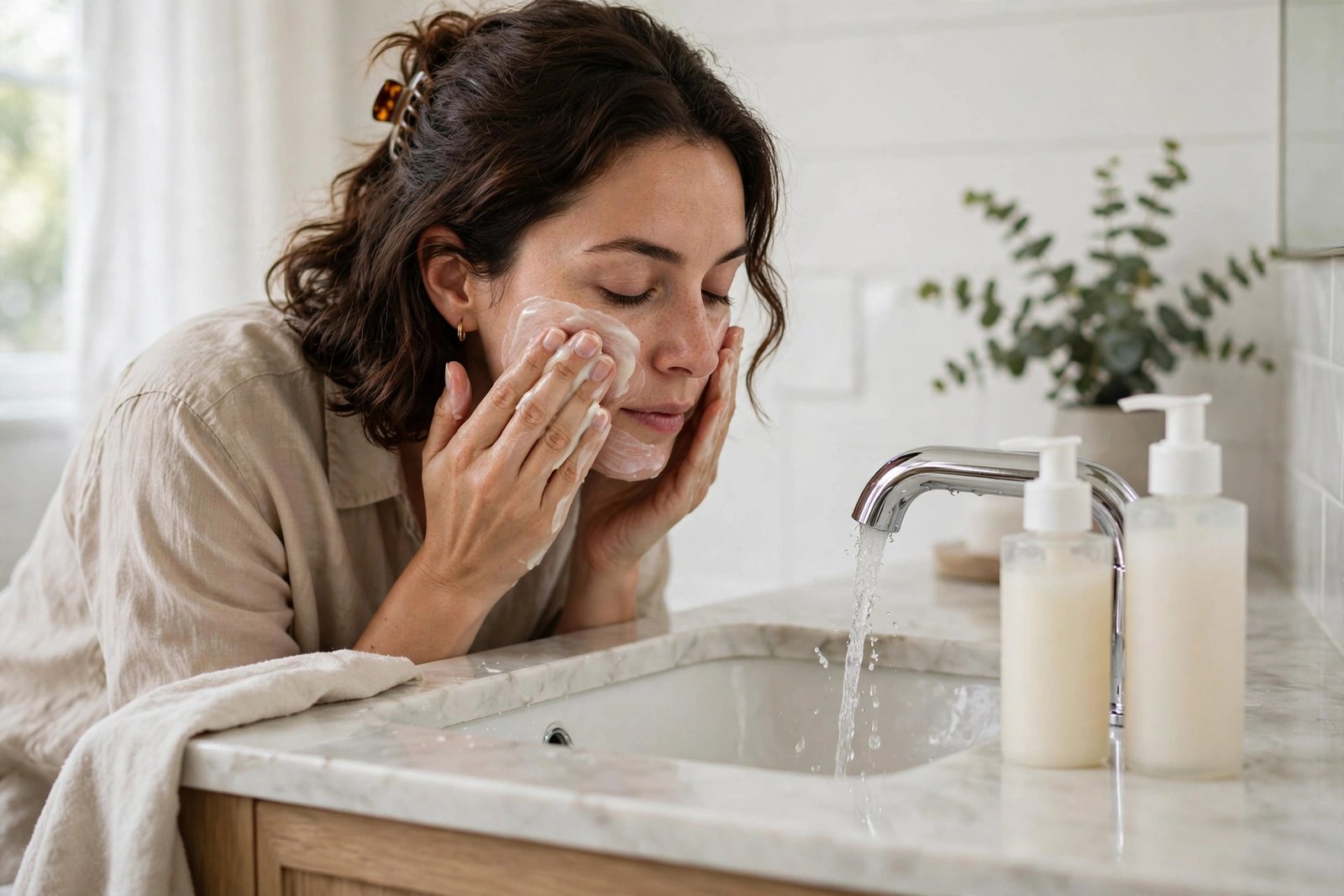
Oil cleanser, then water-based cleanser. Sixty seconds each. Every evening. The double cleansing method has travelled from Korean and Japanese skincare routines into British bathrooms, championed as the secret to truly clean skin. But is it necessary, or is it marketing dressed as ritual? What is double cleansing, and do you actually need it? The honest answer: it is a genuinely useful technique for some people, a pointless extra step for others — and knowing which group you are in saves you time, money and potentially your skin barrier.
This guide explains what double cleansing actually does, who benefits, who should skip it, how to do it properly, and the mistakes that turn a good technique bad.
What double cleansing actually is
Double cleansing means washing your face twice in succession with two different types of cleanser. Step one is an oil-based cleanser — a cleansing oil or balm — which dissolves oil-soluble substances: sunscreen, makeup, sebum and pollution. Step two is a water-based cleanser — a gel, foam or cream — which removes water-soluble residue: sweat, dirt and whatever the oil cleanser left behind. The principle is “like dissolves like”: oil removes oil-based debris far more effectively than water-based cleansers alone.
This is not new science. Makeup artists and dermatologists have long known that a single gentle cleanser often leaves sunscreen and long-wear makeup behind — visible if you tone afterwards and the cotton pad comes away tinted. Double cleansing simply systematises what thorough makeup removal always required.
Who actually needs it
Double cleansing earns its place if you wear sunscreen daily (you should), wear makeup regularly, have oily or congestion-prone skin, live in a polluted city, or wear heavy or long-wear formulas. For these people, the first cleanse does the heavy lifting that a single gentle wash cannot, and skin genuinely looks clearer within a couple of weeks.
The British Association of Dermatologists’ cleansing guidance supports thorough evening cleansing as the foundation of any routine — residual sunscreen and makeup left overnight contribute to congestion and dullness. If your evening cleanse currently involves a makeup wipe followed by hope, double cleansing is a significant upgrade.
Who can safely skip it
Morning double cleansing is unnecessary for almost everyone — overnight, skin produces only light sebum, and a single gentle cleanse or even water suffices. Very dry, sensitive or barrier-compromised skin may find two cleanses stripping; if your face feels tight after cleansing, you are overdoing it regardless of method. Minimalists who wear no makeup and light sunscreen can do perfectly well with one thorough evening cleanse.
Children and teenagers with simple routines do not need it either. And if your skin is currently irritated, reactive or recovering from over-exfoliation, drop back to a single gentle cleanse until the barrier recovers. More cleansing is not more virtuous — it is just more cleansing.
How to double cleanse properly
Technique matters more than product price. Massage the oil cleanser or balm onto dry skin for a full 60 seconds — this is where the dissolving happens, so do not rush it. Add a splash of water to emulsify (the oil turns milky), massage briefly more, then rinse. Follow immediately with your water-based cleanser, another 30 to 60 seconds, then rinse with lukewarm water and pat dry.
Choose wisely: fragrance-free formulas for both steps, a balm or oil that emulsifies cleanly without residue, and a gentle second cleanser matched to your skin type — not a harsh foaming wash that undoes the gentleness of step one. Excellent affordable options line the shelves of the UK’s best affordable high-street brands. For a full pampering context, our guide to planning a spa day at home shows where double cleansing fits into a deeper routine.
Mistakes that ruin a good technique
Using the oil cleanser on wet skin prevents it from dissolving makeup properly — dry skin, always. Scrubbing aggressively or using hot water strips the barrier the technique is meant to protect. Following with a harsh second cleanser defeats the purpose; the second step should be the gentlest one you own. And double cleansing twice daily is overkill that leads straight to dryness and sensitivity.
If breakouts appear after starting, check the oil cleanser first — comedogenic oils (coconut oil is the classic offender) or incomplete rinsing cause congestion that people blame on the method rather than the product.
Double cleansing for different skin types
Tune the method to your skin. Oily and combination skin generally loves double cleansing — the oil step dissolves sebum plugs and sunscreen thoroughly, often reducing congestion within weeks. Dry skin should choose rich, creamy oil cleansers and the gentlest possible second cleanse, watching for any tightness. Sensitive skin can double cleanse successfully with fragrance-free, minimal-ingredient formulas, but should drop to a single cleanse at the first sign of reactivity.
Acne-prone skin benefits most from the thoroughness, provided the oil cleanser is non-comedogenic and fully rinsed — residue is the enemy. The NHS advice on acne and cleansing supports gentle but thorough cleansing as part of acne management, while warning against harsh scrubbing that worsens inflammation. Match the products to your skin, and the method adapts to almost everyone.
The morning question, settled
To be definitive: no, you do not need to double cleanse in the morning. Overnight skin accumulates only light sebum and whatever your night products left behind — a single gentle cleanse, or even lukewarm water for dry types, is plenty. Double cleansing twice daily is the fast track to a damaged barrier, and anyone telling you otherwise is selling cleanser.
Save the method for evenings, when the day’s sunscreen, makeup and pollution actually warrant it. Skincare should follow the soil, not the clock — cleanse according to what is on your face, and your barrier will thank you.
Conclusion
Double cleansing is neither miracle nor myth — it is a practical solution to a real problem: modern sunscreen and long-wear makeup need more than a cursory wash to remove fully. If you wear SPF and makeup, live in the city, or battle congestion, it is worth the extra sixty seconds each evening. If your routine is minimal and your skin is dry or sensitive, one good cleanse does the job. Match the method to your life, not to the trend cycle, and your skin will tell you whether it was needed.
Frequently Asked Questions
Can I double cleanse with the same cleanser twice?
It misses the point — the method relies on an oil-based first step to dissolve oil-soluble debris. Two rounds of the same water-based cleanser just irritates without cleaning better.
Is micellar water a good first cleanse?
It can work as a first step for light makeup days, but dedicated cleansing oils and balms dissolve sunscreen and long-wear makeup more thoroughly. Micellar water plus rinsing is better than wipes alone, though.
Will double cleansing dry out my skin?
It should not, if both cleansers are gentle and suited to your skin. Tightness afterwards means a product is too harsh — usually the second cleanser — not that the method is wrong.
Do I need to double cleanse if I don’t wear makeup?
If you wear daily sunscreen (recommended), yes — SPF is oil-soluble and benefits from an oil first cleanse. If you wear neither makeup nor sunscreen, a single cleanse suffices.
§ Further Entries

Is Washing Your Hair Every Single Day Actually Bad for It?
Is it bad to wash your hair every single day? What daily shampooing really does to British hair types, plus when to wash less and when it is fine. Read our guide.

The Most Flattering Haircuts for a Round Face Shape in the UK
What is the best haircut for a round face shape? Flattering cuts, lengths and styling tricks UK stylists recommend to add definition and balance to faces.
How to Stop Makeup From Creasing Under Your Eyes All Day
How do you stop makeup from creasing under your eyes? The prep, product and setting techniques makeup artists use for smooth, crease-free concealer all day.